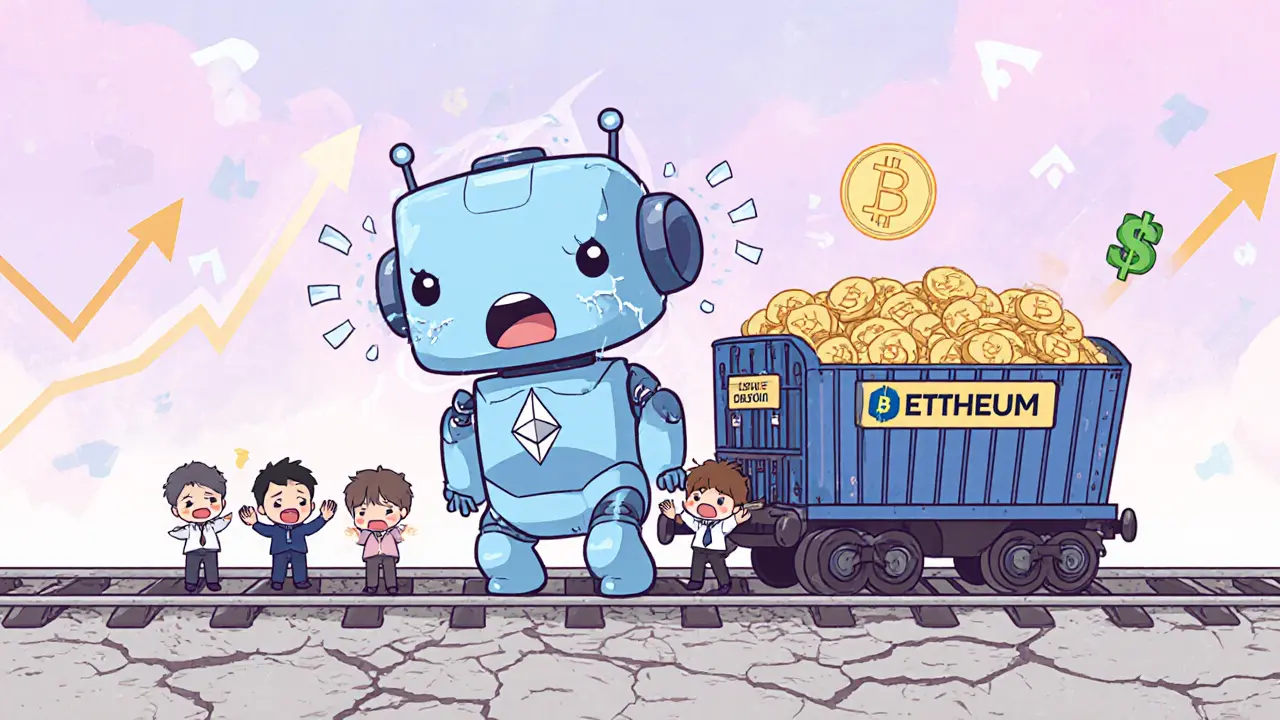
Blockchain Scalability: Why It Matters and How Real Projects Are Fixing It
When you send Bitcoin or swap tokens on Ethereum, you’re relying on blockchain scalability, the ability of a blockchain network to handle growing numbers of transactions without slowing down or becoming too expensive. This isn’t just tech jargon—it’s the difference between waiting 10 minutes for a transaction to confirm or having it done in under a second. Without scalability, crypto stays slow, costly, and unusable for everyday payments or high-volume trading. Many people think Bitcoin or Ethereum are broken because they’re slow, but the truth is they were never designed to handle millions of users. They were built for security and decentralization first. That’s why block time, the average time it takes to add a new block to the chain matters so much. Bitcoin’s 10-minute block time keeps it secure but makes it terrible for quick payments. Ethereum’s 12-second block time is faster, but when everyone tries to trade at once, gas fees spike and the network clogs up.
That’s where DeFi scaling, the set of techniques used to make decentralized finance faster and cheaper comes in. Projects like Polygon, Arbitrum, and zkSync aren’t replacing Ethereum—they’re building highways next to it. These layer-2 solutions take thousands of transactions off the main chain, bundle them up, and submit one proof back to Ethereum. The result? Fees drop from $50 to $0.10, and speeds jump from 15 transactions per second to over 2,000. Meanwhile, newer chains like Coreum and BNB Chain are built from the ground up to handle high volume, which is why platforms like SushiSwap on Polygon and THENA FUSION on BNB Chain can offer 60x leverage and instant swaps. But not all scaling solutions are equal. Some sacrifice decentralization. Others have low liquidity, making them risky for large trades. That’s why you need to know what’s behind the speed.
Real-world usage is the ultimate test. If you’ve ever tried to claim an airdrop during peak hours and got stuck with failed transactions, or if you’ve watched your trade get frontrun because the network was overloaded, you’ve felt the limits of poor scalability. The posts below dive into exactly this: how exchanges like THORChain handle cross-chain swaps without custody, why some DEXs like Ultron Swap fail despite the tech, and how platforms like ApeSwap and SushiSwap balance speed, cost, and risk. You’ll see which chains actually work for daily trading, which ones are just hype, and how scalability impacts everything from your wallet to your returns. This isn’t theory—it’s what’s happening right now, on the chains you’re already using.