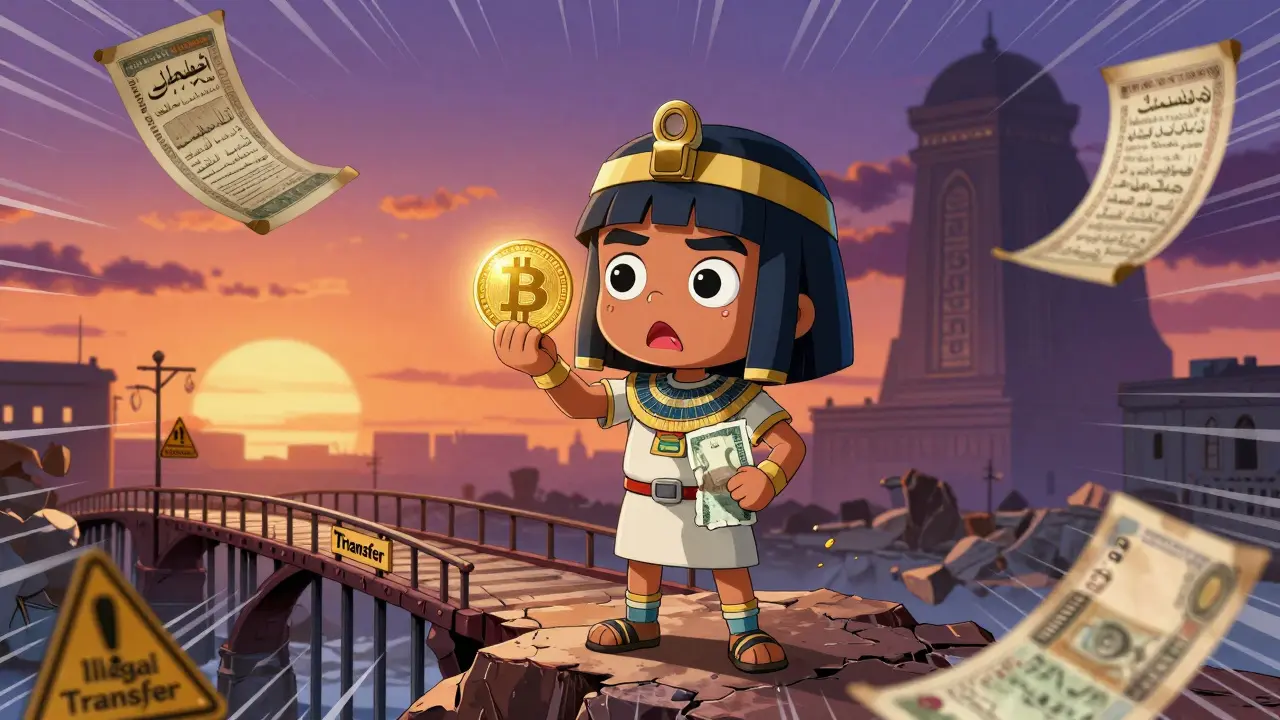
Crypto Regulations in Egypt: What You Can and Can't Do in 2025
When it comes to crypto regulations in Egypt, the Egyptian government has made it clear that cryptocurrencies are not recognized as legal tender and are heavily restricted by central banking authorities. Also known as Egyptian crypto ban, this policy blocks banks, payment processors, and financial institutions from handling any digital asset transactions. Unlike countries that are slowly opening up to crypto, Egypt’s stance is one of the strictest in the Middle East.
The Central Bank of Egypt, the nation’s primary financial regulator, has repeatedly warned citizens that using Bitcoin, Ethereum, or any other crypto is against the law. Also known as CBE crypto policy, their position is simple: if you’re caught trading, depositing, or even promoting crypto through local platforms, you could face fines or legal action. This isn’t just a rumor—it’s backed by official statements, bank notices, and even arrests in some cases. The Egyptian Financial Intelligence Unit, a government body that tracks suspicious financial activity, actively monitors crypto-related transactions flagged by international exchanges. Also known as FIU Egypt, they work with global platforms to identify users in Egypt who bypass restrictions using VPNs or P2P networks.
Despite the ban, crypto isn’t disappearing—it’s going underground. Thousands of Egyptians use P2P crypto platforms, like LocalBitcoins and Paxful, to buy Bitcoin with cash or mobile money, often through informal traders. Also known as peer-to-peer crypto Egypt, this method avoids banks entirely and lets users trade without exposing their identities to regulators. But it’s risky: if you get caught using a P2P platform to send money abroad, you could be accused of money laundering or violating foreign exchange laws. There’s also no legal recourse if you’re scammed. Unlike regulated exchanges, these P2P deals have no customer support, no chargebacks, and no protection under Egyptian law.
And what about taxes? The government hasn’t officially said how crypto gains should be reported—because they don’t recognize it as income. But if you’re earning money from crypto, whether through trading or mining, and you deposit it into a bank account, the Egyptian tax authority, could flag those deposits as unexplained income and demand proof of legal source. Also known as Egypt tax compliance, this creates a dangerous gray area: you might not be breaking crypto rules, but you’re breaking tax rules by not explaining where the money came from.
There’s no sign the ban will lift soon. Unlike Nigeria or Saudi Arabia, where rules are evolving, Egypt’s government sees crypto as a threat to its control over the national currency and financial system. Even discussions about blockchain for public records or land registries are being slowed down or buried. The only crypto activity that’s tolerated is research and education—nothing that involves actual trading or transferring value.
What you’ll find below are real stories and practical breakdowns from people who’ve navigated this system. You’ll learn how traders avoid detection, what platforms still work (and which ones got shut down), and how to spot scams targeting Egyptians desperate for access. No fluff. No theory. Just what’s actually happening on the ground in 2025.