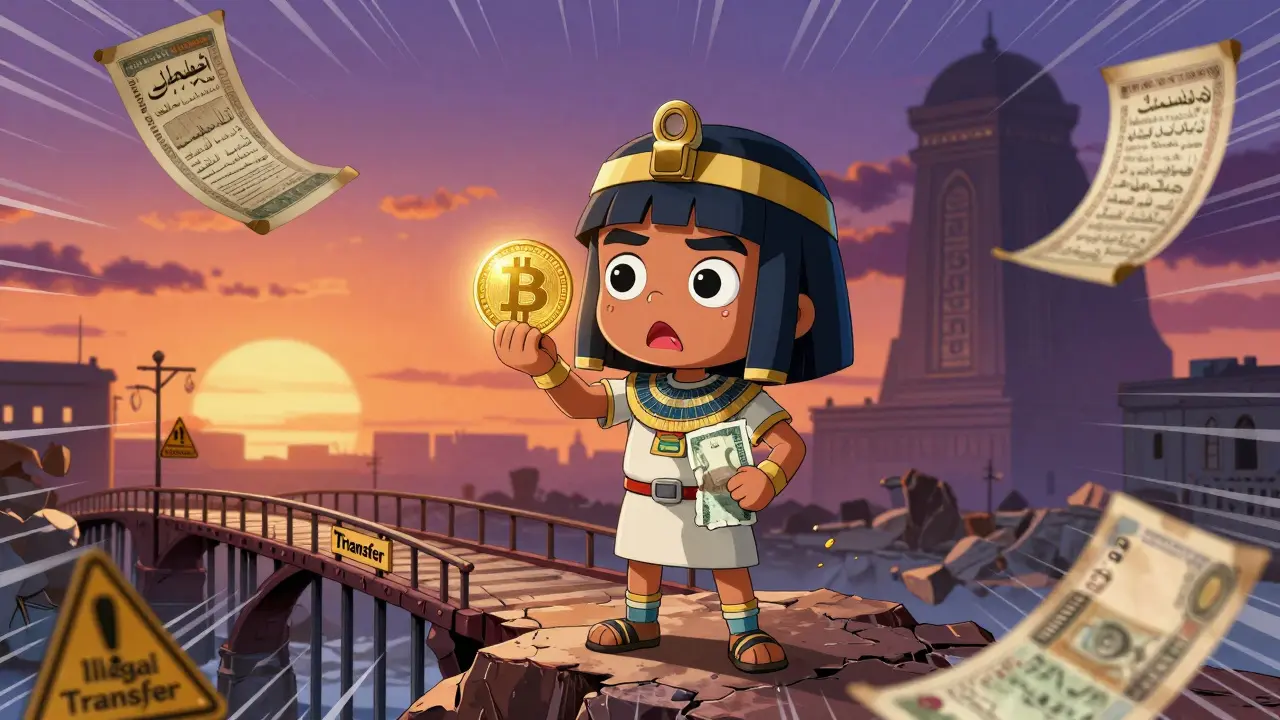
Egypt crypto ban: What it means and how people still trade
Egypt crypto ban, a government restriction on financial institutions and banks from handling cryptocurrency transactions. Also known as crypto prohibition in Egypt, it was enforced by the Central Bank of Egypt in 2020 and remains active today, making it one of the strictest crypto policies in the Middle East. The rule doesn’t just block exchanges—it stops banks from processing payments to or from crypto platforms, freezing wallets tied to local accounts. This wasn’t about technology. It was about control. The government feared losing oversight over money flows, worried about capital flight, and didn’t trust decentralized systems that don’t answer to them.
But bans don’t stop demand. In Egypt, where inflation has eroded the pound and access to foreign currency is tight, people turned to P2P crypto, peer-to-peer trading platforms that connect buyers and sellers directly without banks. Platforms like Paxful and LocalBitcoins became lifelines. Traders use cash meetups, mobile money, and even gift cards to swap Bitcoin for Egyptian pounds. It’s risky—scams are common—but it’s the only way many can protect their savings from devaluation. Bitcoin Egypt, the most traded crypto in the country despite the ban, isn’t just a speculative asset. For many, it’s a store of value, like gold, but faster and easier to move across borders.
The ban also pushed users to rely on VPNs, tools that mask internet location to access global crypto exchanges. But it’s not foolproof. Egyptian authorities have started monitoring traffic patterns and blocking known crypto-related domains. Free VPNs are dangerous—they often sell user data or get shut down overnight. Those caught face fines or account freezes, but enforcement is inconsistent. Meanwhile, the underground market keeps growing. You won’t find crypto ads on TV, but you’ll hear about it in coffee shops, university campuses, and WhatsApp groups.
What’s missing from the official story is how deeply crypto is woven into daily life. Farmers sell crops for Bitcoin. Freelancers get paid in USDT. Students send money home using Binance P2P. The ban didn’t kill crypto—it buried it. And underground economies don’t die easily. Below, you’ll find real stories, tools, and risks from people navigating this gray zone. No fluff. No hype. Just what works—and what gets you caught.