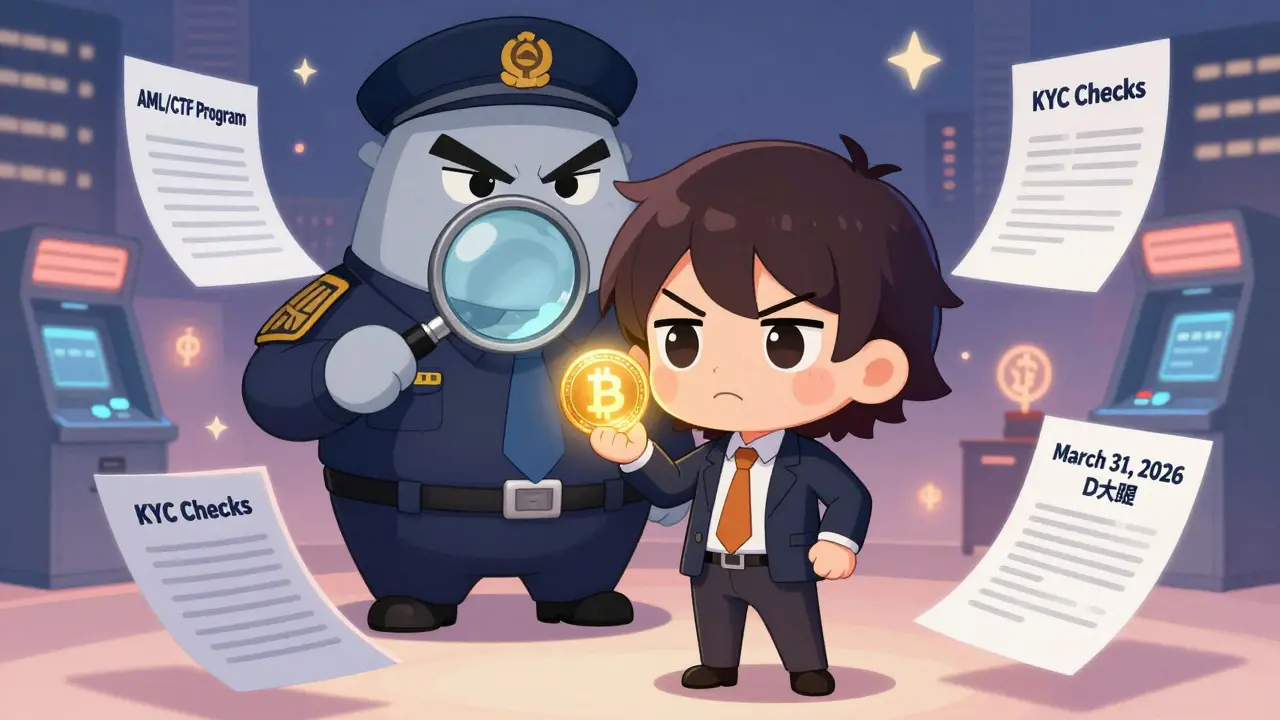
If you're running or planning to launch a crypto exchange in Australia, you need to register with AUSTRAC before you open your doors. It’s not optional. It’s not a suggestion. As of October 2025, operating a digital currency exchange without AUSTRAC registration is a criminal offense. And starting March 31, 2026, the rules are about to get even tighter.
What Exactly Is AUSTRAC Registration?
AUSTRAC - the Australian Transaction Reports and Analysis Centre - is Australia’s financial intelligence unit. Think of it like the financial watchdog for money laundering and terrorism financing. For crypto businesses, it means you must prove you have systems in place to stop criminals from using your platform to hide or move illegal money. Right now, AUSTRAC registration applies to any business that exchanges Australian dollars (or other fiat currencies) for cryptocurrency, or vice versa. That includes online platforms, mobile apps, and even crypto ATMs. If you’re taking cash in and sending Bitcoin out, or swapping Ethereum for AUD, you need to register.What Changes on March 31, 2026?
The big shift isn’t happening tomorrow - but you need to plan for it now. On March 31, 2026, AUSTRAC will expand its scope to cover more crypto activities than ever before. After that date, you’ll need registration if you do any of the following:- Exchange one cryptocurrency for another (like BTC for ETH)
- Transfer digital assets on behalf of customers
- Hold or manage crypto assets for clients (custody services)
- Help issue or sell digital tokens, including ICOs or tokenized assets
What You Need to Register
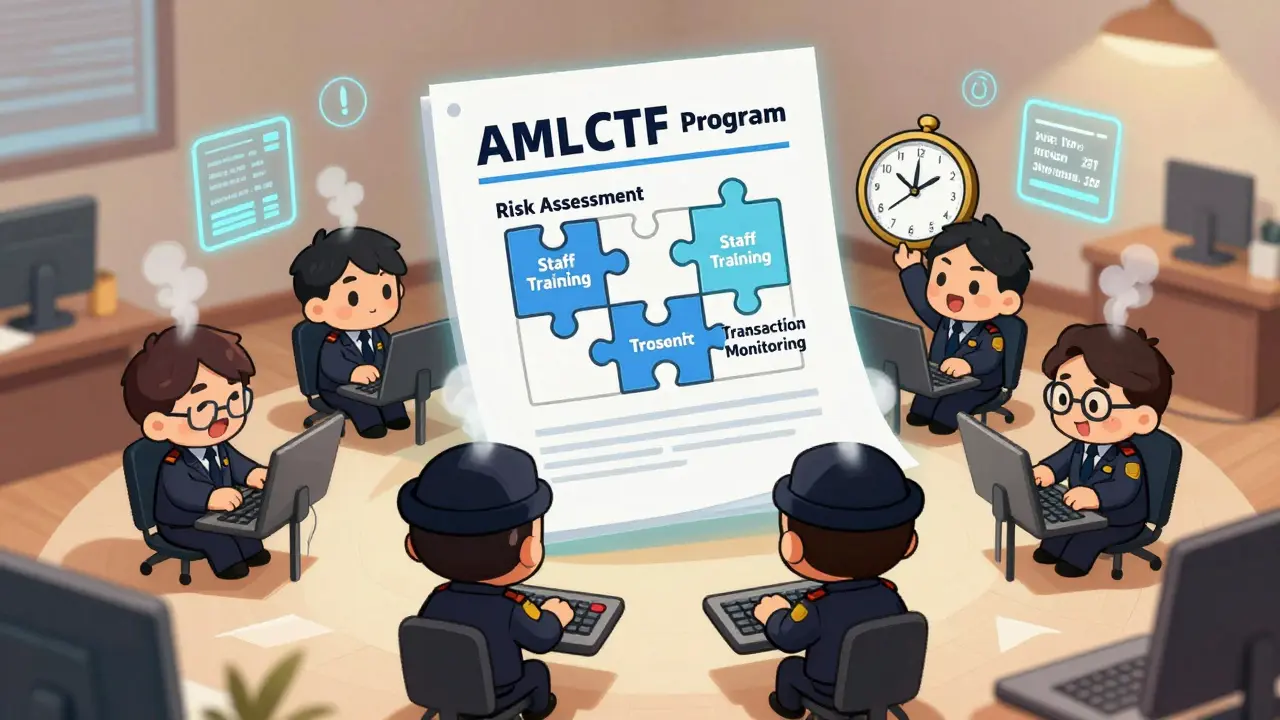
You can’t just fill out a form and pay a fee. AUSTRAC requires serious documentation before they’ll even look at your application. Here’s what you need to have ready:- AML/CTF Program: A written plan showing how you’ll detect, prevent, and report suspicious activity. This isn’t a one-page document. It needs policies for customer onboarding, transaction monitoring, staff training, and internal audits.
- Money Laundering and Terrorism Financing Risk Assessment: You must identify where your business is most vulnerable. Are you serving high-risk customers? Do you accept anonymous payments? Are your KYC checks weak? This assessment must be updated annually.
- Registration Application: Submitted through AUSTRAC’s online portal. You’ll need details about your company structure, directors, owners, and the types of services you offer.
What Happens After You Register?
Registration isn’t a one-time checkbox. It’s the start of ongoing compliance. Once you’re approved, you’re legally required to:- Verify every customer’s identity (KYC): You must collect government-issued ID, proof of address, and sometimes source of funds. No exceptions. Even small transactions require basic checks.
- Report suspicious transactions: If something looks off - a customer suddenly sending $50,000 in crypto to an unknown wallet - you have to report it to AUSTRAC within 24 hours.
- Report large transactions: Any cash transaction over $10,000 (or equivalent in crypto) must be reported within 3 business days.
- Keep records for 7 years: Every transaction, every ID copy, every internal report. You need to store them securely and make them available if AUSTRAC asks.
- Submit annual compliance reports: You must prove you’re still following your own AML/CTF program.
AUSTRAC vs ASIC: What’s the Difference?
A lot of crypto businesses get confused between AUSTRAC and ASIC. They’re two different regulators with different jobs.- AUSTRAC only cares about money laundering and terrorism financing. If you’re moving crypto or fiat, you need them.
- ASIC (Australian Securities and Investments Commission) regulates financial products. If your crypto token is considered a security - like a share in a company or a profit-sharing agreement - then you need an Australian Financial Services License (AFSL) from ASIC.
Who’s Already Registered?
As of late 2025, only about 120 crypto exchanges are officially registered with AUSTRAC. That’s out of hundreds operating in Australia. Many smaller platforms, especially those using overseas servers or claiming they’re “not a financial service,” are operating illegally. The big players - like CoinSpot, Independent Reserve, and Swyftx - are all registered. They’ve spent months preparing their AML/CTF programs and hiring compliance teams. If you’re a startup trying to compete without doing the same, you’re not just risking fines - you’re risking your entire business.What Happens If You Don’t Register?
The penalties are severe. You could face:- Fines up to $21 million or 3x the value of the illegal transaction
- Imprisonment for directors or owners
- Forced shutdown of your platform
- Public listing on AUSTRAC’s non-compliant businesses page
- Loss of banking relationships - banks will freeze your accounts if they find out you’re unregistered

How to Get It Right
The registration process is complex. Most businesses hire compliance consultants. It’s not expensive compared to the cost of getting it wrong. Here’s a practical checklist:- Use AUSTRAC’s online tool to confirm you need registration.
- Build your AML/CTF Program with help from a specialist - don’t copy a template from the internet.
- Conduct a detailed ML/TF Risk Assessment based on your actual customer base and transaction patterns.
- Train your staff on KYC procedures and how to spot red flags.
- Choose a reliable identity verification provider (like Jumio, Onfido, or local Australian solutions).
- Submit your application at least 60 days before you plan to launch.
- Prepare for the March 2026 expansion - start planning for crypto-to-crypto trading now.
What’s Next for Crypto in Australia?
Australia is moving toward a full licensing regime for crypto exchanges. Draft legislation is being reviewed that would require all exchanges to hold an AFSL from ASIC - not just AUSTRAC registration. This would bring crypto under the same rules as banks and brokers. That’s still a year or two away. But the writing is on the wall. The days of loose regulation are over. If you want to operate in Australia long-term, you need to treat compliance like part of your product - not an afterthought.Consumer Protection Matters Too
Even if you’re not selling financial products, you still have to follow the Australian Consumer Law. That means:- No false claims about returns or security
- No hiding fees in fine print
- No misleading advertising about “risk-free” crypto
Final Thought
AUSTRAC registration isn’t a hurdle - it’s your license to operate. It’s your credibility. It’s your protection. In a market where scams and failures make headlines, being registered is the only way to prove you’re serious. Start now. Don’t wait for March 2026 to catch you off guard. The regulators aren’t waiting. Your competitors aren’t waiting. And your customers are watching.Do I need AUSTRAC registration if I only trade crypto-to-crypto?
As of January 2026, no - you don’t need AUSTRAC registration for crypto-to-crypto trades yet. But starting March 31, 2026, you will. If you’re planning to offer crypto-to-crypto trading, you need to prepare your AML/CTF Program now. Waiting until after March 31 will mean you’re already operating illegally.
Can I register with AUSTRAC if I’m based overseas?
Yes - but only if your business targets Australian customers. If you’re a U.S.-based exchange that allows Australians to deposit AUD or withdraw AUD, you’re required to register. AUSTRAC’s rules apply based on who you serve, not where you’re headquartered.
How long does AUSTRAC registration take?
The process typically takes 8 to 12 weeks if your application is complete and accurate. If you’re missing documents - like your AML/CTF Program or Risk Assessment - AUSTRAC will pause your application until you submit them. Many businesses take 4-6 months total because they start too late.
Do I need an AFSL from ASIC too?
Only if you’re dealing with crypto-assets that are classified as financial products - like tokenized shares, derivatives, or investment funds. Most standard exchanges trading Bitcoin or Ethereum don’t need an AFSL. But if you’re launching a new token that promises profits or voting rights, you’ll likely need both AUSTRAC and ASIC approval.
What happens if my registration is refused?
AUSTRAC can refuse registration if they believe your business poses a high risk of money laundering or terrorism financing. They’ll give you reasons in writing. You can appeal or resubmit with stronger documentation. But if you’re found to have provided false information, you could be banned from applying again for up to five years.
Can I operate while my application is being reviewed?
No. Operating a digital currency exchange without registration - even while your application is pending - is illegal. You must wait for written approval from AUSTRAC before accepting any customers or processing transactions.
Do I need to report every single transaction?
No. You only need to report suspicious transactions (anytime you have reason to believe money is illegal) and large cash transactions over $10,000. But you must keep records of every transaction - even small ones - for seven years. AUSTRAC can request any record at any time.
Is there a fee to register with AUSTRAC?
Yes. As of 2026, the application fee is $1,500. There’s also an annual fee of $1,500 to maintain your registration. These fees are non-refundable, even if your application is rejected.
Can I outsource my AML/CTF compliance?
You can hire consultants to help you build your AML/CTF Program and Risk Assessment, but you can’t outsource your legal responsibility. The business owner remains fully liable. AUSTRAC holds the company - not the consultant - accountable for compliance failures.
What if I only run a crypto ATM?
Yes, you still need to register. Crypto ATMs that exchange fiat for crypto (or vice versa) are classified as digital currency exchanges under AUSTRAC rules. Even single-machine operators must complete the full registration process, including KYC checks and transaction reporting.



Michael Richardson
January 7, 2026 AT 03:49Mujibur Rahman
January 7, 2026 AT 20:00kris serafin
January 9, 2026 AT 18:51Natalie Kershaw
January 10, 2026 AT 19:46Allen Dometita
January 10, 2026 AT 21:27Veronica Mead
January 11, 2026 AT 06:42Brittany Slick
January 12, 2026 AT 14:23Caitlin Colwell
January 13, 2026 AT 08:11Kip Metcalf
January 14, 2026 AT 17:47Tiffani Frey
January 15, 2026 AT 08:11Dennis Mbuthia
January 16, 2026 AT 15:49Jordan Leon
January 17, 2026 AT 08:04Charlotte Parker
January 18, 2026 AT 08:29Kelley Ramsey
January 19, 2026 AT 06:05Andy Schichter
January 19, 2026 AT 10:11Emily Hipps
January 20, 2026 AT 15:04Calen Adams
January 22, 2026 AT 00:54