Remember the panic of 2021? If you were trading Bitcoin or Ethereum in Lagos or Abuja back then, you likely watched your bank account freeze while trying to move funds. The Central Bank of Nigeria (CBN) had slapped a hard ban on banks serving crypto businesses. It felt like the end of the road for digital assets in Africa’s largest economy. But here is the twist most people missed: Nigerians didn’t stop trading. They just moved underground.
Fast forward to August 2026. The landscape looks completely different. The outright ban is gone. In its place sits a complex, multi-agency regulatory framework born from the Investments and Securities Act (ISA) 2025. This law didn’t just legalize crypto; it reclassified it as a security. For the average trader, this means fewer police raids on P2P traders, but more paperwork when signing up for an exchange. If you are wondering whether your favorite app is still legal, or why your withdrawal got flagged by the EFCC, you need to understand the new rules of engagement.
The Great Policy Reversal: From Ban to Regulation
To understand where we are, you have to look at how far we’ve come. In February 2021, the CBN issued a circular telling banks to close accounts linked to cryptocurrency exchanges. The logic was simple: protect the Naira and prevent money laundering. But regulators underestimated one thing-Nigerian resilience. With inflation eating savings and the Naira fluctuating, people turned to stablecoins like USDT as a digital dollar substitute. Peer-to-peer (P2P) volume skyrocketed. By 2023, Nigeria consistently ranked first globally in P2P crypto transaction volume.
Recognizing that banning what people actually use doesn’t make them stop using it, Governor Cardoso lifted the ban in December 2023. He allowed banks to service licensed Virtual Asset Service Providers (VASPs). Then came the big shift in March 2025. President Bola Ahmed Tinubu signed the ISA 2025 into law. This act officially recognizes digital assets as securities under Nigerian law. It’s not a ban anymore; it’s a regulated market. The goal shifted from "stop it" to "control it."
Who Is Calling the Shots? The Regulatory Triad
You might think the CBN handles everything related to money. Not anymore. Crypto regulation in Nigeria is now a team sport involving three main players, each with distinct powers. Understanding who does what helps you know which door to knock on if things go wrong.
| Agency | Primary Role | Impact on Users |
|---|---|---|
| Securities and Exchange Commission (SEC) | Licensing exchanges and VASPs; enforcing investor protection laws. | Exchanges must be registered. Unlicensed platforms face shutdowns. |
| Central Bank of Nigeria (CBN) | Monetary policy oversight; banking relationships with VASPs. | Banks can now open accounts for licensed crypto firms. |
| Economic and Financial Crimes Commission (EFCC) | Combating fraud, Ponzi schemes, and money laundering. | Aggressive enforcement against unregistered operators and scams. |
The SEC holds the keys to the kingdom regarding exchange operations. Under the ISA 2025, any platform offering crypto trading services to Nigerians must register with the SEC. Early approvals went to local heavyweights like Quidax and Busha. These companies passed rigorous vetting processes involving anti-money laundering (AML) checks and capital adequacy tests.
The CBN’s role has softened. While they no longer ban crypto transactions, they strictly monitor how banks interact with crypto firms. If your bank freezes your account, it’s often because the compliance department sees a pattern that looks like money laundering, not because crypto itself is illegal. The EFCC remains the muscle. They target the gray areas-unlicensed exchanges, Ponzi schemes masquerading as DeFi projects, and users moving massive amounts of cash without explanation.

What Does This Mean for Your Wallet?
So, can you buy Bitcoin in Nigeria today? Yes. Are there restrictions? Absolutely. Here is the practical reality for traders in 2026.
- Banking Access: You can link your Nigerian bank account to licensed exchanges. However, direct fiat deposits via card are sometimes restricted due to international payment processor policies, not necessarily local law. Most users still rely on P2P transfers or bank transfers within the exchange’s ecosystem.
- KYC Requirements: Know Your Customer (KYC) is no longer optional. To trade on a licensed platform, you need a valid National ID (NIN), proof of address, and often a selfie verification. Anonymous trading is effectively dead for significant volumes.
- Taxation Looming: The SEC and Federal Inland Revenue Service (FIRS) are finalizing tax guidelines. Expect capital gains tax implications once these rules are fully published. Keep records of all trades.
- NFT Distinction: Investment-focused NFTs fall under SEC scrutiny. Artistic NFTs generally do not. If you’re buying an NFT expecting a return on investment, ensure the platform is compliant.
A common misconception is that holding crypto is illegal. It isn’t. Holding Bitcoin in a hardware wallet at home is perfectly fine. The restrictions apply to the *service providers*-the exchanges, brokers, and custodians. If you use an unlicensed offshore exchange, you aren’t breaking the law by trading, but you lose consumer protections. If that exchange disappears with your funds, the SEC won’t help you recover them.
The Enforcement Gap: Theory vs. Reality
Here is where things get messy. On paper, the regulations are clear. In practice, enforcement varies wildly across states. Reports from late 2025 and early 2026 indicate that some local police units still harass P2P traders. There have been instances where individuals were detained for having large balances of USDT in their mobile wallets, accused of "money laundering" simply because they couldn't immediately explain the source of funds to an officer unfamiliar with blockchain technology.
This friction stems from the rapid adoption curve. Over 22 million Nigerians engage with crypto activities. Many are young entrepreneurs using stablecoins to pay freelancers abroad or hedge against inflation. Law enforcement agencies are playing catch-up. While the EFCC has improved its understanding, local officers often lack training. The advice? Always keep a paper trail. If you receive a large transfer from a buyer, save the chat logs and the receipt. If questioned, show them the context of the transaction.
Choosing the Right Platform in 2026
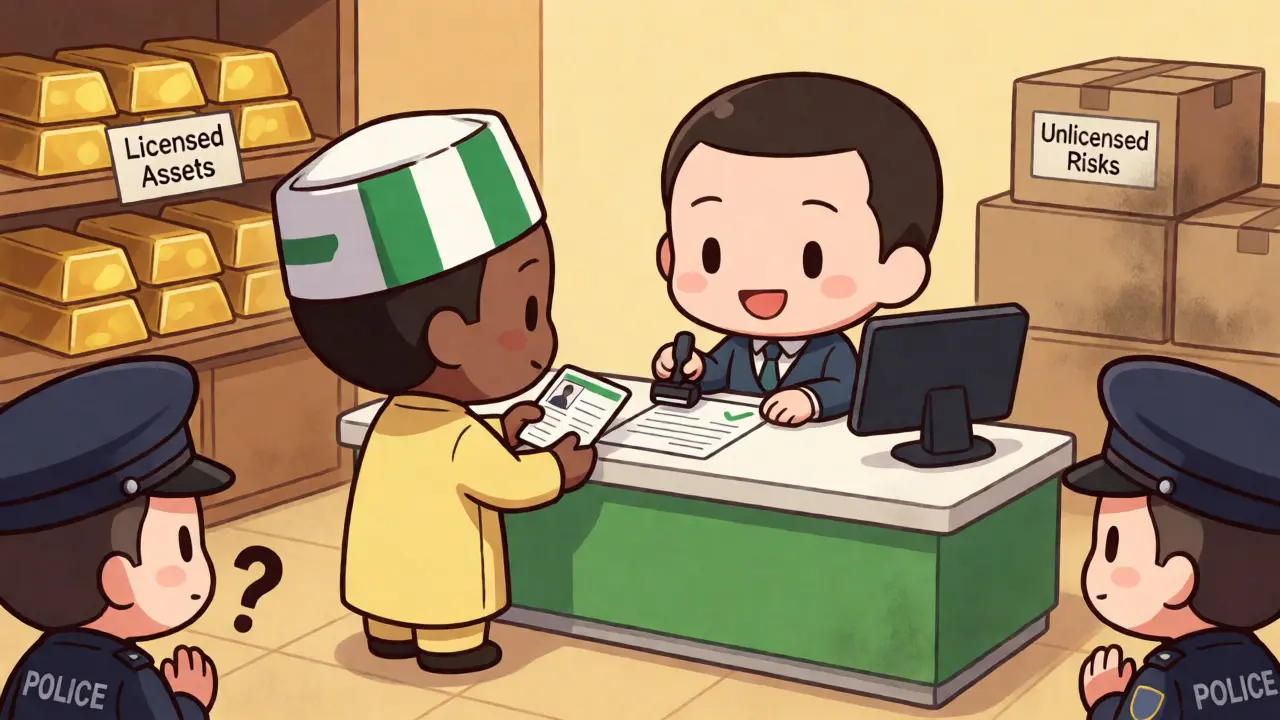
With the market maturing, choosing an exchange is less about finding the lowest fee and more about safety. The ISA 2025 created a two-tier system: Licensed and Unlicensed.
Licensed Platforms: These include Quidax, Busha, and newer entrants approved by the SEC. They offer bank integration, insurance on hot wallets, and customer support that understands local issues. They report suspicious transactions to the NFIU (Nigerian Financial Intelligence Unit).
Unlicensed/International Platforms: Giants like Binance and KuCoin operate in a gray zone. They serve Nigerian users but may not hold a full local license for all services. Users love their liquidity and variety, but they risk sudden delisting of Naira pairs if regulatory pressure mounts. Using these requires higher technical literacy and self-custody habits.
Is cryptocurrency banned in Nigeria in 2026?
No, cryptocurrency is not banned. The Central Bank of Nigeria lifted the banking ban in December 2023. As of 2026, crypto trading is legal and regulated under the Investments and Securities Act (ISA) 2025, provided exchanges are licensed by the SEC.
Can I use my Nigerian bank account for crypto trading?
Yes, banks are permitted to maintain relationships with licensed Virtual Asset Service Providers (VASPs). However, individual bank accounts may still face scrutiny for high-volume P2P transactions. It is advisable to communicate with your bank if you expect large inflows/outflows.
Do I need to pay taxes on crypto profits in Nigeria?
Tax frameworks are currently being finalized by the FIRS and SEC. While specific implementation timelines vary, eligible transactions are subject to taxation. Traders should keep detailed records of all buys, sells, and swaps to prepare for future tax obligations.
Why do police sometimes detain crypto traders?
Despite federal regulations, inconsistent enforcement occurs at the state level. Some law enforcement agents mistakenly view crypto holdings as evidence of money laundering or fraud. Keeping documentation of your transactions and ensuring you use licensed platforms can mitigate these risks.
Which crypto exchanges are licensed in Nigeria?
As of 2026, platforms like Quidax and Busha have received SEC licenses. New applicants are continuously undergoing vetting. Always check the SEC’s official website for the latest list of registered VASPs before depositing funds.
Next Steps for Nigerian Crypto Users
If you are active in the Nigerian crypto space, don’t wait for a problem to arise. Take proactive steps to align with the new regime.
- Verify Your Exchange: Check if your current platform appears on the SEC’s list of registered entities. If not, consider migrating your long-term holdings to a licensed provider or self-custody.
- Clean Up Your KYC: Ensure your profile data matches your national ID exactly. Mismatched names or outdated addresses trigger automated flags.
- Document Everything: Save screenshots of P2P chats and receipts. If you deal in large sums, consider consulting a tax professional familiar with digital assets.
- Stay Updated: Regulations are evolving rapidly. Follow official SEC announcements rather than relying solely on social media rumors.
The era of the wild west in Nigerian crypto is ending. We are entering a phase of structured growth. While the bureaucracy adds friction, it also brings legitimacy. For millions of Nigerians seeking financial freedom outside traditional banking limitations, this clarity is worth the extra paperwork.