
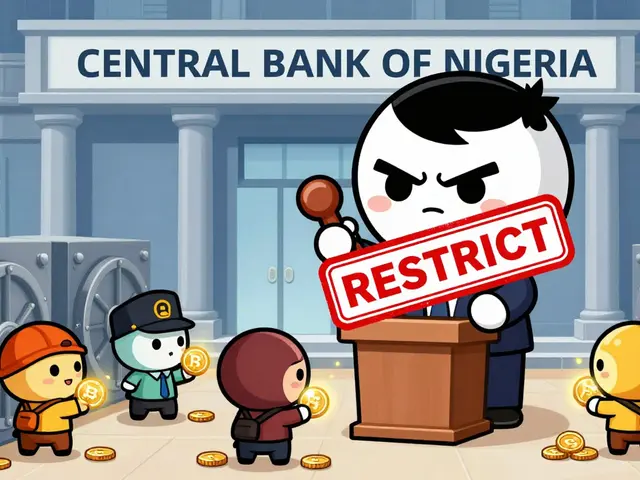
When your home country bans cryptocurrency trading, you don’t just lose access to your assets-you lose control over your financial future. Countries like China, Turkey, Vietnam, and Bangladesh have made it illegal to buy, sell, or even hold digital assets. For traders and investors, this isn’t just an inconvenience. It’s a crisis. And the only real solution? Legal migration.
This isn’t about running away. It’s about rebuilding. Thousands of crypto traders have already done it. They’ve moved to places where Bitcoin isn’t a crime, where blockchain companies get visas, and where your crypto gains aren’t taxed. But it’s not simple. You can’t just pack a bag and fly to Dubai. There are steps. Rules. Paperwork. And if you get it wrong, you could lose everything.
Why Some Countries Ban Crypto
It’s not random. Countries that ban cryptocurrency usually have one thing in common: unstable currencies or weak financial systems. When the Turkish lira lost 40% of its value in two years, people turned to Bitcoin to save their savings. That scared the government. So in April 2021, Turkey banned crypto as a payment method. Vietnam did the same after inflation spiked. Bangladesh criminalized crypto under anti-money laundering laws-punishable by prison. China went even further: mining was outlawed, exchanges shut down, and bank accounts were frozen for anyone linked to crypto.
These bans aren’t about security. They’re about control. Governments that can’t manage inflation or protect their currency see crypto as a threat. And they respond by making it illegal. But that doesn’t stop people from using it. It just forces them to hide it. And hiding it means risking fines, seizures, or worse.
The Legal Path: Where You Can Go
You don’t need to flee to a lawless island. There are countries that welcome crypto traders-with clear rules, legal protections, and tax advantages. Here are the top destinations:
- United Arab Emirates (Dubai & Abu Dhabi): The UAE offers a Golden Visa for crypto investors and entrepreneurs. No capital gains tax. No income tax. Banks like Emirates NBD now accept crypto-linked businesses. The Virtual Assets Regulatory Authority (VARA) is the world’s first dedicated crypto regulator-clear rules, not vague warnings.
- Malta: Known as "Blockchain Island," Malta treats crypto as a store of value. If you hold Bitcoin for over a year, you pay 0% capital gains tax. Day traders pay up to 35%, but smart structuring-like setting up a company-can drop that to under 5%. Residency by investment starts at €250,000 in property or government bonds.
- Australia: ASIC regulates crypto exchanges like any financial business. No tax on personal crypto sales if you’re not trading regularly. Business owners can apply for the Business Innovation and Investment Visa (subclass 188). Australia also offers regulatory sandboxes to test crypto products without full licensing.
- Bermuda: The Digital Asset Business Act (DABA) gives clear licenses to crypto firms. No capital gains tax. No corporate tax. The Bermuda Monetary Authority works directly with blockchain startups to get them operational in under six months.
- Panama: No capital gains tax on crypto. No reporting requirements for individuals. The country’s friendly investor program lets you get residency by investing $300,000 in real estate or a business. It’s not as polished as Dubai, but it’s fast and cheap.
- Malaysia: Technically, crypto isn’t taxed if you’re not trading frequently. The government doesn’t classify it as income or capital asset. But be careful: if you’re buying and selling weekly, they may treat it as business income. Still, it’s one of the few Southeast Asian countries with no outright ban.
Tax Is the Real Game-Changer
Most people think migration is about safety. But for traders, it’s about taxes. If you’re selling Bitcoin for a $200,000 profit in the U.S., you pay 20-37% in capital gains. In Germany, it’s 45%. In India, it’s 30% plus a 4% cess. But in Dubai? Zero. In Malta? Zero-if you hold long-term. In Panama? Zero. That’s not a small difference. That’s hundreds of thousands of dollars.
And it’s not just about selling. If you run a crypto business-staking, lending, mining-your tax bill can be 50% higher in restrictive countries. In the UAE, you can set up a free zone company for under $10,000 a year and pay 0% corporate tax. In Australia, you can deduct mining equipment costs. In Bermuda, you can structure your LLC to avoid all income tax.
The smartest traders don’t just move. They restructure. They shift their business registration. They open bank accounts before they move. They time asset transfers to avoid triggering tax events in their old country. And they never assume a tax-free status will last forever.

How to Actually Move: The 5-Step Process
Moving legally isn’t a weekend project. It takes 12 to 24 months. Here’s how successful traders do it:
- Choose your destination: Don’t pick based on weather or Instagram. Pick based on your business model. Are you a day trader? Australia or Malta. A long-term holder? UAE or Panama. Running a DeFi startup? Bermuda or Dubai.
- Get legal advice: Hire an immigration lawyer who specializes in crypto. Not just any lawyer. One who knows VARA, ASIC, or DABA regulations. They’ll tell you which visa fits your activity. Most people apply for investor visas or entrepreneur visas-not tourist visas.
- Prepare your assets: Transfer crypto slowly. Document everything. Use non-custodial wallets. Never move large sums all at once. Many countries audit incoming crypto. If you can’t prove where it came from, you’ll be flagged for money laundering.
- Exit your home country properly: If you’re leaving China or Bangladesh, you must clear all tax obligations. Some countries still tax you for years after you leave. You need a tax residency certificate from your new country before you file your final return.
- Set up your new life: Open a bank account. Get a local SIM card. Register your business. Find a local accountant who understands crypto. Don’t wait until you arrive. Start the process online before you leave.
Most failures happen at step three. People move, then try to transfer $5 million in Bitcoin overnight. That’s how you get flagged. The smart ones move $50,000 at a time over 18 months. They use decentralized exchanges. They avoid centralized platforms. They keep receipts.
Costs and Risks
This isn’t cheap. You’ll spend between $50,000 and $500,000. Why so much?
- Legal fees: $10,000-$50,000 for immigration lawyers and tax advisors.
- Investment requirements: UAE Golden Visa needs $500,000 in property. Malta needs €250,000 in bonds. Panama needs $300,000 in real estate.
- Living expenses: Dubai isn’t cheap. You’ll need $3,000-$8,000/month to live comfortably.
- Hidden costs: Bank account denials, asset freezes, delayed visas, tax audits in your old country.
And the risks? They’re real. A country can change its mind. The Central African Republic made Bitcoin legal tender in 2022-then reversed it in 2023. Ukraine was a crypto haven until 2024, when new rules limited foreign exchanges. You need a backup plan. Maybe two.

What No One Tells You
Most guides focus on the destination. But the real challenge is leaving. If you’re in a restricted country, you’ve likely used unregulated exchanges. You’ve used P2P platforms. You’ve held crypto in wallets that aren’t yours. Now, you have to prove you didn’t launder money.
Bankers in Dubai won’t open an account for you if you can’t show a 12-month transaction history. Accountants in Australia won’t file your taxes if you can’t prove your Bitcoin was bought before you moved. You need records. Wallet addresses. Transaction IDs. Even screenshots of old trades.
And don’t assume your old country will let you go quietly. Bangladesh and Vietnam have started tracking crypto wallet addresses linked to citizens abroad. If you move and keep sending funds back home, you’ll be investigated.
Final Advice
If you’re thinking about this, start now. Don’t wait until your country bans crypto again. Don’t wait until your bank freezes your account. Start researching visas, talk to lawyers, and begin documenting your crypto history. The window isn’t closing-but it’s narrowing.
Successful relocation isn’t about escaping. It’s about building something better. A life where your money isn’t controlled by a government that doesn’t understand it. Where your trades are legal. Your taxes are fair. And your future isn’t tied to a currency that’s falling apart.
Can I move to a crypto-friendly country without selling my crypto?
Yes, you can. Countries like the UAE, Malta, and Panama don’t tax crypto holdings. But you must prove your crypto was acquired legally and before you moved. Keep wallet addresses, transaction histories, and exchange records. Avoid transferring large amounts right before relocating-this raises red flags.
What if I’m still earning income in my home country after moving?
You may still owe taxes. Countries like the U.S. and Germany tax citizens worldwide. Even if you move, if you’re still a tax resident, you must report crypto gains. You need to formally change your tax residency-get a certificate from your new country and file an exit declaration in your old one. Otherwise, you risk double taxation or penalties.
Is it safe to use crypto exchanges in my new country?
Only use licensed exchanges. In the UAE, use Dubai-based platforms like Bybit or BitOasis, which are VARA-regulated. In Australia, use CoinSpot or Independent Reserve, which are ASIC-compliant. Avoid unregulated exchanges-even if they offer better rates. They can be shut down overnight, and your funds may disappear.
How long does the entire migration process take?
Typically 12 to 24 months. Visa applications alone can take 6-12 months. Setting up a business, opening bank accounts, and transferring assets adds more time. Rushing it increases the risk of rejection, asset seizure, or tax penalties. Plan for at least a year of preparation before you move.
Can I move my family with me?
Yes. Most crypto-friendly countries allow dependents-spouses and children-to apply for residency with the main applicant. UAE’s Golden Visa includes family members. Malta’s program allows spouses and children under 26. Panama’s investor visa includes immediate family. You’ll need to prove financial support, but you don’t need to invest more than the base requirement.
What happens if the destination country changes its crypto laws after I move?
It’s a risk. That’s why experts recommend diversifying. Don’t put all your assets in one country. Consider a second residency option-like applying for Portuguese citizenship while living in Dubai. Keep some assets in stable jurisdictions like Switzerland or Singapore. Stay informed. Subscribe to regulatory updates from VARA, ASIC, or the BMA. Change is inevitable. Preparation is your only defense.


Tammy Stevens
March 23, 2026 AT 17:57Justin Credible
March 25, 2026 AT 09:44Dheeraj Singh
March 26, 2026 AT 13:11Alicia Speas
March 27, 2026 AT 10:44Mike Yobra
March 28, 2026 AT 19:14Mansoor ahamed
March 30, 2026 AT 12:11Nicolette Lutzi
March 31, 2026 AT 15:07Jeannie LaCroix
April 1, 2026 AT 23:17Sam Harajly
April 3, 2026 AT 17:26Pradip Solanki
April 5, 2026 AT 09:24Brad Zenner
April 6, 2026 AT 08:27Tony Phillips
April 7, 2026 AT 12:17Kevion Daley
April 9, 2026 AT 10:39