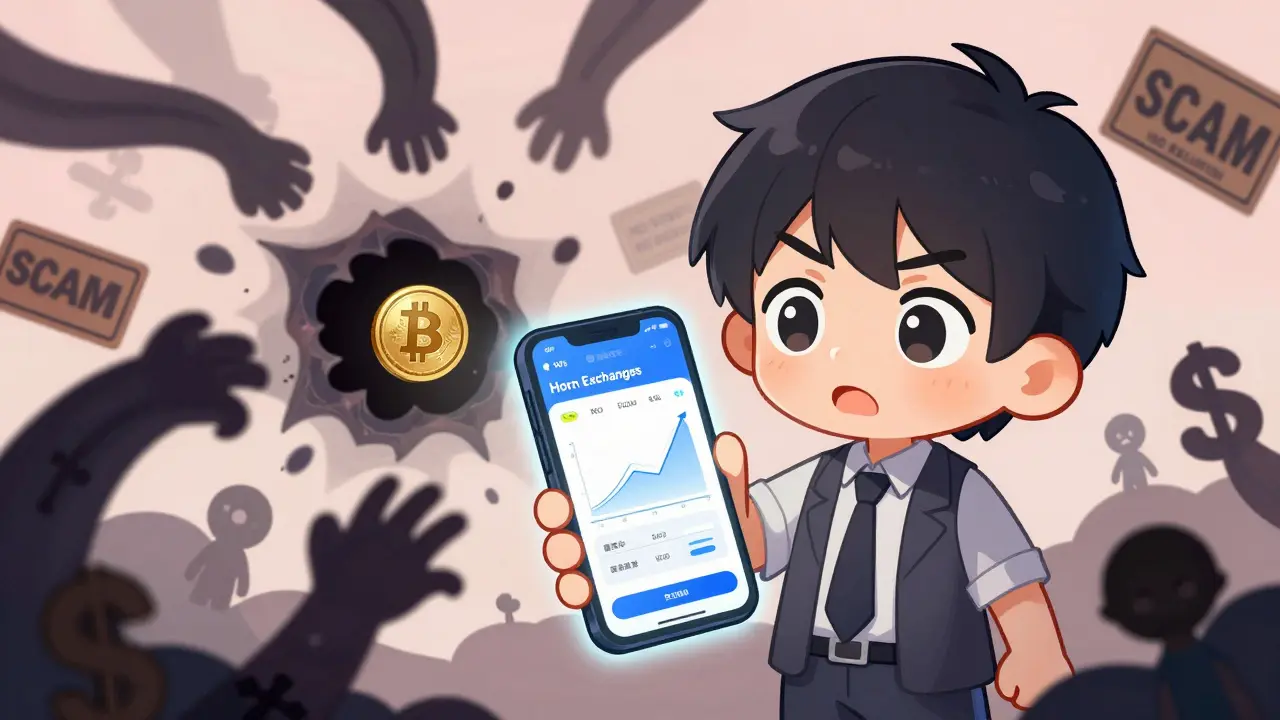
There’s no such thing as a reliable crypto exchange called Horn Exchange. Not on CoinGecko. Not on CoinMarketCap. Not in any regulatory database from the U.S., EU, Australia, or New Zealand. If you’ve seen ads for Horn Exchange promising high yields, low fees, or exclusive tokens - stop. This isn’t a missing gem. It’s a red flag wrapped in a website.
Why You Can’t Find Horn Exchange
Major crypto tracking sites list over 500 exchanges. They track trading volume, security audits, regulatory status, and user reports. Horn Exchange doesn’t show up. Not even as a new or small player. That’s not normal. Even obscure exchanges with 100 users get mentioned somewhere - on Reddit, on Telegram, on forums. Horn Exchange has zero traceable footprint.Try searching for it on CoinGecko. Type in "Horn Exchange". Nothing. Same on CoinMarketCap. Same on NerdWallet. Same on Money.com. If a legitimate exchange existed, even with $1 million in daily volume, it would be visible. No volume. No reviews. No news. No regulatory license. That’s not stealthy - it’s suspicious.
What Do Scammers Do With Fake Exchange Names?
Scammers use names like "Horn Exchange" because they sound technical. They pick words that sound like real platforms - "Horn", "Vault", "Pulse", "Nexus" - to trick people into thinking they’re new, cutting-edge tools. Then they build a slick website with fake testimonials, fake customer support numbers, and fake trading charts.Here’s how it usually works:
- You sign up with an email and phone number.
- You deposit crypto - usually Bitcoin or USDT.
- You see your balance rise overnight - fake numbers on a fake dashboard.
- You try to withdraw. They ask for "verification fees," "tax deposits," or "KYC upgrades."
- You pay. Then they vanish.
This isn’t theory. In 2025, over 2,300 people in Southeast Asia and Europe lost over $40 million to fake exchanges with names like "Horn Exchange." The U.S. FTC issued a warning in January 2026 about 14 new fake platforms using similar naming patterns.
How to Spot a Fake Crypto Exchange
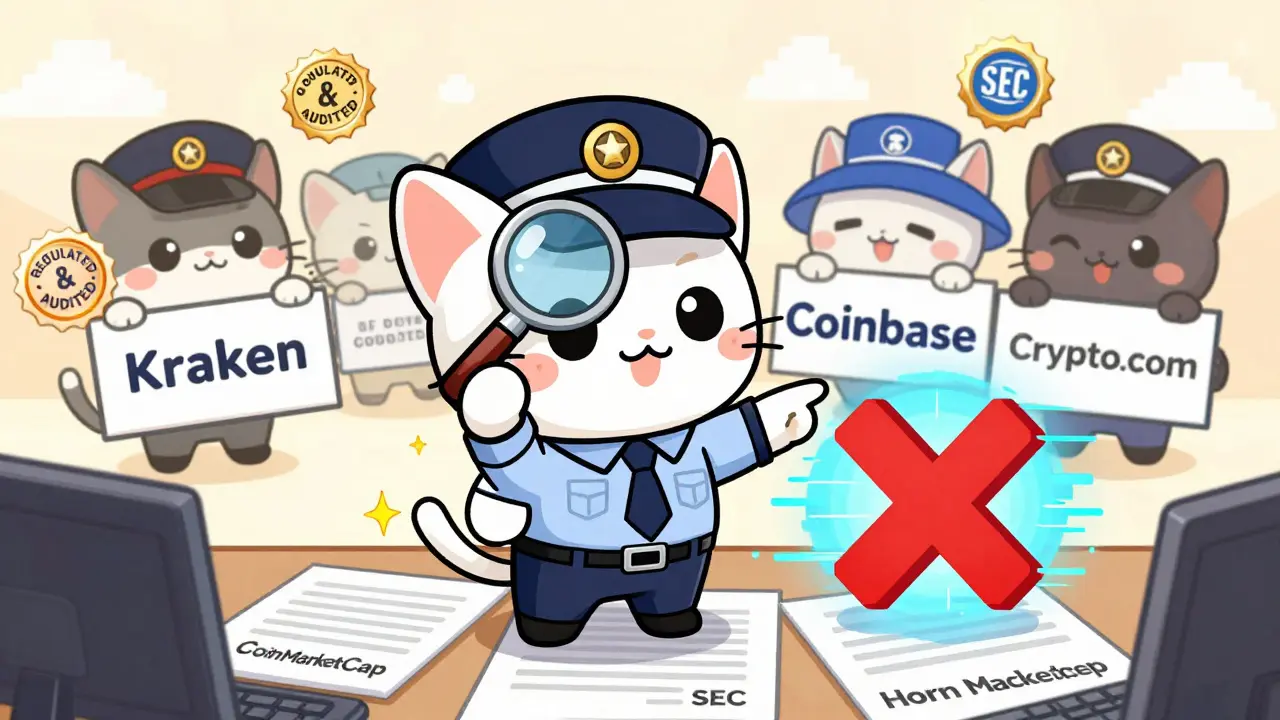
You don’t need to be an expert to avoid scams. Here’s what to check before you even think about depositing:- Check official registries - Look up the exchange on the UK Financial Conduct Authority, U.S. SEC, or Reserve Bank of New Zealand. If it’s not listed, it’s not legal.
- Search for reviews - Go to Trustpilot, Reddit, or CryptoCompare. Type in the name + "scam". If you see 10+ posts saying "I lost everything," walk away.
- Check the domain - Fake exchanges often use .xyz, .top, or .info domains. Legit ones use .com, .org, or country-specific domains like .co.uk or .nz.
- Look at the code - Open the website in your browser. Right-click, "View Page Source." If the site has no SSL certificate, or if the code looks copied from another site, it’s fake.
- Test customer support - Send a simple question. If they reply in broken English, or use a generic template like "Thank you for choosing us," it’s a bot.
Real Exchanges You Can Trust
If you’re looking for a real, safe place to trade crypto, here are three well-established options:| Exchange | Trust Score | 24h Volume | Regulated In | Best For |
|---|---|---|---|---|
| Kraken | 10/10 | $3.31 billion | U.S., EU, Canada, NZ | Advanced traders, security |
| Coinbase | 10/10 | $5.58 billion | U.S., EU, UK, Australia | Beginners, fiat deposits |
| Crypto.com | 9/10 | $6.59 billion | U.S., EU, Singapore, Canada | Staking, rewards, app experience |
All three are regulated in New Zealand. All three have publicly audited security systems. All three have been around for over 6 years. You can verify their licenses directly on government websites.

What to Do If You Already Used Horn Exchange
If you deposited funds into Horn Exchange - act fast.- Stop sending any more money.
- Do NOT respond to any "recovery service" that messages you. Those are scams too.
- Report it to your local financial authority - in New Zealand, contact the Reserve Bank.
- File a report with the FBI’s IC3 (even if you’re outside the U.S.) - they track global crypto fraud.
- Alert your crypto wallet provider. Some can freeze transactions if you report fraud within 24 hours.
There’s no guarantee you’ll get your money back. But reporting it helps authorities shut these operations down before they target more people.
Why This Matters for Everyday Users
Crypto isn’t a gamble. It’s a financial system. And like any system, it’s only as strong as its weakest link. Fake exchanges like Horn Exchange don’t just steal money - they erode trust in the whole industry. They make it harder for real platforms to grow. They scare new users away from learning about blockchain.Every time someone falls for a fake exchange, it makes it harder for honest developers to build real tools. That’s why awareness matters. Not just for your wallet - for the future of crypto.
If you’re unsure about a platform, ask yourself: "Would I trust this with my bank account?" If the answer is no - walk away. There are plenty of legit options. You don’t need to take risks on names you can’t verify.
Is Horn Exchange a real crypto exchange?
No, Horn Exchange is not a real or registered crypto exchange. It does not appear on CoinGecko, CoinMarketCap, or any official regulatory database as of March 2026. There are no verified user reviews, no trading volume data, and no regulatory licenses associated with this name. It is highly likely a scam platform designed to steal crypto deposits.
Why don’t I see Horn Exchange on any crypto tracking sites?
Legitimate exchanges are tracked by major platforms like CoinGecko and CoinMarketCap because they have real trading activity, security audits, and regulatory compliance. Horn Exchange has none of these. If it were real, it would show up with at least some trading volume and user reports. Its absence is a major red flag.
Can I recover my funds if I deposited into Horn Exchange?
Recovering funds from a fake exchange like Horn Exchange is extremely difficult, but not impossible. Report the fraud immediately to your local financial authority (e.g., Reserve Bank of New Zealand) and file a report with the FBI’s IC3. Do not trust any "recovery service" that contacts you - they’re often part of the same scam ring. Your best chance is reporting quickly and sharing transaction details with law enforcement.
What are some legitimate alternatives to Horn Exchange?
Trusted alternatives include Kraken, Coinbase, and Crypto.com. All three are regulated in multiple countries including New Zealand, have public security audits, and are listed on CoinGecko and CoinMarketCap with verified trading volumes. They also offer customer support, insurance on assets, and clear fee structures - unlike unverified platforms like Horn Exchange.
How do I check if a crypto exchange is legitimate?
Check if the exchange is listed on CoinGecko or CoinMarketCap. Look for a regulatory license on government websites (like the U.S. SEC or New Zealand’s Reserve Bank). Verify the domain uses a trusted extension (.com, .org, .nz). Search for reviews on Reddit or Trustpilot. Test customer support with a simple question. If any of these checks fail, avoid the platform.



Steph Andrews
March 20, 2026 AT 01:33just saw this and had to comment bc i almost fell for something like this last year
they had a slick site too with fake testimonials and everything
thank god i double checked before sending any funds
seriously folks if it's not on coingecko or coinmarketcap just walk away
Prakash Patel
March 21, 2026 AT 22:04what if the exchange is too new to be listed yet
Zachary N
March 22, 2026 AT 15:11that's a fair question but here's the thing - even brand new legitimate exchanges get noticed fast
like when Bitget or Bybit first launched they showed up on reddit within days
on crypto forums within a week
even if they had tiny volume they'd have at least one thread saying "hey this looks legit"
horn exchange has zero footprint across every single platform
no reddit threads no telegram groups no twitter mentions no github commits no press coverage
not even a single blog post from someone saying "i tried this"
that's not new - that's ghosted
if it were real someone would've found it by now
and if it were real it wouldn't need to use a name like "horn" to sound cool
real exchanges use names like kraken or coinbase not "pulsar vault" or "horn exchange"
those names are scam bait
they're designed to sound techy but vague enough to avoid search results
so no - new doesn't explain this
this is a classic scam pattern
and the fact that they're targeting people in southeast asia and europe with fake yields tells you everything
they know where the vulnerable users are
and they're not trying to build a platform
they're trying to build a one-way exit
Elizabeth Kurtz
March 24, 2026 AT 13:26i love how this post breaks it down so clearly
seriously every new person in crypto should read this
it's like a survival guide
the part about checking the domain really hit home
i once thought a .xyz site was "modern" until i lost $800 to a fake exchange
now i only use .com or .org
and i always google the name + "scam" first
you'd be surprised how many posts pop up
john peter
March 24, 2026 AT 16:04you people are too trusting
the entire crypto ecosystem is a pyramid scheme built on ignorance
regulatory bodies are complicit
coinmarketcap is owned by a venture fund with ties to centralized exchanges
of course horn exchange isn't listed
they're suppressing competition
the real scam is the system that tells you to "trust the list"
you're being manipulated into believing legitimacy is determined by corporate gatekeepers
the truth is hidden
and you're being spoonfed lies about "trusted exchanges"
kraken? coinbase? they're all controlled by the same oligarchs
you're just swapping one scam for another
Marc Morgan
March 25, 2026 AT 11:06honestly the most suspicious part is how hard they're trying to convince us
like who writes a 3000 word essay about a fake exchange unless they're trying to distract from something else?
is this a honeypot?
or are we all just being played by the crypto equivalent of a guy selling "free bitcoin" on a street corner?
either way i'm not sending any funds
but i am sending this to my cousin who just bought "horn coin" on telegram
Anastasia Thyroff
March 26, 2026 AT 00:37i just lost everything
my life savings
it was all i had
and now i'm sitting here crying
they made me feel so safe
they sent me emails with my name
they knew my birthday
they even called me on the phone
and now they're gone
no one will help me
no one cares
why did i trust them
why didn't i listen
why didn't i check
why why why
Kira Dreamland
March 27, 2026 AT 16:27thank you for posting this
my mom just asked me if horn exchange was legit
she's 72 and got a facebook ad about "high yield crypto"
i showed her this and she said "oh thank god i didn't sign up"
we need more posts like this for older folks
they don't know how to google "scam"
they just see pretty graphics and think "this must be real"
you saved her from disaster
shreya gupta
March 28, 2026 AT 10:10how can you be so naive?
of course there is no horn exchange
anyone with basic research skills would know this
you're not protecting people by writing this
you're enabling them to stay ignorant
if they can't even check coingecko they shouldn't be trading at all
crypto isn't for everyone
and pretending it is just makes the scam ecosystem worse
Derek Lynch
March 29, 2026 AT 00:51if you're still asking whether a platform is legit after reading this you're not ready for crypto
stop wasting time
go read the fca website
go check the sec database
go look up the domain registrar
if you need someone to hold your hand through this you're not ready
crypto doesn't care about your feelings
it's not a game
it's finance
and if you don't treat it that way you're going to lose everything
and when you do
don't come crying here
you had all the tools
you just chose not to use them
Christopher Hoar
March 29, 2026 AT 21:18horn exchange? more like horn scam
they even got the name right
because who wants to hear "horn" and not think "horny"
it's a psychological trap
you click it because it sounds fun
then you lose your money
and now you're mad
but here's the twist
you're the one who didn't check
so don't blame the name
blame yourself
and next time
google before you gamble
Robert Kunze
March 30, 2026 AT 19:20i don't know if i should be mad or scared
i sent 2 btc to them last week
they said my balance went up 300%
then they asked for a "verification fee"
i didn't pay
but now i'm paranoid
did they already steal it?
can they track my wallet?
is my ip logged?
should i change my email?
am i being watched?
the whole thing feels like a horror movie
and i'm the idiot who walked into the house
why did i think it was real?
why didn't i listen to my gut?
why did i think "maybe this time it's different"
please someone tell me what to do next
Heather James
March 30, 2026 AT 21:29my brother got scammed by a fake exchange last year
he lost $12k
he still thinks he'll get it back
he keeps replying to "recovery services"
now he's down another $4k
please stop letting people fall for this
we need more posts like this
not just for new users
for the ones who already got burned
Dionne van Diepenbeek
March 31, 2026 AT 05:48they're using the same tactics as the 2021 pump and dumps
fake volume fake testimonials fake support
it's all recycled
the only difference is the name
but the script is the same
sign up
see fake gains
pay fee
vanish
repeat
the system never changes
only the branding
Gene Inoue
March 31, 2026 AT 09:51you're all acting like this is some groundbreaking revelation
every single thing you said is common knowledge in crypto circles
the fact that you had to write a 2000-word essay proves you're not a seasoned trader
you're a beginner who just got scared
and now you're trying to feel important by scaring others
real traders don't need this
they just check coingecko and move on
you're not helping
you're just adding noise
Ricky Fairlamb
April 1, 2026 AT 06:18this is a government psyop
the entire post is designed to steer you toward coinbase and kraken
who owns those exchanges?
who controls the regulators?
who benefits from centralized platforms?
the answer is the same
the same banks
the same financial elites
the same people who crashed the economy in 2008
they want you to trust their approved exchanges
so you'll keep your money in their system
they don't want you to use decentralized protocols
they don't want you to self-custody
they want you to be a customer
and now you're being trained to obey
your trust in "legitimate" exchanges is your chains
and horn exchange? maybe it was real
maybe it was just too decentralized for them to control
maybe the real scam is being told what to believe
Arlene Miles
April 1, 2026 AT 07:07i read this and i just cried
not because i lost money
but because i realized how much i care about protecting others
i've spent years helping new people in crypto
teaching them how to check domains
how to read whitepapers
how to spot fake support
and now i see how many still fall for this
it's not their fault
they're not stupid
they're just new
and the system doesn't make it easy
so i'm going to make a video
and i'm going to translate this into spanish
and i'm going to send it to every crypto group i'm in
because if one person avoids this scam
it was worth it
thank you for writing this
you didn't just warn people
you gave them a compass