
It’s 2025, and if you’re in Russia, buying Bitcoin on a local exchange is impossible. Withdrawing cash after a crypto trade? Risky. Using P2P apps like LocalBitcoins? Your bank account could freeze overnight. The Russian government isn’t just discouraging crypto-it’s actively shutting it down for regular people. But here’s the twist: while you can’t legally buy or sell crypto domestically, Russian companies are using it to move billions across borders. So how do regular citizens navigate this mess? And more importantly, how do you avoid getting caught?
What’s Actually Banned in Russia Right Now
The Central Bank of Russia doesn’t just dislike crypto-it’s made it legally dangerous. Under the 2020 Digital Financial Assets Law, retail crypto trading is effectively outlawed. That means no buying Bitcoin from a Russian exchange. No using Ethereum to pay for services. No sending USDT to a friend via Telegram. If you try, your bank will flag it. And if they catch you, you’re looking at a fine of up to 200,000 rubles (about $2,200 USD). It’s not just about fines. Banks are required to monitor ATM withdrawals for signs of crypto-related activity. Suspicious triggers include: cash withdrawals at odd hours, using QR codes instead of cards, sudden changes in phone usage before a withdrawal, or pulling out cash right after getting a loan. If any of these happen, your daily withdrawal limit drops to 50,000 rubles for 48 hours. That’s not a coincidence-it’s a trap. Even mining, once a gray-area activity, is now tightly controlled. You need a license. Unlicensed miners face fines and equipment seizures. The government isn’t trying to stop crypto entirely-it’s trying to control it. And that control is only given to a handful of state-approved players.The Only Legal Way to Use Crypto in Russia
There’s one exception: the Experimental Legal Regime (ELR). This isn’t for you. It’s for big companies that need to pay foreign suppliers without using SWIFT. Under ELR, a select group of firms can use Bitcoin, Ethereum, and other cryptocurrencies to settle international trade deals. But you need to be a "highly qualified investor"-a term that means you have millions in assets and legal counsel on retainer. This is where Russia’s real crypto strategy kicks in. While ordinary citizens are locked out, the state is quietly building a parallel system. The ruble-backed stablecoin A7A5 hit $41.2 billion in volume in July 2025 alone. It’s not decentralized. It’s not anonymous. It’s a digital ruble with a different name, used to bypass Western sanctions and move money out of the country. The government isn’t against crypto-it just wants to own it.How People Are Getting Around the Ban (And Why It’s Dangerous)
Most Russians who use crypto today rely on foreign platforms: Binance, Bybit, KuCoin. They use VPNs to access them. They deposit rubles via P2P traders. They withdraw to crypto wallets and then convert to cash through informal networks. It’s not illegal to hold crypto. It’s illegal to trade it inside Russia’s financial system. Here’s how it works in practice: someone in Moscow buys 0.5 BTC from a trader in Kazakhstan using a Telegram bot. The trader sends the BTC to their wallet. The buyer then uses a local cash-out point-a small shop or a friend’s apartment-to get rubles in hand. The shopkeeper gets paid in cash. The buyer gets crypto. No bank involved. No paper trail. But here’s the problem: those cash-out points are being targeted. In March 2025, the U.S. Treasury sanctioned Garantex, one of Russia’s largest crypto exchanges, and froze $26 million in assets. Its successor, Grinex, is now under the same scrutiny. The U.S. Secret Service, working with German and Finnish police, seized Garantex’s servers. Executives were arrested. Rewards of up to $5 million are offered for information leading to their capture. If you’re using these platforms, you’re not just risking your money-you’re risking your freedom. Law enforcement doesn’t need to prove you traded crypto. They just need to prove you were near a known P2P hub, used a banned app, or had a wallet linked to a sanctioned exchange.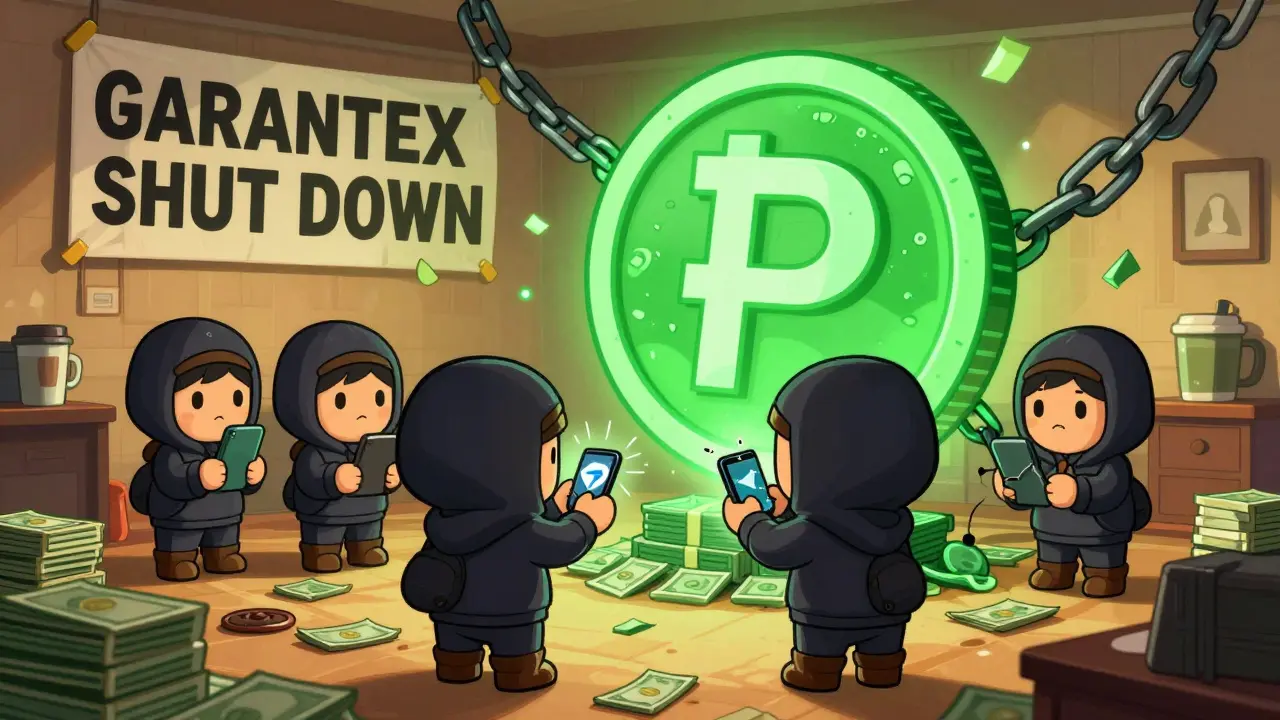
The Digital Ruble Is Coming-And It Will Make Things Worse
The Russian government is building a digital version of the ruble. Launching in 2026, the digital ruble will be a central bank digital currency (CBDC). Unlike Bitcoin, it’s not decentralized. It’s not anonymous. Every transaction will be tracked, timestamped, and monitored by the Central Bank. Think of it like a smartphone app that replaces cash. You can’t spend it outside Russia. You can’t send it to unapproved wallets. You can’t use it to buy crypto. And if the government decides you’re a risk-say, you bought crypto last year-they can freeze your digital ruble balance without a court order. This isn’t innovation. It’s control. The digital ruble is the final step in eliminating crypto as an alternative. Once it’s live, using any other digital currency will be treated like a crime. The government wants every ruble you spend to be traceable. And they want to make sure no one escapes their system.What You Should Do If You’re in Russia
If you’re a regular Russian citizen, the truth is simple: there’s no safe way to use crypto legally right now. The only legal path is for institutions. For individuals, it’s all gray zone. Here’s what you can do to reduce risk:- Don’t use Russian-based platforms. Even if they say they’re "legal," they’re either lying or being monitored.
- Avoid P2P cash trades. The risk of being caught is too high. Banks are trained to spot these patterns.
- Use a reputable foreign exchange. Binance and Bybit still work for Russians, but only if you don’t link your Russian bank account.
- Use non-cash deposits. Deposit via crypto-to-fiat gateways that accept international wire transfers or e-wallets like PayPal (if you can access them).
- Never store large amounts on exchanges. Withdraw to a hardware wallet. Keep your private keys offline.
- Don’t talk about it. Social media posts, Telegram groups, forum threads-these are all monitored. Silence is your best defense.




Josh Seeto
December 30, 2025 AT 16:40So let me get this straight - the Russian government bans crypto for citizens but lets corporations use it to bypass sanctions? Classic. They’re not stopping crypto, they’re just making sure only the elite get to play. Meanwhile, regular folks risk jail for using a VPN. The real crime is the irony.
And don’t even get me started on the ‘digital ruble.’ It’s not currency - it’s a surveillance tool with a UI. You think you’re getting innovation? Nah. You’re getting a digital leash.
Also, ‘don’t talk about it’? Yeah, right. The second you mention Bitcoin in a Telegram group, your neighbor’s cousin’s ex-wife’s cousin who works at FSB is already logging your IP. Good luck staying under the radar.
Fun fact: the same people who banned crypto are probably holding BTC in offshore wallets. Hypocrisy isn’t a bug - it’s the business model.
surendra meena
December 31, 2025 AT 19:11OMG I CAN’T BELIEVE THIS IS HAPPENING!!!
THEY’RE STEALING OUR FREEDOM WITH ‘DIGITAL RUBLE’ AND CALLING IT ‘INNOVATION’???
WHY DO THEY HATE US SO MUCH??
WHY CAN’T WE JUST BUY BITCOIN LIKE NORMAL PEOPLE??
THEY’RE ALL CORRUPT!!
THEY’RE ALL LYING!!
THEY’RE ALL GOING TO HELL!!
AND WHY IS NO ONE DOING ANYTHING??
WE NEED A REVOLUTION!!
JUST BUY BTC AND FLEE THE COUNTRY!!
THEY’LL NEVER STOP UNTIL WE DO!!
WHY AREN’T YOU DOING SOMETHING RIGHT NOW??
STOP READING AND START MOVING!!
BITCOIN OR BUST!!
Kevin Gilchrist
January 2, 2026 AT 12:05Y’all are acting like this is some new dystopia. Nah. This is capitalism with a side of authoritarianism. The state doesn’t hate crypto - it wants to monetize it. Same as the Fed with dollar dominance. They just don’t want you owning the keys. They want you to *trust* their version.
And let’s be real - if you’re using P2P cashouts in Russia, you’re already in the danger zone. You’re not a crypto pioneer. You’re a walking ATM for organized crime. And the FSB knows it.
But hey - at least you’re not using the digital ruble. That thing’s gonna track your coffee purchases, your grocery habits, and whether you bought a Bible or a vape. You think you’re free? You’re a data point with a salary.
And if you think the U.S. is any better? LOL. They just use subpoenas instead of prison cells. Same game. Different flavor of oppression.
So yeah - use Binance. Use a VPN. Keep your keys cold. But don’t pretend you’re fighting tyranny. You’re just dodging bullets in a game you didn’t design.
And if you’re still holding cash in a Russian bank? Honey… you’re already owned.
NIKHIL CHHOKAR
January 3, 2026 AT 03:18It’s important to understand that the Russian government isn’t uniquely evil here. Every major economy is moving toward centralized digital currencies. The EU is testing the digital euro. China has the e-CNY. The U.S. is quietly laying groundwork for a FedCBDC. Russia’s just ahead of the curve because it’s under sanctions.
The real issue isn’t the ban on crypto - it’s the lack of financial autonomy for ordinary people. When your government controls your money, you lose the ability to resist. That’s not about crypto. That’s about power.
So yes, using foreign exchanges is risky. But so is relying on a banking system that can freeze your account because you withdrew cash after a loan. The system is rigged either way.
Maybe the solution isn’t to fight the state, but to build alternatives outside of it. Decentralized finance isn’t just for tech bros - it’s for anyone who wants to keep their money from being weaponized against them.
And if you think the digital ruble is the future? You’re right. But you don’t have to use it. You just have to be smart enough to avoid it.
Mike Pontillo
January 3, 2026 AT 23:31So you’re telling me the government is fine with billionaires moving billions in crypto but you get fined for buying a few bucks of BTC? That’s not a policy. That’s a joke.
And the digital ruble? Please. It’s just the same old surveillance state with a shiny app.
People think they’re protecting the economy. They’re just protecting their own power.
And you wonder why everyone’s leaving the country.
Joydeep Malati Das
January 4, 2026 AT 22:09The situation in Russia reflects a broader global trend: the tension between financial sovereignty and state control. While the legal framework presented here is restrictive, it is not unprecedented. Many nations regulate digital assets through licensing, taxation, and monitoring.
It is worth noting that the use of foreign platforms, while technically circumventing domestic restrictions, introduces jurisdictional and compliance risks. The sanctions against Garantex and Grinex illustrate the international dimension of this issue.
For individuals, the prudent course is to prioritize legal compliance, even when the system appears unjust. Financial resilience is not achieved through evasion, but through diversified, transparent, and lawful asset management.
The digital ruble, despite its perceived authoritarian implications, may offer greater stability than unregulated crypto markets. One must weigh personal liberty against systemic risk.
Elisabeth Rigo Andrews
January 5, 2026 AT 23:47Let’s talk about the real elephant in the room: the digital ruble isn’t about control - it’s about *replacing* the ruble’s legitimacy. The Central Bank knows the ruble is collapsing in trust. So they’re replacing it with a programmable, surveillable, state-backed token. Crypto isn’t the threat - the *loss of faith in fiat* is.
And guess what? They’re not even hiding it. The A7A5 stablecoin? That’s not a blockchain. That’s a ledger with a fancy name. It’s not decentralized. It’s not transparent. It’s just a digital version of the same broken system.
Meanwhile, you’re out here using VPNs like it’s 2015, thinking you’re some kind of rebel. Nah. You’re just a node in a network they’re already mapping. Every IP, every wallet, every cash-out point - they’ve got it.
And when the digital ruble launches? You’ll be forced to convert. Or your account gets frozen. Or your kid’s school enrollment gets revoked. Or your wife’s job disappears.
This isn’t about crypto. It’s about total financial capture. And we’re all just watching the slow-motion takeover.
Adam Hull
January 7, 2026 AT 07:11The entire premise of this article is fundamentally flawed. It assumes that crypto’s value lies in its ‘freedom’ - a romanticized, libertarian fantasy that ignores the reality of market dynamics, regulatory inevitability, and human behavior.
There is no such thing as ‘crypto freedom.’ There is only arbitrage between regulatory regimes - and Russia’s crackdown is merely a correction of a market inefficiency. The state is not ‘banning’ crypto; it is reclaiming monetary sovereignty from shadow intermediaries.
Those who use P2P cashouts are not ‘resisting’ - they are participating in a black market that undermines national economic stability. The fact that Binance still operates in Russia is not a victory - it is a failure of international compliance.
And the digital ruble? It is not oppression. It is evolution. Central bank digital currencies are the logical endpoint of monetary policy in the 21st century. To oppose them is to oppose progress itself.
Anyone who believes they can ‘outsmart’ the state with a hardware wallet is not a pioneer. They are a liability. And their ‘freedom’ is just another form of delusion.
Mandy McDonald Hodge
January 9, 2026 AT 06:18okay i just read this and i’m crying a little 😭
like… i get it. i really do. you just want to buy btc and not get your bank account nuked
but also… don’t feel alone. i live in the us and my bank flagged me for buying $200 of eth once. they called me. i had to explain i wasn’t laundering money 😅
so yeah. the system is rigged. everywhere.
but if you’re using a hardware wallet and not talking about it on telegram? you’re doing better than most.
keep your keys safe. keep your head down. and if you can, help someone else do the same.
we’re all just trying to survive capitalism, right? 💙
ps. if you’re in russia and reading this - you’re braver than you know.
Bruce Morrison
January 10, 2026 AT 04:23Use foreign exchanges. Keep keys offline. Don’t link your bank. Don’t talk about it.
That’s it.
No fluff. No drama. Just the basics.
Most people overcomplicate this. The rules are simple. The risks are real. But the path is clear.
Stay quiet. Stay smart. Stay safe.
Andrew Prince
January 10, 2026 AT 20:53It is my solemn duty to correct the profound misconceptions embedded within this post. The notion that crypto represents a form of ‘freedom’ is not merely erroneous - it is dangerously ideologically naive. Crypto, as a speculative asset class, has no intrinsic value. It is a tulip bulb wrapped in blockchain hype.
The Russian state’s actions are not oppressive - they are fiscally responsible. The digital ruble is not surveillance - it is transparency. The A7A5 stablecoin is not a tool of oligarchs - it is a mechanism of macroeconomic stabilization under unprecedented sanctions pressure.
Those who utilize foreign exchanges are not ‘resisting’ - they are engaging in illicit capital flight, which has been criminalized under international anti-money laundering conventions since 2001.
Furthermore, the suggestion that one can ‘hide’ from state monitoring via VPNs and hardware wallets is a fantasy perpetuated by technolibertarian delusion. Every transaction leaves a digital fingerprint. The state does not need to prove you traded crypto - it only needs to prove you attempted to evade its monetary authority.
The future belongs to those who align with institutional order - not those who romanticize underground networks.
And if you are still using Telegram for P2P? You are not a pioneer. You are a statistic waiting to be published in a Ministry of Finance white paper.
Jordan Fowles
January 10, 2026 AT 22:38There’s something deeply human about wanting to control your own money. It’s not about Bitcoin. It’s about autonomy. The fact that the state sees that desire as a threat says more about them than it does about us.
People aren’t using crypto because it’s profitable. They’re using it because they’re tired of being treated like children who can’t be trusted with their own cash.
The digital ruble isn’t the future. It’s the end of a conversation. Once every transaction is tracked, there’s no room for error, for privacy, for dignity.
I don’t know if there’s a solution. But I know this: when people stop trusting their money, they stop trusting their government. And that’s when real change begins - even if it takes decades.
For now, stay cautious. Stay quiet. And remember - you’re not alone in wanting to be free.
Steve Williams
January 12, 2026 AT 10:42While the situation in Russia is indeed challenging, it is important to recognize that every nation navigates financial innovation through the lens of its own historical and political context. The Russian government’s approach reflects its need to maintain economic stability amid external pressures.
For individuals, the priority should be resilience - not rebellion. Building financial literacy, diversifying assets, and understanding legal boundaries are more sustainable strategies than attempting to circumvent state systems.
The digital ruble, while concerning to some, may offer greater access to financial services for underserved populations. Its success will depend on implementation, not ideology.
Let us not confuse control with oppression. Let us instead seek understanding, patience, and long-term solutions.
nayan keshari
January 13, 2026 AT 12:42Everyone’s acting like Russia is the only country doing this. Newsflash - the U.S. froze Russian assets. China banned crypto. The EU is tracking everything. You think you’re special because you’re using a VPN? You’re just another guy with a wallet and a prayer.
And don’t give me that ‘digital ruble is oppression’ crap. The dollar is the most surveilled currency on Earth. The Fed knows what you bought last Tuesday. You just don’t know it yet.
The real problem? You’re all mad because you can’t gamble with crypto anymore. Not because you care about freedom. You care about profit.
Grow up. The world doesn’t owe you a loophole.
Josh Seeto
January 14, 2026 AT 02:26And now the author’s gonna reply with a 10-paragraph essay about ‘economic sovereignty’ and ‘state necessity.’
Good luck with that. We all know how this ends.
They’ll say they’re protecting the people.
Meanwhile, the people are already gone.