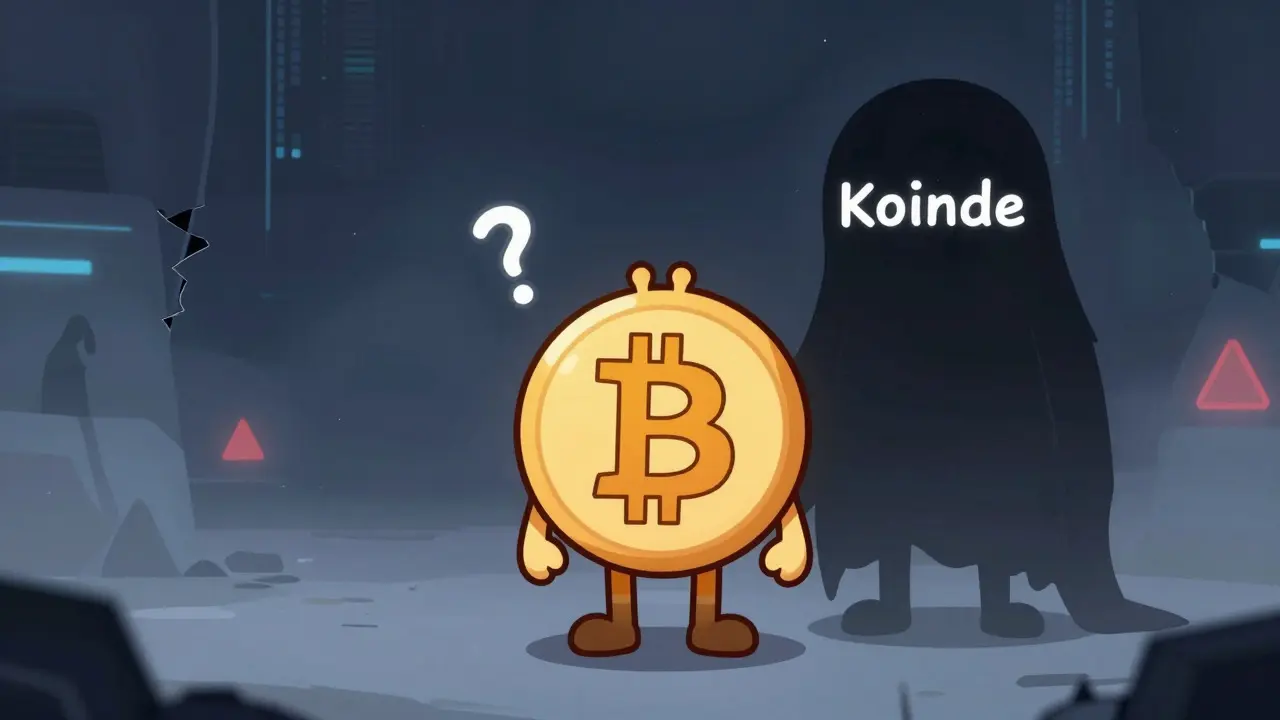
You found Koinde, a platform promising to simplify Bitcoin (BTC) trading against the US Dollar (USD) and Turkish Lira (TRY). But here is the hard truth: information about this exchange is incredibly scarce. In an industry where transparency builds trust, silence often raises red flags. This review digs into what little we know about Koinde, analyzes the risks of trading on low-profile platforms, and helps you decide if your funds are safe there.
What Is Koinde?
Koinde presents itself as an innovative trading platform focused specifically on three pairs: BTC/USD, BTC/TRY, and potentially direct fiat on-ramps. Unlike giants like Binance or Coinbase that offer hundreds of altcoins, Koinde appears to be a niche player. Its primary value proposition seems to be serving users who need to move between Bitcoin and either the global reserve currency (USD) or the volatile Turkish Lira (TRY).
This narrow focus suggests a specific target audience: traders in Turkey or those dealing with TRY liquidity issues, and perhaps US-based traders looking for a simpler interface. However, "simple" can sometimes mean "limited." The lack of broader asset support means you cannot diversify easily without moving your money elsewhere.
The Transparency Problem
When reviewing any crypto exchange, the first step is checking its background. For major exchanges, you can find their founding date, team members, and headquarters. For Koinde, the search results are quiet. Here is what is missing:
- Founding Team: No public profiles of founders or developers.
- Regulatory Status: No clear mention of licenses from bodies like the SEC, FinCEN, or Turkish Capital Markets Board (SPK).
- Trading Volume: No independent data on daily volume, which makes it hard to judge liquidity.
- User Reviews: A notable absence of feedback on Trustpilot, Reddit, or specialized crypto forums.
In the crypto world, anonymity used to be cool. Today, it is risky. If a platform has no digital footprint beyond its homepage, how do you verify they exist? How do you contact them if your withdrawal gets stuck? This lack of social proof is the biggest warning sign for potential users.
Security and Fund Safety
Security is not just about firewalls; it is about policy. Established exchanges publish their security audits, cold storage ratios, and insurance details. Koinde’s website does not prominently display these critical metrics. Without knowing if your Bitcoin is stored in cold wallets (offline storage) or hot wallets (online, vulnerable to hacks), you are gambling with your principal investment.
Consider the alternative. Platforms like Kraken or Coinbase Pro have survived multiple market cycles by being transparent about their security infrastructure. They undergo regular third-party audits. When an exchange like Koinde offers no such details, you must assume the worst-case scenario: that your assets might be commingled with company operational funds, leaving them exposed if the business faces financial trouble.
| Feature | Koinde | Binance / Coinbase |
|---|---|---|
| Supported Assets | BTC, USD, TRY only | 300+ cryptocurrencies |
| Regulatory Info | Unclear / Not Public | Licensed in multiple jurisdictions |
| User Feedback | Minimal to none | Millions of reviews |
| Security Audits | Not mentioned | Regularly published |
| Liquidity | Unknown | High (tight spreads) |

Fees and Hidden Costs
Low-profile exchanges often lure users with promises of low fees, but the reality can be different. Since Koinde’s fee structure is not detailed in available sources, you need to watch out for hidden costs. Common traps include:
- Wide Spreads: The difference between the buy and sell price might be larger than advertised commissions.
- Withdrawal Fees: High network fees for moving BTC off-platform.
- Inactivity Fees: Charges for keeping funds idle.
Before depositing even $10, check the fine print. If the fees are not clearly listed on the homepage, ask customer support. Their response time and clarity will tell you more about their service quality than any marketing banner.
Who Should Use Koinde?
Given the limited information, Koinde might suit a very specific type of user. Perhaps you live in a region where access to major exchanges is restricted, and Koinde offers a viable workaround for TRY conversions. Or maybe you are a high-risk tolerance trader looking for arbitrage opportunities in illiquid markets.
For the average investor, however, the risks likely outweigh the benefits. If you are new to crypto, stick to platforms with proven track records. If you are an advanced trader, consider whether the lack of API tools and advanced charting features on Koinde will hinder your strategy.

Alternatives to Consider
If Koinde feels too opaque, several alternatives offer robust BTC/TRY and BTC/USD trading with better transparency:
- Binance: Offers deep liquidity for BTC/TRY pairs and a wide range of other assets.
- Kraken: Known for strong security and regulatory compliance in Europe and the US.
- LocalBitcoins / Paxful: Peer-to-peer platforms that allow direct BTC/TRY trades with local sellers, offering more control over the counterparty.
These platforms have established reputations, active communities, and clear dispute resolution processes. While they may have slightly higher barriers to entry (like stricter KYC), they provide peace of mind that Koinde currently lacks.
Final Verdict
Koinde fills a niche gap for BTC-TRY trading, but it does so with minimal transparency. The absence of user reviews, regulatory disclosures, and security details makes it a high-risk option. Until the platform publishes verifiable data about its operations, it is wise to proceed with extreme caution. Start with small amounts, verify withdrawal processes immediately, and keep the majority of your holdings on more established platforms.
Is Koinde a scam?
There is no definitive evidence labeling Koinde as a scam, but the lack of transparency, user reviews, and regulatory information makes it risky. Proceed with caution and never invest more than you can afford to lose.
Can I trade Turkish Lira (TRY) on Koinde?
Yes, Koinde specifically advertises BTC/TRY trading pairs, making it a potential option for users needing to convert between Bitcoin and Turkish Lira.
Is Koinde regulated?
Current public information does not specify any regulatory licenses held by Koinde. This is a significant concern compared to major exchanges that are licensed in various jurisdictions.
What cryptocurrencies does Koinde support?
Based on available data, Koinde primarily supports Bitcoin (BTC) paired with USD and TRY. It appears to be a single-asset or very limited-asset exchange.
Are my funds safe on Koinde?
Without published security audits or cold storage policies, fund safety is uncertain. It is recommended to use hardware wallets for long-term storage rather than leaving large amounts on any exchange, especially obscure ones.