
As of 2025, mining cryptocurrency in China isn't just discouraged-it's a criminal offense. If you're caught running even a single rig in your basement, you could face fines, asset seizure, or arrest. This isn't a rumor. It's the law. And it’s been building for over a decade.
How China Went From Crypto Capital to Crypto Blackout
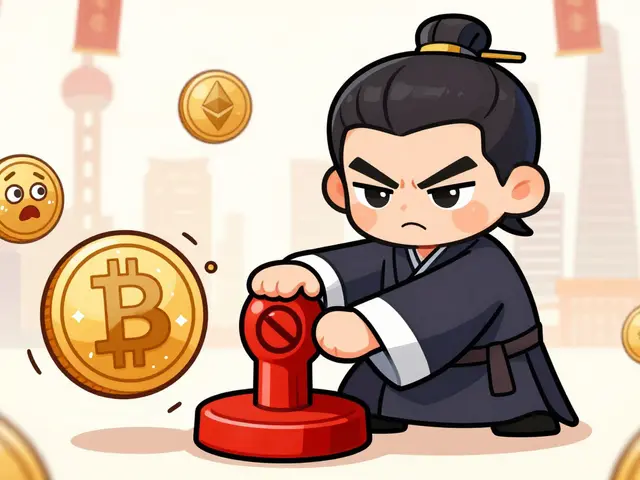
In 2013, China didn’t ban Bitcoin. It just told banks to stop processing Bitcoin transactions. That was the first warning sign. By 2017, the government shut down all domestic cryptocurrency exchanges and banned Initial Coin Offerings (ICOs), calling them illegal fundraising. At the time, China still hosted more than 70% of the world’s Bitcoin mining power. Miners were running rigs in Inner Mongolia, Sichuan, and Xinjiang, using cheap hydroelectric and coal power. Then came 2021. The People’s Bank of China declared all cryptocurrency transactions illegal. Mining was banned nationwide. Thousands of mining farms were shut down overnight. Equipment was confiscated. Power supplies were cut. Miners fled-mostly to the U.S., Kazakhstan, and Canada. China’s share of the global Bitcoin hash rate dropped from 75% to under 5% in less than a year. But the government wasn’t done. In 2024, authorities started arresting individuals who held crypto wallets. Civil courts stopped recognizing crypto-related contracts. In 2025, the final hammer fell: on May 31, 2025, China announced a comprehensive ban on all cryptocurrency activities-including ownership, trading, and mining. Now, simply holding Bitcoin or Ethereum in a personal wallet is considered a violation of financial regulations.Why Did China Do This?
It wasn’t just about control. There were four clear reasons. First, energy use. Bitcoin mining in China used more electricity than entire countries like Argentina and the Netherlands. That clashed with China’s 2060 carbon neutrality goal. Mining farms in Inner Mongolia were burning coal to power rigs while the government pushed for green energy. The math didn’t add up. Second, financial control. The Chinese government doesn’t want its citizens using money outside its system. Cryptocurrencies bypass capital controls. People could move wealth out of the country without detection. That’s a direct threat to monetary policy. Third, illicit activity. Crypto has been used for money laundering, tax evasion, and underground markets. Even if most users are legitimate, the risk was too high for regulators. In 2023, Chinese authorities traced over $1.2 billion in illicit crypto flows back to domestic wallets. Fourth, and most important-the digital yuan. China has spent over $10 billion developing its central bank digital currency (e-CNY). It’s already used by over 300 million people for everyday payments. The government doesn’t want a competing digital currency. Not even one that’s decentralized. The digital yuan is state-controlled, traceable, and programmable. Bitcoin? Not even close.How the Ban Is Enforced
You can’t just hide a mining rig under a blanket and hope no one notices. China has built a surveillance net designed to catch every last miner. The People’s Bank of China monitors bank accounts. If you suddenly start receiving large, unexplained transfers from overseas exchanges, you’re flagged. The State Administration of Foreign Exchange tracks cross-border crypto payments. Even using a VPN to buy Bitcoin on Binance can trigger a red flag. Electricity companies now use AI to detect abnormal power usage. A mining rig running 24/7 in a residential area draws power differently than a fridge or AC unit. Utilities report spikes to the Cyberspace Administration, which then sends inspectors. In 2024, over 2,100 underground mining operations were shut down. In one case in Sichuan, authorities found 870 ASIC miners hidden inside a decommissioned factory. The owner was sentenced to three years in prison.
What About Underground Mining?
Yes, it still happens. But it’s getting harder. Small-scale miners are using mobile rigs, hiding them in rural homes, or running them during off-peak hours to avoid detection. Some use solar panels or generators to avoid drawing grid power. But these setups are inefficient, risky, and expensive. Studies from Tsinghua University in late 2024 estimated that underground mining still accounts for 3-5% of global Bitcoin hash rate-down from 75% in 2020. That’s not enough to matter for network security. But it’s enough to keep authorities busy. The risk? If you’re caught, you don’t just lose your equipment. You lose your freedom. And your bank accounts. And your business licenses. China doesn’t mess around.The Global Ripple Effect
China’s ban didn’t just affect Chinese miners. It changed the entire crypto industry. Before 2021, the U.S. had less than 10% of global hash rate. Today, it has over 35%. Texas and Georgia became mining hotspots because of cheap energy and friendly regulations. Canada’s Quebec and Ontario saw mining farms pop up near hydro dams. Kazakhstan briefly became the second-largest mining hub-until it started taxing miners heavily in 2024. The market reacted hard. On May 31, 2025, when the comprehensive ban was announced, Bitcoin dropped from $111,000 to $104,500 in under an hour. Ethereum fell 12%. Altcoins like Solana and Cardano lost over 20% of their value. Over $750 million in leveraged positions were liquidated. Investors now treat China like a nuclear zone. Any news about Chinese regulators cracking down on crypto-even rumors-triggers global sell-offs.


Jake West
January 1, 2026 AT 07:19Shawn Roberts
January 2, 2026 AT 16:40Abhisekh Chakraborty
January 3, 2026 AT 14:44dina amanda
January 5, 2026 AT 12:56Gavin Hill
January 5, 2026 AT 18:34SUMIT RAI
January 6, 2026 AT 06:09Josh Seeto
January 6, 2026 AT 14:39Kevin Gilchrist
January 7, 2026 AT 05:59Khaitlynn Ashworth
January 8, 2026 AT 15:10Amy Garrett
January 9, 2026 AT 02:06Phil McGinnis
January 10, 2026 AT 00:45Andy Reynolds
January 12, 2026 AT 00:22Alex Strachan
January 12, 2026 AT 02:23Rick Hengehold
January 12, 2026 AT 23:44Ian Koerich Maciel
January 14, 2026 AT 14:54