You bought a rig. You found cheap electricity. Then the lights went out-not because of a storm, but because a government decree said so. If you're looking at mining crypto in Russia, you need to know that the Wild West era is over. As of 2026, operating here isn't just about hardware specs; it's about navigating a maze of regional bans, registration mandates, and energy priorities.
The landscape shifted dramatically between 2024 and 2025. Russia moved from a gray zone to a strictly regulated environment. The goal? To harness the economic potential of mining while protecting the national grid and keeping tight control over digital assets. Here’s what you actually need to know before plugging in your ASICs.
The New Legal Reality: From Shadow Economy to State Registry
For years, mining in Russia was largely unregulated. That changed with comprehensive legislation enacted in late 2024. Today, if you want to mine legally, you must register. The Federal Tax Service (FTS) maintains a mandatory state registry of mining equipment. This isn't optional for serious operators.
Why does this matter? Because unregistered miners are now easy targets. Authorities use data analytics to spot unusual electricity consumption patterns. If your home draws industrial-level power but you aren't registered, expect a visit. The only exception is small-scale individual miners consuming less than 6,000 kWh per month. These "garage miners" remain exempt from registration requirements, though they still owe taxes on profits.
Geographic Restrictions: Where You Can’t Mine
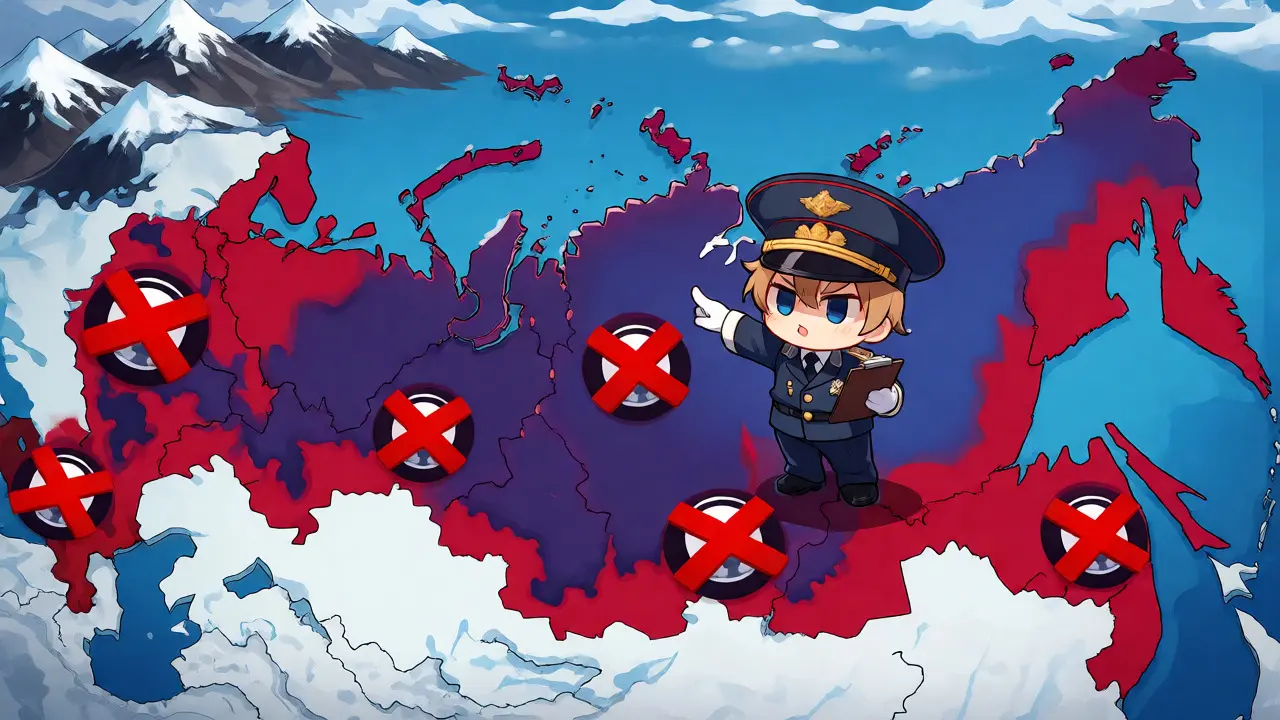
This is the biggest hurdle for most newcomers. Russia is huge, but you can't set up shop everywhere. The government implemented a two-tier restriction system effective January 1, 2025, lasting through March 15, 2031. It’s designed to prevent energy shortages in vulnerable regions.
Complete Bans: Mining is entirely prohibited in ten regions. If you live in Dagestan, Ingushetia, Kabardino-Balkaria, Karachay-Cherkessia, North Ossetia, Chechnya, or the Donetsk and Lugansk People's Republics, you’re out of luck. The same applies to the Zaporizhzhia and Kherson regions. In these areas, no amount of registration will save you. The ban is absolute.
Seasonal Restrictions: Three Siberian regions-Irkutsk, Buryatia, and Zabaikalsky-allow mining but impose seasonal limits. During winter months (typically November 15 to March 15), authorities can restrict or halt mining operations to prioritize heating for residents. Irkutsk, once a mining hub due to its cheap hydroelectric power, has seen strict enforcement during peak cold spells.
| Region Type | Specific Regions | Restriction Details |
|---|---|---|
| Full Ban | Dagestan, Chechnya, North Ossetia, etc. | No mining allowed until 2031. |
| Seasonal Ban | Irkutsk, Buryatia, Zabaikalsky | Restricted during winter peak demand (Nov-Mar). |
| Open Areas | Most other regions (e.g., Krasnodar, Moscow Oblast) | Allowed with registration and tax compliance. |
Energy Priority: The Fourth Category Consumer
Even in permitted regions, you don't have guaranteed access to electricity. Miners are classified as "fourth category" consumers in the national power grid hierarchy. This means you are the lowest priority.
When demand spikes-say, during a heatwave or a deep freeze-the grid operator can remotely disconnect mining facilities. This happens without warning. Your rigs stop hashing, and you lose revenue. Hospitals, residential buildings, and critical industries always get power first. This remote disconnection capability is enforced via smart meters linked to the state registry. If your equipment isn't labeled and certified, you might not even be able to import it legally anymore.
Industry experts note that this unpredictability adds a layer of risk to ROI calculations. You can't assume 24/7 uptime. Smart operators factor in downtime costs into their break-even analysis.
Taxes and Compliance: Paying Your Due
If you survive the geography and the grid, you face the taxman. Russia introduced a 15% tax on Bitcoin mining profits in late 2024. This isn't just a suggestion; it's a requirement for registered entities.
Individuals trading crypto also face reporting rules. Any transaction exceeding 600,000 rubles must be reported to tax authorities. While owning crypto is legal, using it to buy coffee or cars is not. The ruble remains the sole legal tender. Violating payment rules can lead to penalties, separate from mining taxes.
Compliance is tricky. As of mid-2025, only about 30% of miners had registered with the Federal Tax Service. Deputy Minister Ivan Chebeskov admitted that "another 2/3 need to be 'cleaned up'." The government is tightening the screws, considering higher fines to force participation in the registry. If you're running an illegal operation, the risk-reward ratio is shifting unfavorably.

Market Dynamics: Growth Amidst Regulation
Despite the hurdles, interest in Russian mining hasn't died. In fact, demand for industrial equipment tripled in Q4 2024. Why? Because legalization brought credibility. Large-scale operators feel safer investing when the rules are clear, even if those rules are strict.
Russia aims to leverage its abundant natural resources-gas flaring sites and hydroelectric plants-to become a global mining hub. However, the market is bifurcated. Large farms in compliant regions thrive, while small miners struggle with overheads like registration fees and electricity rate hikes. Subsidized rates for residential users are being phased out for high-consumption households, further squeezing small players.
Key Takeaways
- Registration is Mandatory: Unless you use under 6,000 kWh/month, you must register equipment with the state registry.
- Know Your Region: Ten regions have total bans; three have seasonal winter bans. Check local laws before buying hardware.
- Energy Priority: Miners are low-priority consumers. Expect remote shutdowns during peak demand.
- Tax Obligations: A 15% tax on mining profits applies. Transactions over 600k rubles require reporting.
- Payment Limits: You can own and trade crypto, but you cannot use it for everyday payments.
Is crypto mining legal in Russia in 2026?
Yes, mining is legal but heavily regulated. You must register your equipment with the state registry unless you are a small-scale miner using less than 6,000 kWh per month. Operations in banned regions are illegal regardless of registration.
Which regions in Russia ban crypto mining?
Complete bans are in effect in Dagestan, Ingushetia, Kabardino-Balkaria, Karachay-Cherkessia, North Ossetia, Chechnya, Donetsk, Lugansk, Zaporizhzhia, and Kherson. Seasonal bans apply in Irkutsk, Buryatia, and Zabaikalsky during winter months.
What are the penalties for illegal mining in Russia?
Fines range from 200,000 rubles to 2 million rubles depending on the scale and nature of the violation. Authorities may also confiscate equipment and disconnect power supplies.
Do I have to pay taxes on crypto mining in Russia?
Yes. Registered miners pay a 15% tax on profits. Additionally, individuals must report transactions exceeding 600,000 rubles to the Federal Tax Service.
Can I use cryptocurrency to buy things in Russia?
No. Using cryptocurrencies to pay for goods and services is illegal. The ruble is the only legal tender. You can own, trade, and mine crypto, but not spend it directly.