There’s no official record of an underground crypto market in Ecuador. No police raids, no seized wallets, no leaked documents from shady exchanges. But that doesn’t mean it doesn’t exist. If you talk to people in Quito, Guayaquil, or Cuenca who’ve been trading crypto since 2020, they’ll tell you the same thing: crypto moves in the shadows when the banks won’t let you in.
Why People Turn to the Shadows
Ecuador’s banking system has been broken for years. After the 2000 dollarization, the country lost control of its monetary policy. Inflation stayed low, but access to credit vanished. Banks became gatekeepers, not helpers. People who needed cash fast - farmers, small vendors, freelancers - got locked out. When the government banned private cryptocurrencies in 2014, it wasn’t to stop crime. It was to protect its own failed digital currency project, the Sistema Nacional de Moneda Electrónica, which collapsed before it ever launched. Fast forward to 2026, and the rules changed. Trading crypto is legal now. But legality doesn’t mean accessibility. The big exchanges - Binance, Gemini, Bit2Me - require ID verification, bank accounts, and sometimes even proof of income. Many Ecuadorians don’t have those. They have cash, a phone, and a desperate need to get money out of a failing economy. That’s where the underground starts.How It Works: Cash for Crypto, No Paper Trail
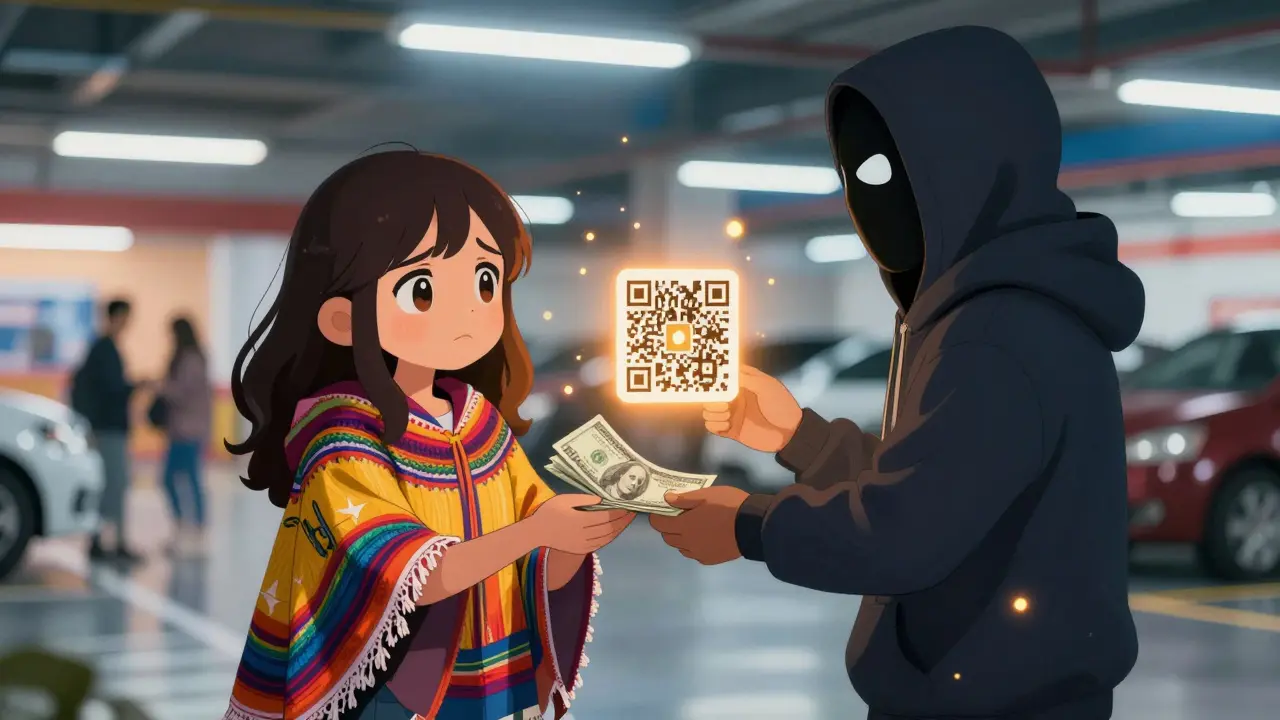
You won’t find a website advertising it. No Facebook groups. No Telegram channels with public links. But if you know someone who knows someone, you’ll hear whispers about los contactos - the contacts. Here’s how it works: A person in Guayaquil needs $200 in USDT. They meet someone in a mall parking lot, near the food court. No names exchanged. No screenshots taken. They hand over crisp $100 bills - folded, counted, sometimes even wrapped in plastic to avoid fingerprints. In return, they get a QR code. Scan it. The USDT lands in their wallet. Done. No KYC. No bank record. No traceable transaction. These trades happen in person, in public but unmonitored places: bus stations, church parking lots, even inside small tiendas that double as drop points. Payment methods? Cash, mobile wallets like Pago Fácil, even prepaid cards bought with fake IDs. The crypto is usually USDT, because it’s stable, easy to move, and accepted everywhere. This isn’t theory. It’s what happens when 40% of the population is underbanked and the legal options feel like they’re designed for tourists, not locals.The Risk: No Safety Net
There’s no recourse if you get scammed. No customer service line. No chargeback. If the person walks off with your cash and the wallet never loads, you’re out $200. No police will help you. The government doesn’t recognize these trades. The law says crypto trading is legal - but only if you use licensed platforms. Anything else? Legally, it’s a gray zone. Not criminal, but unprotected. Some traders use intermediaries - people who act as brokers. They take a 2-5% fee. They vet the buyers and sellers. They hold the crypto in escrow until cash changes hands. But even these brokers operate without licenses. One broker in Cuenca was arrested in late 2024, not for running an illegal exchange, but for failing to report a cash transaction over $10,000. That’s the only time authorities have ever stepped in.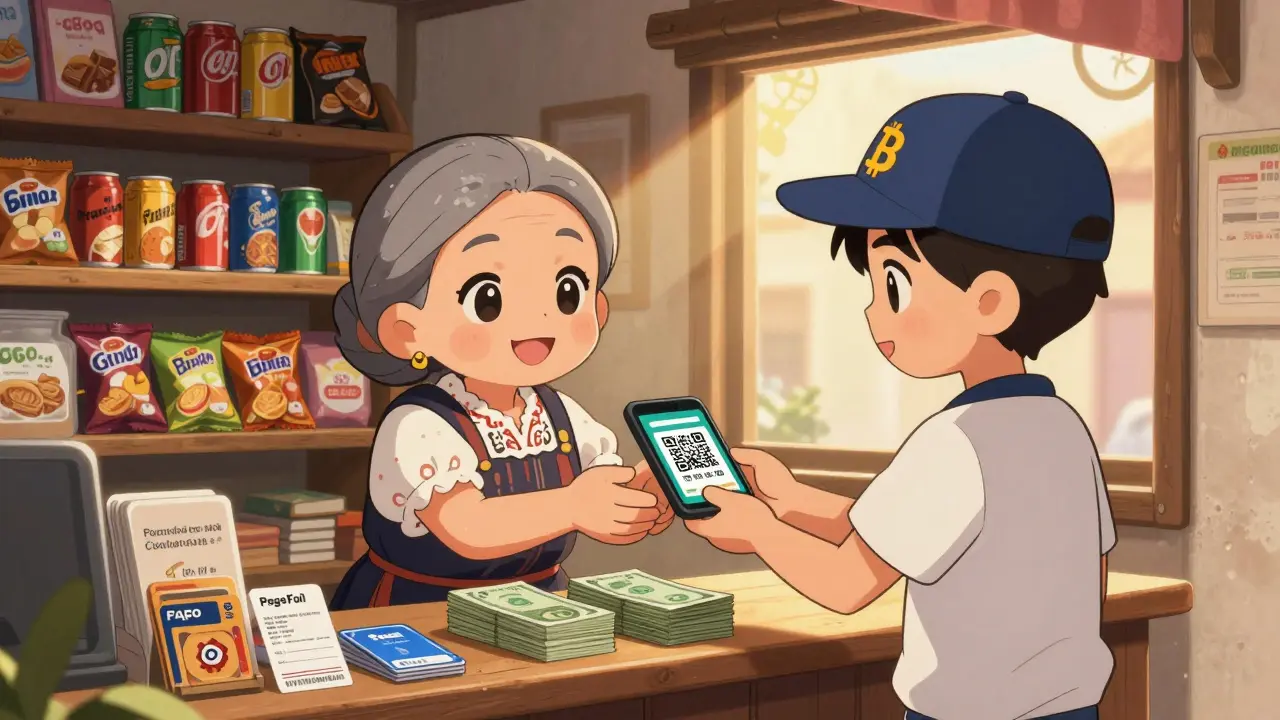
Why the Government Looks the Other Way
Ecuador’s financial regulators aren’t blind. They know this is happening. But they have bigger problems. The central bank is underwater with debt. The economy is shrinking. They can’t afford to crack down on a movement that’s keeping millions from total financial collapse. In 2023, the Superintendencia de Bancos issued a warning: “Transactions outside regulated platforms carry full risk.” That’s it. No fines. No shutdowns. No arrests for trading. Just a warning. It’s a signal: we’re not stopping you, but we’re not helping you either. That’s the quiet compromise. The underground crypto market isn’t thriving because it’s illegal. It’s thriving because it’s necessary.Who’s Using It - And Why
It’s not just criminals. It’s teachers who get paid late. Farmers who need to send money to relatives in Spain. Freelancers who get paid in crypto from clients in the U.S. but can’t cash out through banks. A 2024 survey by the Universidad Central del Ecuador found that 28% of crypto users in the country had done at least one P2P cash trade outside regulated platforms. Women are the fastest-growing group. Many don’t have formal IDs or bank accounts. But they have phones. They use WhatsApp to coordinate trades. They trust community networks more than institutions. The underground isn’t about hacking or theft. It’s about survival.The Line Between Legal and Illegal
Here’s the twist: Binance P2P is legal. LocalCoinSwap is legal. You can trade crypto with cash on those platforms - if you verify your identity. But the underground version? Same thing. Same crypto. Same cash. Just no ID. No paper. No audit trail. The difference isn’t the action. It’s the paperwork. That’s why regulators don’t shut it down. They can’t. Every time they try to close one contact, three more pop up. It’s decentralized by design - because it has to be.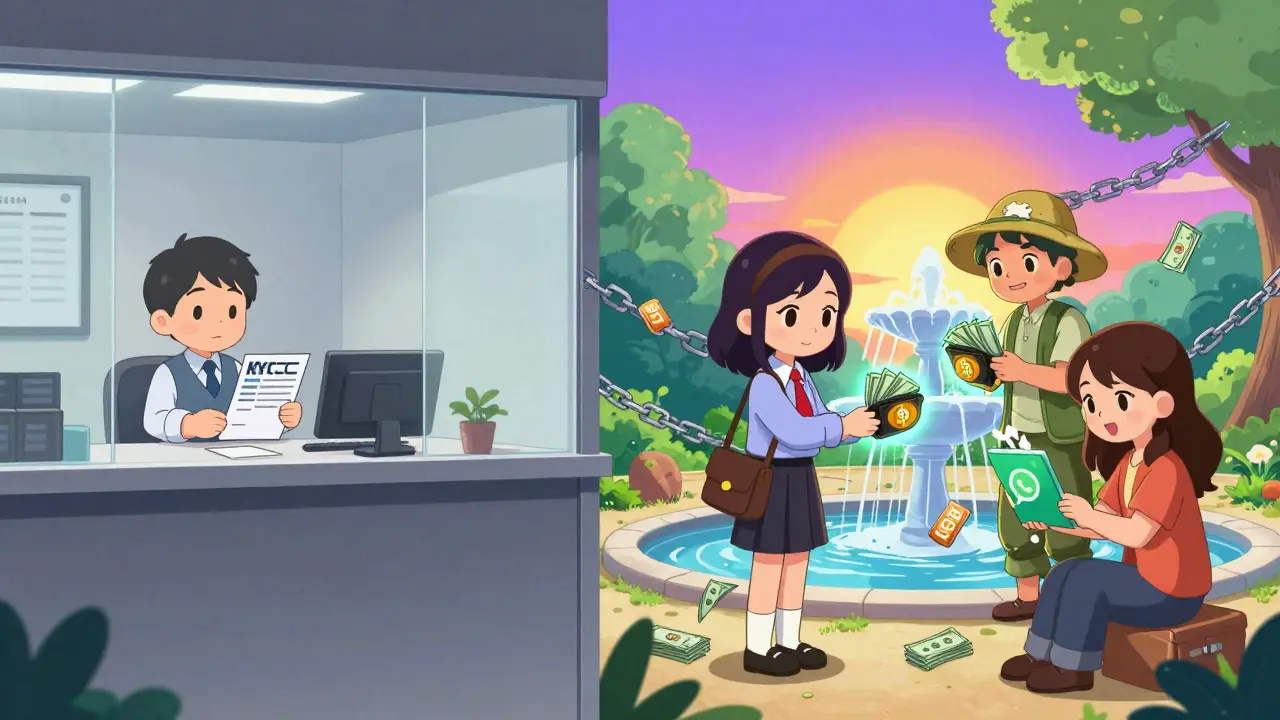
What Could Change
If Ecuador ever introduces a national digital currency - a true central bank digital currency (CBDC) - the underground could vanish overnight. People would switch to a government-backed app that works like cash but moves digitally. But so far, the government hasn’t shown the will or the tech to build it. For now, the underground market stays alive because it fills a gap no one else will. It’s not a threat to the system. It’s a symptom of it.What You Should Know If You’re in Ecuador
If you’re thinking about using the underground market:- Never carry more cash than you can afford to lose.
- Meet in public, daylight hours. Never alone.
- Use a burner phone. Don’t link your real number.
- Confirm the wallet address before handing over cash - once it’s sent, it’s gone.
- Don’t trust anyone who asks for your private key.
Final Thought
There’s no underground crypto market in Ecuador - officially. But if you look closely, you’ll see it everywhere. In the quiet handoff of cash at a bus stop. In the WhatsApp message that says, “I’m at the park, near the fountain.” In the person who can’t get a loan but can get Bitcoin in 10 minutes. It’s not a crime. It’s a consequence.Is it illegal to trade crypto in Ecuador?
No, trading crypto is legal in Ecuador. The government lifted its ban in 2021 and now recognizes Bitcoin and other cryptocurrencies as legal to buy, sell, and hold. However, they are not legal tender - you can’t use them to pay for groceries or gas. Only licensed exchanges can operate legally, and they must follow AML and KYC rules.
Can I get arrested for trading crypto with cash in Ecuador?
You won’t be arrested just for trading crypto with cash. But if you’re caught doing large, repeated cash trades without reporting them, you could face penalties under anti-money laundering laws. Ecuador requires reporting of cash transactions over $10,000. The problem? Most underground trades are under that limit - so they fly under the radar. Enforcement is rare.
What’s the safest way to buy crypto in Ecuador?
The safest way is through licensed exchanges like Bit2Me, CEX.IO, or Gemini. They allow you to deposit cash via bank transfer or at partner locations. You’ll need ID verification, but you get 2FA, cold storage, and customer support. If something goes wrong, you have recourse. Underground trades offer no protection.
Why don’t more people use legal exchanges?
Many Ecuadorians don’t have bank accounts, official IDs, or stable incomes - all required for KYC. Others distrust institutions after years of financial instability. For them, cash trades are faster, more private, and feel more reliable. Legal exchanges are safe, but they’re not always practical.
Is Binance P2P safe in Ecuador?
Yes, Binance P2P is legal and safe if you follow the rules. It requires ID verification and only allows transfers between registered accounts. The platform holds the crypto in escrow until the cash is confirmed. It’s the closest thing to an underground trade that’s still protected by law. Avoid any P2P trade outside the app - that’s where the risks begin.
Are there any crypto scams in Ecuador’s underground market?
Yes. Scams are common because there’s no oversight. Fake traders, double-spending, and phishing QR codes are all risks. Some people pretend to be brokers and take your cash without sending crypto. Others create fake wallets that look real. Always verify the wallet address yourself. Never trust someone who asks for your private key. If it sounds too easy, it’s a trap.


Josh V
January 19, 2026 AT 04:18This is wild man I had no idea crypto was moving like this in Ecuador
Haley Hebert
January 20, 2026 AT 13:49I mean it makes total sense when you think about it-banks are basically saying ‘you don’t qualify so good luck’ and people just find a way. It’s not rebellion, it’s basic human resourcefulness. I’ve seen this same thing in rural parts of Mexico and Nigeria. When systems fail, people build their own. It’s not pretty, but it’s real. And honestly? Kinda beautiful in a desperate kind of way.
Jill McCollum
January 21, 2026 AT 17:46omg this is so cool i had no idea people were doing cash-for-usdt in parking lots 😍 like imagine just handing over $200 in bills and getting a qr code like it’s a vending machine for money 🤯
Hailey Bug
January 23, 2026 AT 12:59The real issue here isn’t the underground market-it’s the failure of financial inclusion. If 40% of the population can’t access basic banking services, crypto isn’t the problem. It’s the symptom. Legal exchanges exist, but they’re designed for people who already have access to identity, credit, and infrastructure. The underground fills the gap because no one else will. This isn’t a loophole-it’s a lifeline.
CHISOM UCHE
January 25, 2026 AT 10:01From a fintech perspective, this is a textbook case of informal financial intermediation leveraging decentralized ledger tech. The absence of KYC isn’t evasion-it’s adaptive governance in a context of institutional collapse. The 2-5% broker fee structure mirrors microfinance models seen in Sub-Saharan Africa, with trust networks replacing institutional verification. What’s fascinating is the emergent self-regulation: escrow brokers, burner phones, daylight meetups. This isn’t chaos-it’s a proto-financial ecosystem.
Stephen Gaskell
January 25, 2026 AT 13:17So what you’re saying is Ecuadorians are breaking the rules because they’re too lazy to get a bank account
Ashlea Zirk
January 26, 2026 AT 12:23While the informal crypto economy may serve an immediate need, it undermines the broader regulatory framework designed to prevent illicit financial flows. The absence of transactional transparency creates systemic vulnerabilities. Even if enforcement is impractical, normalization of unregulated peer-to-peer exchanges erodes the foundations of financial accountability. This is not resilience-it is institutional erosion masked as necessity.
Chris Evans
January 27, 2026 AT 15:41Think about it-this isn’t just crypto. It’s the death rattle of the modern state’s monopoly on money. When the institution fails to provide a medium of exchange, the people don’t wait for permission. They invent it. The QR code in the parking lot? That’s the new dollar bill. The broker in Cuenca? He’s the new banker. The government’s warning? That’s the last gasp of legitimacy. We’re witnessing the quiet collapse of centralized finance-and the birth of something raw, real, and radically human.
Hannah Campbell
January 29, 2026 AT 15:08Oh wow so Ecuadorians are just… trading cash for crypto like it’s a street corner poker game?? I mean sure why not let the whole country turn into a mafia movie
Bryan Muñoz
January 30, 2026 AT 21:46you think this is just about crypto?? nah this is the deep state testing crypto as a tool to track people. the qr codes? they’re bugged. the cash? it’s tagged. they’re building a digital fingerprint on the poor so they can control them later. you think they don’t know who’s trading? they’re watching. they’re waiting. they’re building the matrix and we’re handing them the keys
Rod Petrik
February 1, 2026 AT 08:58wait so if you use a burner phone and cash you’re safe right?? what if the government has a backdoor in every phone?? what if the qr code is actually a spy chip?? what if the USDT is secretly tracking your location??
myrna stovel
February 2, 2026 AT 19:30It’s easy to judge from afar, but imagine needing to feed your kids and the bank says no. You don’t get to choose between legality and safety-you choose between hunger and a risk. The people doing this aren’t criminals. They’re parents, teachers, small business owners. They’re not breaking the system. They’re keeping it from breaking them. We should be asking why the system failed them-not blaming them for surviving.
Alexandra Heller
February 3, 2026 AT 03:25Let’s be real-this isn’t survival. It’s moral laziness. If you can’t follow the rules, you don’t deserve to participate. The system isn’t perfect, but it’s the only thing holding society together. People who bypass KYC aren’t heroes-they’re freeloaders who think the world owes them privacy and convenience. If you can’t get an ID, maybe you shouldn’t be trading. That’s not cruelty. That’s responsibility.
Christina Shrader
February 4, 2026 AT 00:26Just because it’s not illegal doesn’t mean it’s safe. And just because it’s necessary doesn’t mean it’s sustainable. The real solution isn’t more underground trades-it’s better access. Lower barriers. More inclusive banking. We need policy, not parking lot deals.
Michael Jones
February 5, 2026 AT 19:57While the informal market operates outside legal frameworks, it demonstrates a critical gap in financial infrastructure. The absence of regulation does not equate to absence of risk. The reliance on unverified intermediaries, cash-based transactions, and lack of recourse mechanisms exposes vulnerable populations to irreversible loss. Legal alternatives exist, even if imperfect. The path forward lies not in glorifying informality, but in expanding access to secure, regulated platforms with low entry barriers.
Pat G
February 7, 2026 AT 07:24So now we’re celebrating people breaking the law because they’re poor? Next you’ll say it’s okay to steal because you’re hungry. This isn’t justice. This is anarchy dressed up as empathy. The US doesn’t allow this. Why should Ecuador? Because they’re lazy? Because they can’t spell? This is why the world hates the third world.