
Imagine trying to buy machinery from Germany when your bank account is frozen by international sanctions. For years, this was the daily reality for Iranian importers. But since 2018, a different path has emerged: using Bitcoin and other cryptocurrencies to settle international trade deals outside the U.S. dollar system. This isn't just a theoretical hack; it's a state-sanctioned strategy that has moved billions of dollars in goods across borders. By August 2024, $4.18 billion worth of cryptocurrency had left Iran, marking a 70% jump from the previous year. Here’s how a country under heavy financial pressure turned digital assets into a lifeline for its import sector.
The Regulatory Paradox: Banned at Home, Blessed Abroad
To understand how Iran uses crypto for imports, you first have to grasp the confusing rules governing it. The Central Bank of Iran (CBI) officially prohibits domestic payments in cryptocurrency. You can’t pay for groceries or rent with Bitcoin inside Tehran. However, the same authority allows licensed miners to sell their mined coins specifically for trade settlement. This creates a dual-track system where crypto is illegal for everyday spending but legal for industrial-scale export and import financing.
This framework involves multiple agencies. The Ministry of Energy oversees power allocation, while the Iran Cyber Police (FATA) monitors compliance. Since 2018, mining has been legal under industrial electricity tariffs, provided operations are registered as large-scale facilities. In 2023, the CBI explicitly authorized cryptocurrency use for cross-border trade, solidifying its role as a tool to bypass sanctions. The goal? To let Iranian firms trade with partners like Russia, Turkey, and China without touching SWIFT or the U.S. dollar.
How the Import Process Actually Works
So, what does an actual crypto-enabled import look like? It doesn’t happen on open exchanges like Coinbase. Instead, transactions are funneled through a centralized system controlled by the CBI. Here is the typical flow for an Iranian importer:
- Contract Negotiation: An Iranian firm agrees to buy goods (e.g., steel, chemicals, or electronics) from a foreign supplier.
- Crypto Acquisition: The importer obtains Bitcoin or stablecoins through a state-approved channel or a licensed miner. Often, this involves purchasing mined coins directly from domestic farms.
- CBI Authorization: The transaction must be cleared by the Central Bank. This step introduces delays, as the CBI reviews each deal for compliance with anti-money laundering (AML) and know-your-customer (KYC) rules.
- Settlement: The crypto is transferred to the foreign seller, who then converts it to local currency or fiat.
- Customs Clearance: Goods arrive in Iran, and standard customs duties apply, but the payment trail remains off the traditional banking radar.
This process is slower than a simple wire transfer due to the regulatory friction. However, for businesses locked out of global banking, it’s the only viable option. The first documented instance of this occurred on August 9, when Iran executed a $10 million import order using an unspecified cryptocurrency. That single transaction signaled a shift from experimental use to strategic reliance.
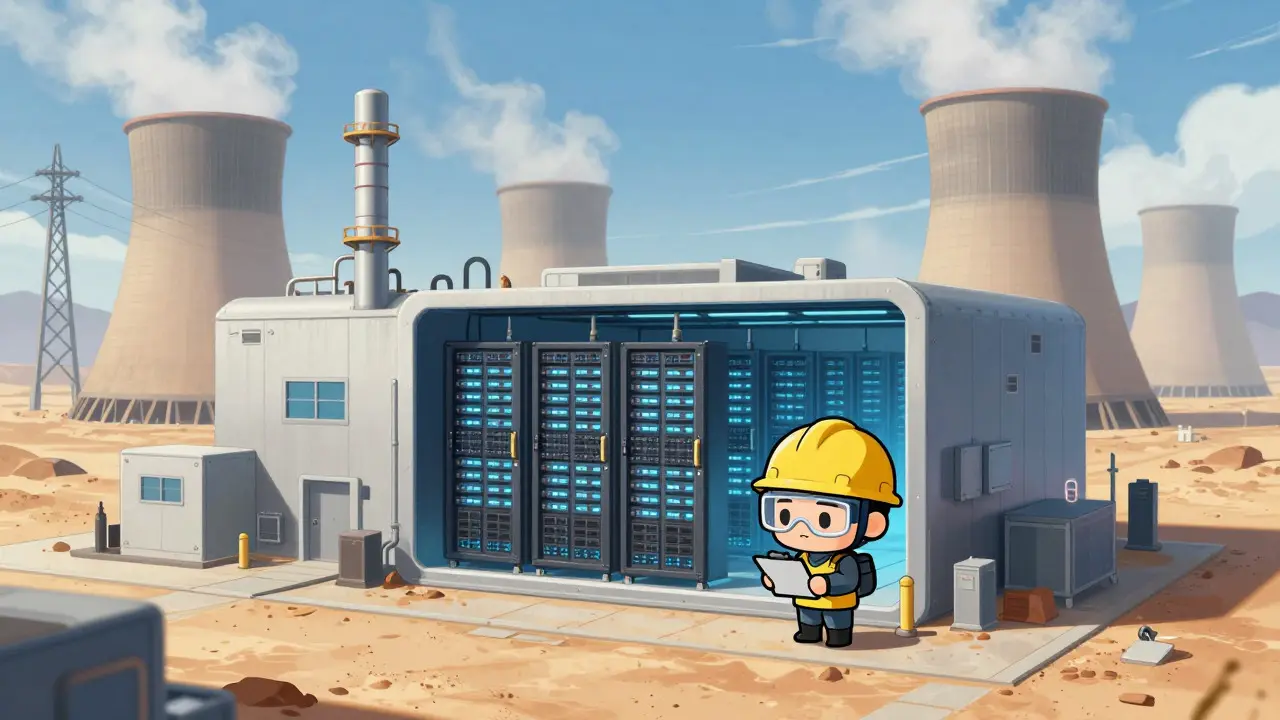
The Role of Mining and the IRGC
You can’t talk about crypto imports in Iran without mentioning where the coins come from. Iran is one of the world’s top Bitcoin producers, accounting for nearly 5% of all new bitcoins as early as 2021. By 2022, the government issued licenses for over 10,000 mining farms. But who runs these massive operations?
A significant portion is controlled by the Islamic Revolutionary Guard Corps (IRGC). Under directives from Supreme Leader Ali Khamenei, the IRGC partnered with Chinese companies to build huge mining facilities. A prime example is the 175-megawatt farm in Rafsanjan, Kerman province. These sites benefit from rock-bottom electricity tariffs and minimal scrutiny, often located in special economic zones or on military bases. The IRGC’s involvement ensures that a large share of newly minted Bitcoin stays within state-influenced hands, ready to be deployed for trade settlements.
This setup solves two problems for Tehran: it generates revenue from cheap natural gas-powered electricity and creates a reserve of hard assets that can be used to pay for imports without needing foreign exchange reserves.
| Feature | Traditional Banking (Pre-Sanctions) | Crypto-Enabled Trade (Current) |
|---|---|---|
| Payment Currency | U.S. Dollar / Euro | Bitcoin / Stablecoins |
| Regulatory Approval | Commercial Banks + Customs | Central Bank of Iran (CBI) + FATA |
| Sanctions Risk | High (SWIFT exclusion) | Low (Off-ledger settlement) |
| Transaction Speed | Days to Weeks | Hours to Days (due to CBI review) |
| Primary Cost Driver | Exchange Rates + Fees | Electricity Costs + Volatility |
Challenges: Volatility, Power Crises, and Compliance
It’s not all smooth sailing. Using Bitcoin for trade comes with significant headaches. First, there’s price volatility. If the value of Bitcoin drops 10% between signing a contract and settling the invoice, someone eats that loss. Most sophisticated traders mitigate this by using stablecoins or locking in rates via futures, but for smaller importers, it’s a gamble.
Second, the energy strain is real. Iran’s power grid is under immense pressure. Large mining farms consume industrial amounts of electricity, leading to widespread blackouts in cities and factories. Investigators have pointed to a "crypto cartel" involving state-affiliated entities that divert subsidized power for profit. This has sparked public backlash and stricter enforcement, including the arrest of illegal miners using household electricity in 2021.
Finally, compliance is a maze. The CBI requires rigorous documentation for every coin movement. Public trading is prohibited, meaning all activity must stay within licensed channels. For foreign partners, dealing with Iranian counterparties adds layers of counterparty risk and uncertainty about whether the funds will actually clear customs.

Diplomatic Moves and Future Outlook
Iran isn’t doing this alone. In November 2018, Tehran signed a bilateral agreement on cryptocurrency cooperation with Russia. By January 2019, negotiations were underway with seven other countries, including France and Germany, to explore crypto-based financial transactions. While these diplomatic efforts haven’t fully materialized into widespread adoption, they signal a systematic attempt to build a parallel trade network.
Analysts forecast the Iranian crypto sector to generate $1.5 billion in revenue by 2025, growing at an annual rate of 23.7%. The long-term viability of this model depends on two factors: the stability of Iran’s power grid and the continued tolerance of global regulators. If the CBI tightens controls further or if major mining hubs face technical failures, the flow of crypto-enabled imports could slow down. But for now, Bitcoin remains the key that unlocks Iran’s import doors, allowing the country to keep its economy moving despite external pressures.
Frequently Asked Questions
Is it legal to use Bitcoin for personal purchases in Iran?
No. The Central Bank of Iran prohibits domestic payments using cryptocurrencies. You cannot use Bitcoin to buy goods or services within Iran. Its use is strictly limited to cross-border trade settlements and mining activities conducted by licensed entities.
Which cryptocurrencies are most commonly used for Iranian imports?
Bitcoin is the primary asset due to its liquidity and recognition. However, stablecoins like Tether (USDT) are also frequently used to mitigate price volatility during the settlement period. The specific choice often depends on the agreement between the Iranian importer and the foreign supplier.
How much of Iran's Bitcoin mining is state-controlled?
A significant portion is influenced by the Islamic Revolutionary Guard Corps (IRGC) and state-linked entities. These groups operate large-scale farms in special economic zones, benefiting from low electricity costs and political protection. While private miners exist, the largest capacity is tied to state interests.
What happens if a foreign company accepts Bitcoin from an Iranian entity?
Foreign companies must ensure they are not violating their own local sanctions laws. While the transaction bypasses SWIFT, receiving crypto from an Iranian entity may still carry compliance risks depending on the seller's jurisdiction. Due diligence on the source of funds is critical to avoid secondary sanctions.
Does Iran tax profits from crypto mining?
Yes. Mining is treated as an industrial activity. Taxes vary based on energy usage and output. There is no formal capital gains tax on trading because domestic trading is prohibited, but miners must declare their income and pay applicable industrial levies.