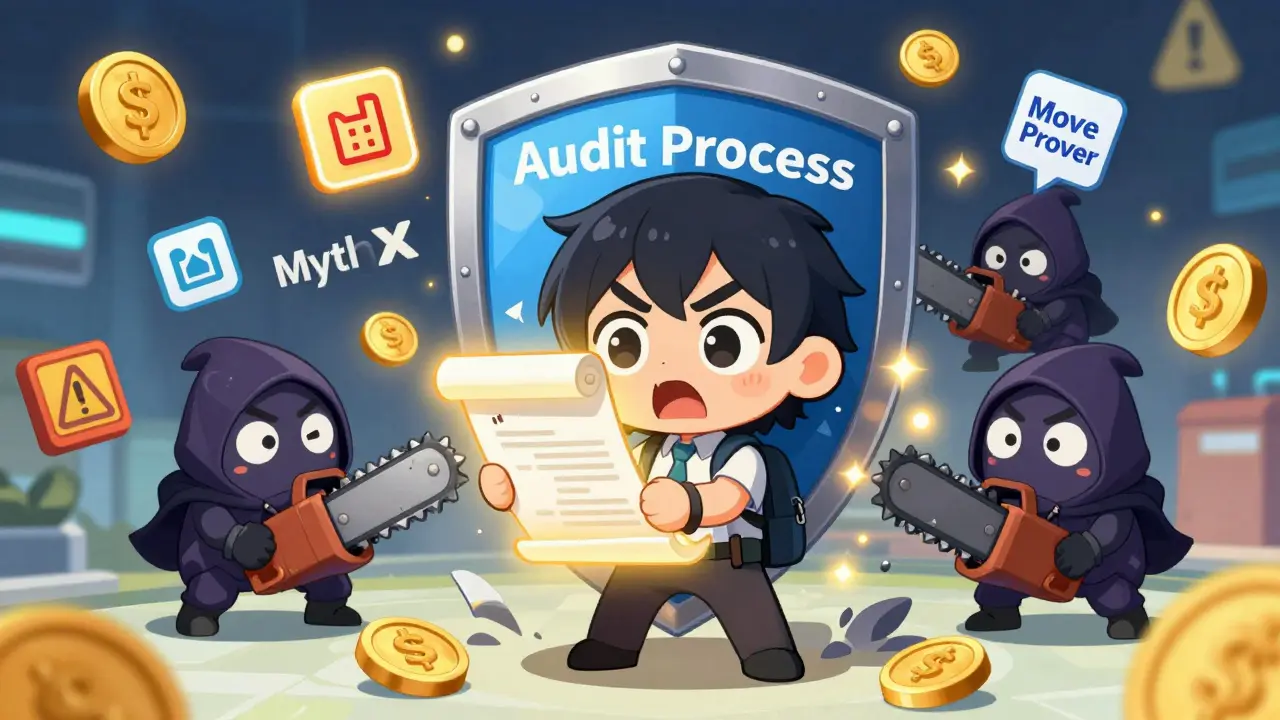
Every dollar locked in a smart contract is a target. In 2024 alone, over $2.2 billion vanished from decentralized platforms because of poorly audited code. It’s not hackers breaking into vaults-it’s code that was never properly checked. If you’re building or investing in a blockchain project, skipping a smart contract audit isn’t just risky-it’s reckless.
Why Auditing Isn’t Optional Anymore
Smart contracts are self-executing programs that run on blockchains. They handle everything from token swaps to loan approvals, and once they’re live, they can’t be changed. If there’s a flaw, attackers exploit it. And they’re getting better at it.Most breaches don’t come from brand-new exploits. They come from code that was already audited-once. Why? Because audits aren’t magic. A single review, done once, can’t keep up with how fast DeFi evolves. New attack patterns emerge every month. Cross-chain bridges, layered protocols, and complex incentive structures create blind spots that automated tools miss.
By 2025, over 70% of major DeFi exploits originated from contracts that had passed at least one audit. That’s not a failure of auditors-it’s a failure of relying on a one-time check. Security isn’t a checkbox. It’s an ongoing process.
The Five Stages of a Real Smart Contract Audit
A proper audit isn’t just running a tool and calling it a day. It’s a five-stage process that combines human expertise with advanced technology.- Discovery and Scope - The audit starts with understanding what the contract is supposed to do. Auditors review the whitepaper, architecture diagrams, and user flows. They map out every module, dependency, and integration point. If the team can’t explain how a function works, that’s a red flag.
- Static and Formal Analysis - Tools like Slither and a static analysis tool for Solidity that detects common vulnerabilities like reentrancy and overflow scan the code for known patterns. Formal verification tools like Move Prover and a mathematical verification system used for Aptos and Sui smart contracts prove that logic behaves correctly under all possible conditions. This stage catches 80-92% of known flaws.
- Manual Code Review - No tool can replace a skilled developer reading every line. Experts look for subtle issues: improper access control, unexpected asset flows, or logic that works in tests but fails under edge cases. They simulate how an attacker might chain vulnerabilities together. This is where most critical bugs are found.
- Risk Reporting - Findings aren’t just listed-they’re ranked. Critical issues (like the ability to drain funds) get immediate attention. High-risk items (like logic flaws that could be exploited later) are flagged with clear fixes. Medium and low issues are documented for future reference. A good report includes code snippets, attack scenarios, and step-by-step remediation steps.
- Remediation and Re-audit - Fixes are made, then the contract is audited again. Regression bugs are common. A fix for one issue can accidentally create another. Re-testing ensures nothing broke in the process.
The entire process usually takes 3-6 weeks for a medium-sized DeFi protocol. Rushing it increases risk. Projects that freeze code and give auditors full documentation have a 60% lower chance of post-deployment exploits.
Tools of the Trade
No single tool catches everything. The best audits use a mix:- Slither - Open-source, detects reentrancy, unchecked external calls, and improper access control in Solidity.
- MythX - Cloud-based, combines static and dynamic analysis. Used by enterprise teams for deep vulnerability scanning.
- Move Prover - Built for the Move language (used by Aptos and Sui). It mathematically proves correctness-no room for human error.
- Diligence Fuzzing - Generates thousands of random inputs to trigger edge cases. Found $1.2 billion in potential losses in 2023.
- Hardhat and Truffle - Development frameworks with built-in testing. They help catch bugs early, before the audit even starts.
Choosing tools isn’t about popularity. It’s about matching the tool to the language and risk profile. A Solana project using Rust? Slither won’t help. An Ethereum ERC-20 token? MythX and Slither are essential. A Move-based DeFi protocol? Move Prover is non-negotiable.

Who Should You Hire?
Not all audit firms are equal. In 2025, the top names have clear specializations:- OpenZeppelin - The go-to for Ethereum and ERC standards. They helped build the standards themselves. Ideal for token contracts and basic DeFi apps.
- Trail of Bits - Experts in high-risk, complex systems. They’ve audited Ethereum 2.0’s deposit contract and other critical infrastructure. Use them for protocols with multi-layered logic.
- Sigma Prime - Focused on consensus layers and validator software. Best for L2s, staking protocols, and anything touching Ethereum’s core.
- Move-Specific Auditors - If you’re on Aptos or Sui, make sure your auditor has audited at least three Move contracts. Not all firms do. Ask for GitHub links to past audits.
Don’t just ask for a portfolio. Ask: "What was the most critical issue you found in your last audit?" If they can’t answer with a specific vulnerability and fix, walk away.
Real-Time Monitoring: The New Standard
Audits are no longer a one-time event. The best projects now use real-time monitoring tools that watch contracts 24/7.These systems detect:
- Sudden large withdrawals
- Unusual transaction patterns
- Changes in governance votes that could signal manipulation
In 2023, monitoring tools prevented over $100 million in losses. Some platforms even auto-freeze funds when an exploit is detected and alert governance to respond. This isn’t sci-fi-it’s standard for protocols with over $100 million in TVL.
The Hidden Cost of Skipping Audits
Some teams think audits are too expensive. A full audit can cost $50,000 to $200,000. But compare that to the cost of a breach.In 2024, the average exploit cost a project $120 million in stolen funds, lost trust, and legal fees. Rebuilding a reputation takes years. Token prices crash. Teams disband.
And it’s not just about money. A single exploit can trigger regulatory scrutiny. In 2025, the EU and U.S. began requiring formal audits for any DeFi protocol operating in their jurisdictions. No audit? No legal operation.
What’s Next: AI, ZK, and the Future of Audits
The field is evolving fast:- AI-Powered Analysis - Tools now use natural language processing to understand developer intent. If code comments say "only admin can withdraw," but the logic doesn’t enforce it, AI flags the mismatch.
- Zero-Knowledge Audits - New systems let auditors verify code correctness without seeing the full source. Useful for proprietary protocols that can’t expose their logic.
- Economic Modeling - Auditors now simulate incentive structures. If a token rewards users for locking funds, does that create a rug-pull opportunity? Game theory is now part of every audit.
By 2027, audits will be automated end-to-end for simple contracts. But for anything complex-DeFi, NFT marketplaces, cross-chain bridges-human expertise will still be irreplaceable.
What You Should Do Today
If you’re building a smart contract:- Freeze code before hiring auditors. No new features after the audit starts.
- Provide full documentation: whitepaper, diagrams, test cases, and dependency lists.
- Choose auditors based on language and protocol expertise-not price.
- Require a re-audit after fixes.
- Set up real-time monitoring before launch.
- Run a bug bounty program on Immunefi. It’s cheaper than an exploit.
If you’re investing in a DeFi project:
- Check if the contract has been audited. Look for the report on the project’s website.
- Verify the auditor’s name. Google them. Did they find real issues in past audits?
- Don’t trust "audited by [unknown firm]". If you can’t find their name online, it’s a red flag.
- Look for ongoing monitoring. No monitoring? That’s a warning sign.
Smart contracts aren’t just code. They’re financial infrastructure. And infrastructure needs inspection, maintenance, and upgrades. Treat your audit like a building inspection-not a one-time formality. Because when it fails, there’s no insurance policy.
What’s the difference between a smart contract audit and a code review?
A code review is usually a quick check by internal devs-focused on functionality and style. A smart contract audit is a deep, multi-stage security assessment by external experts. It includes automated scanning, manual review, formal verification, and risk reporting. Audits are designed to find exploits, not just bugs.
Can automated tools fully replace manual audits?
No. Automated tools like Slither and MythX catch about 80-92% of known vulnerabilities, but they miss logic flaws, economic attacks, and complex interaction bugs. Manual audits by experienced developers are the only way to find these. The best audits combine both.
How much does a smart contract audit cost?
Costs range from $15,000 for a simple ERC-20 token to $200,000 for a complex DeFi protocol with cross-chain integrations. Factors include code size, language, complexity, and timeline. Re-audits after fixes usually cost 30-50% less.
What’s the most common vulnerability in smart contracts?
Reentrancy attacks remain the top threat, especially in older Solidity contracts. But in 2025, unchecked external calls and improper access control are rising fast. These often happen when developers copy code from tutorials without understanding how it works.
Do all blockchains need the same type of audit?
No. Ethereum uses Solidity and tools like Slither. Aptos and Sui use Move and require Move Prover. Solana uses Rust and needs different analysis methods. Auditors must specialize in the language and ecosystem. A Solidity expert can’t audit a Sui contract properly.
Is a bug bounty program enough instead of an audit?
No. Bug bounties are great for catching unknown issues after launch, but they don’t prevent exploits before deployment. Audits are proactive. Bounties are reactive. Use both: audit before launch, then run a bounty program afterward.



Patty Atima
March 16, 2026 AT 09:40Marie Vernon
March 16, 2026 AT 21:26Ross McLeod
March 17, 2026 AT 21:51rajan gupta
March 18, 2026 AT 22:03Jessica Beadle
March 19, 2026 AT 12:28Lucy de Gruchy
March 20, 2026 AT 03:34Lauren J. Walter
March 21, 2026 AT 07:46Tobias Wriedt
March 23, 2026 AT 07:35S F
March 24, 2026 AT 20:32Angelica Stovall
March 25, 2026 AT 15:54Taylor Holloman.
March 27, 2026 AT 01:23Kira Dreamland
March 27, 2026 AT 20:38shreya gupta
March 29, 2026 AT 13:14Shreya Baid
March 29, 2026 AT 19:47Christopher Hoar
March 30, 2026 AT 03:12Robert Kunze
April 1, 2026 AT 02:37Sarah Zakareckis
April 1, 2026 AT 09:36Heather James
April 2, 2026 AT 16:08Sarah Hammon
April 3, 2026 AT 00:31iam jacob
April 3, 2026 AT 06:56Jesse Pals
April 3, 2026 AT 17:26Diane Overwise
April 5, 2026 AT 03:56Marie Vernon
April 5, 2026 AT 17:19Ross McLeod
April 6, 2026 AT 18:47