
Think of a blockchain as a massive, shared digital ledger. If the blockchain is the entire book, then a single block is just one page. But these aren't ordinary pages; they are locked with complex math and linked in a way that makes it impossible to tear one out or change a word without everyone noticing. To really get why blockchain block technology is so secure, you have to look at what's actually happening inside that "page."
The Two Main Parts of a Block
Every block is split into two primary sections: the header and the body. If the body is the actual content (like the list of who sent money to whom), the header is like the metadata or the "envelope" that tells the network where the block fits in the chain.
The Block Body: Where the Data Lives
The body is the heavy lifter. It contains the actual list of transactions. In a network like Bitcoin, this includes the sender's wallet address, the receiver's address, and the exact amount of cryptocurrency being moved. It isn't just a raw list, though; it's organized using a specific structure to keep things efficient.
The Block Header: The Digital ID Card
The header is much smaller but far more critical for security. It contains the "fingerprints" of the block. Without the header, the network wouldn't know if a block is legitimate or where it belongs in the sequence. It acts as the glue that holds the entire chain together.
Breaking Down the Block Header
To understand how a block is validated, we need to look at the specific fields inside the header. These are the rules that miners and nodes check to make sure no one is cheating.
- Timestamp: A record of exactly when the block was created. This ensures the sequence of events is chronological.
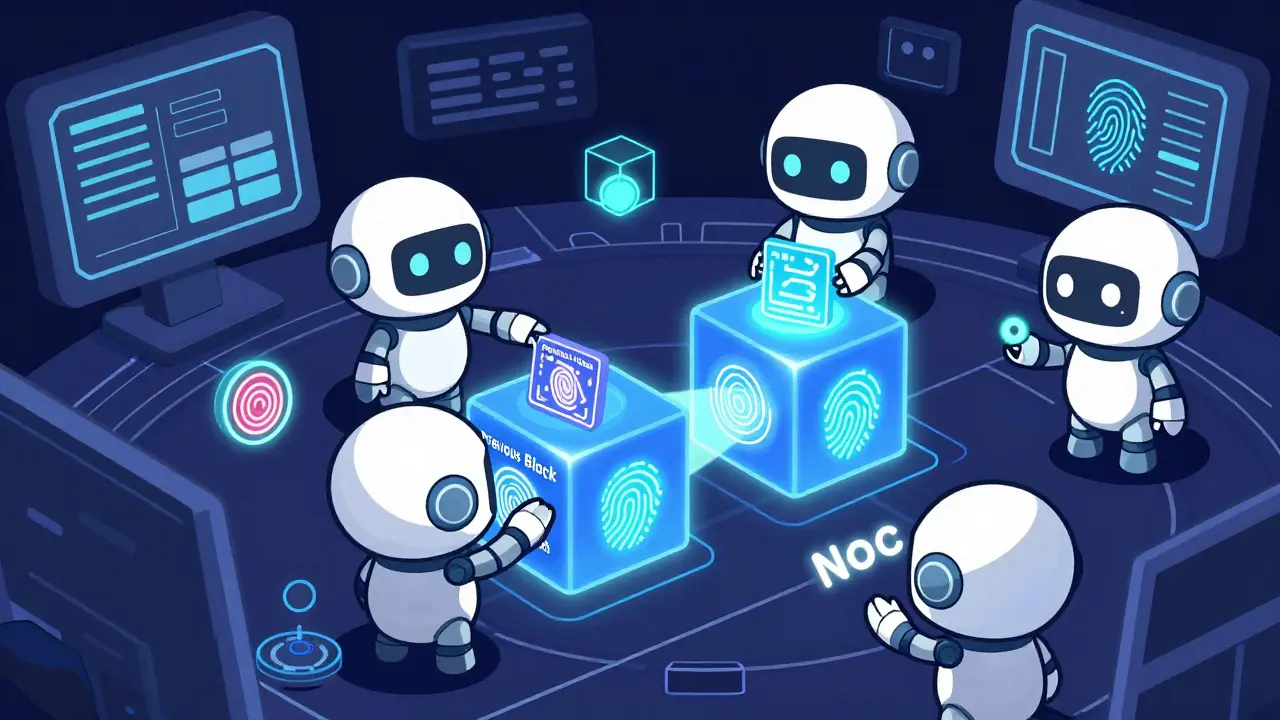
- Previous Block Hash: This is the most important part for connectivity. It's the digital fingerprint of the block that came immediately before it. This is what creates the "chain."
- Merkle Root: A single hash that represents every single transaction in the block body. Instead of checking every transaction one by one, the network just checks this one root.
- Nonce: Short for "number used once." This is a random value that miners change over and over again to solve the mathematical puzzle required to mine the block.
How Cryptographic Hashing Works
You can't talk about blocks without talking about hashes. A hash is like a digital fingerprint. Blockchain uses a specific algorithm called SHA-256 (Secure Hash Algorithm 256-bit). It takes any amount of data and turns it into a fixed-length string of letters and numbers.
Here is the wild part: if you change even one comma or a single decimal point in a transaction, the entire hash changes completely. It doesn't just change a little bit; it becomes a totally different string. This is how the network detects tampering instantly. If a hacker changes a transaction in Block 10, the hash for Block 10 changes. But Block 11 still has the old hash of Block 10 stored in its header. Suddenly, the link is broken, and the rest of the network rejects the change.
| Component | Location | Primary Purpose | Key Attribute |
|---|---|---|---|
| Transactions | Block Body | Data Storage | Immutable Records |
| Prev Block Hash | Block Header | Chain Linkage | Cryptographic Connection |
| Merkle Root | Block Header | Data Integrity | Summarizes all transactions |
| Nonce | Block Header | Mining Puzzle | Variable 32-bit number |
The Magic of the Merkle Root
If a block contains thousands of transactions, checking them all would take too long and slow down the network. This is where the Merkle Root comes in. Imagine a tournament bracket. The network takes two transactions, hashes them together, then takes those results and hashes them again. This continues up the tree until only one hash remains: the Root.
This allows a node to verify if a specific transaction exists in a block without needing to download the entire block's data. It just needs a few pieces of the "branch" to prove the transaction is part of the root. This is a huge win for scalability, allowing smartphones and light clients to interact with the blockchain without needing a supercomputer.
Nodes and the Consensus Process
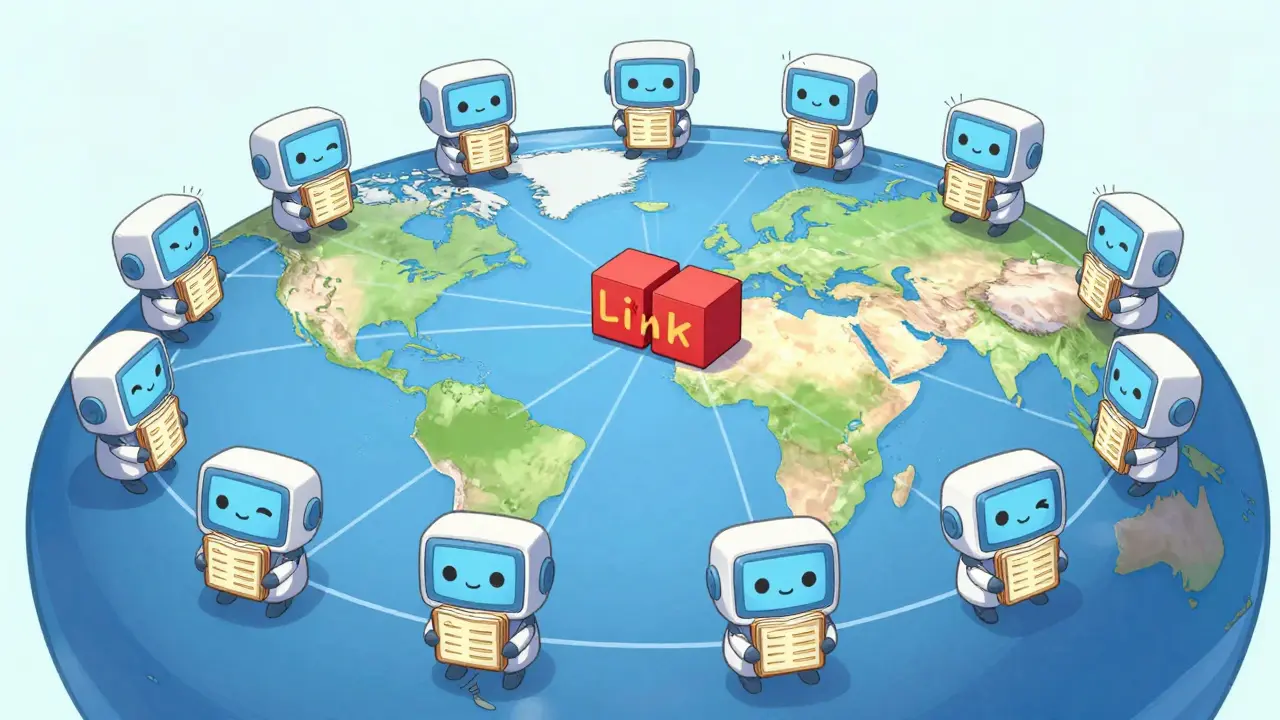
A block doesn't just magically appear. It has to be agreed upon by Nodes-the computers that run the blockchain software. These nodes are spread all over the world, and each one keeps a full copy of the ledger. This decentralization means there is no central server to hack.
Before a block is added, the network must reach a consensus. In Bitcoin, this happens through Proof of Work, where miners compete to find the correct nonce that produces a hash meeting a specific difficulty target. Once a miner finds it, they broadcast the block to the nodes. The nodes check the math: is the timestamp correct? Does the previous hash match? Is the Merkle Root accurate? If everything checks out, the block is added, and a new block starts the process all over again.
Why the Chain is Unbreakable
The security of the blockchain comes from the fact that each block is mathematically dependent on the one before it. If you wanted to change a transaction in a block from three years ago, you would have to:
- Change the data in that old block.
- Recalculate the hash for that block (because the data changed).
- Update the "Previous Block Hash" in the next block to match your new hash.
- Recalculate the hash for that next block.
- Repeat this for every single block created from that point forward to the present day.
Since this would require more computing power than the rest of the network combined, it's practically impossible. The cost of the electricity and hardware needed to pull this off would be higher than any potential reward from the theft. This is why we call the data "immutable."
What happens if a block's data is modified?
If any data inside a block is changed, its unique hash changes immediately. Because the next block in the chain stores the hash of the previous one, the link is broken. The network will see that the stored hash no longer matches the actual hash of the modified block and will reject it as invalid.
Is the Merkle Root located in the header or the body?
The Merkle Root is located in the block header. While it represents all the data in the block body, the root itself is a piece of metadata that allows the network to verify the integrity of the transactions without processing the entire body.
What is the role of the nonce in a block?
The nonce is a 32-bit number that miners change repeatedly to find a block hash that meets the network's difficulty target. It's essentially the "variable" in the mining puzzle that proves the miner put in the computational work required to secure the block.
Why does every node need a copy of the blockchain?
Having every node maintain a copy ensures there is no single point of failure. If one server goes down or is hacked, thousands of other nodes still have the correct version of the truth, making the system transparent and resilient against manipulation.
Does every blockchain use SHA-256?
While Bitcoin and many others use SHA-256, different blockchains may use different cryptographic hash functions depending on their needs. Some might use Keccak-256 (used by Ethereum) or other variations, but the core logic of creating a digital fingerprint remains the same.



Mark Pfeifer
April 16, 2026 AT 14:51The way the previous block hash creates that immutable chain is honestly the most elegant part of the whole system. It's a perfect example of how simple logic can create an unbreakable security layer.
Abhinav Chaubey
April 17, 2026 AT 11:58Obviously, anyone with a basic degree in computer science knows that SHA-256 is the industry standard here, but the explanation of the Merkle Root is far too simplistic. In India, we have developers who can explain the recursive nature of these trees with far more precision than this basic summary. It is simply a matter of whether you want a surface-level understanding or a professional one.
Sandeep Bhoir
April 17, 2026 AT 12:30Sure, it's a "massive shared ledger," as if we're all just writing in a giant diary together. How quaint.
Yuhan Mo
April 18, 2026 AT 02:28The implementation of the Merkle Root is a critical optimization for SPV (Simplified Payment Verification) nodes. By utilizing a binary hash tree, the system achieves logarithmic time complexity for verification, which is essentially what allows light clients to operate without the overhead of a full node synchronization. Very clean breakdown of the architectural layers.
Joshua Salwen
April 18, 2026 AT 09:08Wait, did anyone actually notice the lack of mention regarding the difficulty adjustment!! This whole post is basically a fairy tale if you don't explain how the network actually maintains the ten minute block time. It's absolutely tragick that people think it's just a random nonce without the target hash context. I can't even deal with this level of oversimplfication right now!
John and Lauren Busch
April 19, 2026 AT 03:18Wow, a digital fingerprint. Groundbreaking stuff.
Michelle Stanish
April 20, 2026 AT 07:20It is not actually unbreakable.
Jeff Barlett
April 21, 2026 AT 18:16Let's be real, the whole "unbreakable" narrative is just marketing for crypto bros. If a quantum computer actually becomes viable, this entire SHA-256 structure is going to crumble like a wet cake and everyone will suddenly realize their "immutable" assets are just ghosts in a machine. It's a disaster waiting to happen and people are just ignoring the math for the sake of the hype!
Kim Smith
April 22, 2026 AT 20:37it's funny how we think about these blocks as physical pages in a book when really its more like a collective memory that never forgets... sort of like how culture evolves where we keep the core truths but the details get fuzzy’ except here the details are absolute and that’s a weird kind of digital eternity if you think about it too long in the middle of the night while wondering if the code is actually just a new form of philosophy and we are the ones being hashed into the system of capitalism lol.
Michael Harms
April 23, 2026 AT 14:37This is a great way to get started! If anyone is struggling with the concept of the nonce, just think of it as a lottery ticket that you keep changing until you win. Keep learning, you guys got this!
Keri Pommerenk
April 25, 2026 AT 08:27really helpful breakdown for those of us not in tech
Luke George
April 27, 2026 AT 06:04The "decentralization" part is a joke. They tell you there's no central server, but look at the mining pools. A few huge companies in specific regions control most of the hash rate. It's just a different kind of central power, just hidden behind a bunch of math so we feel safe while they track every single move we make on the public ledger.
siddharth narula
April 28, 2026 AT 18:37One must contemplate the moral imperative of such a system. Is it not the height of hubris to trust a machine's algorithm over the sanctity of human trust? 🧐 The pursuit of immutability is a pursuit of a frozen soul, devoid of the grace of forgiveness and the ability to amend one's errors. 🌌
Thomas Jewett
April 30, 2026 AT 12:11Typical globalist trash trying to make us believe in this magic internet money system that probablly lets forign powers spy on our true patriots here in the US and the way they talk about nodes being spread out is just a cover for the fact that they want to destroy the dollar and replace it with some weird math thing that doesn't even have a real gold backin it which is basic economics 101 for anyone who actually went to a real school!
Karen Mogollon Gutierrez
May 2, 2026 AT 05:20The audacity to describe this complex cryptographic process as a "digital ID card" is simply breathtaking. It is a gross reduction of the architectural brilliance involved in blockchain technology and I find it utterly insulting to the intellect of anyone who has actually studied the whitepaper. Truly, we are living in an era of intellectual decay!
Saurav Bhattarai
May 3, 2026 AT 06:10Imagine thinking a simple table is enough to explain the majesty of a decentralized ledger. How quaintly mid-century. I suppose for the average person, this is "advanced," but for those of us with actual taste and intellect, it's barely a nursery rhyme. Absolutely precious.
nikki krinkin
May 4, 2026 AT 22:26I appreciate the clear language here. It makes a daunting topic feel much more accessible.
Ankit Sindhu
May 5, 2026 AT 19:47For anyone getting stuck on the Merkle Root part, just remember it's like a summary of a summary. Once you get that, the rest of the block header makes way more sense. Happy to help if anyone needs a deeper dive into the hashing part!
Shannon Kelly Smith
May 7, 2026 AT 19:17Exactly! The logic is rock solid 🚀 Just keep grinding and understanding these basics and you'll be a pro in no time! 💎🙌
Kaitlyn Wu
May 9, 2026 AT 14:16Let's keep the discussion focused on the technicals. While the quantum threat mentioned earlier is a valid theoretical concern, we have already seen research into quantum-resistant algorithms that would replace SHA-256. It's important to stay grounded in current capabilities while remaining open to future updates.
Sean Mitchell
May 11, 2026 AT 01:15The sheer boredom I felt reading this is almost a physical weight. It is a textbook definition of a dry explanation. I am absolutely devastated by the lack of flair. Truly an agonizing experience.