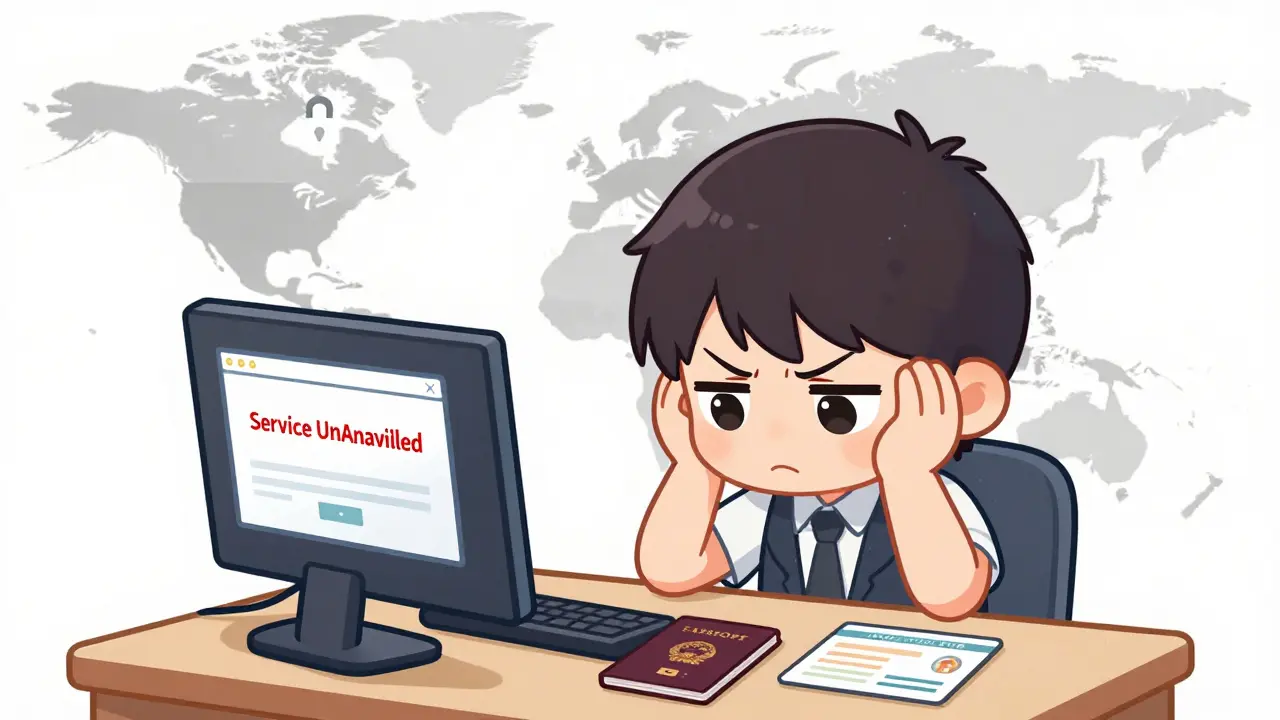
You might be staring at a "Service Unavailable" error on your screen right now. You have your ID ready, your bank details sorted, but Coinbase won’t let you in. It’s frustrating, especially when you see friends abroad buying Bitcoin with zero hassle. But here is the hard truth: Coinbase is not a global free-for-all; it is a heavily regulated financial platform that blocks access based on where you live. If you are outside their approved list of countries, or if you fall into a sanctioned zone, your options are severely limited-or non-existent.
As of early 2026, Coinbase operates in over 100 countries, but that number hides a complex web of restrictions. The difference between having full access to buy crypto with dollars or euros versus being locked out entirely often comes down to one thing: compliance with local laws and U.S. sanctions. Understanding why you are blocked, what you can still do, and which alternatives actually work in your region is the only way to navigate this landscape without losing money or getting your account frozen.
The Two Faces of Coinbase: App vs. Wallet
To understand the restrictions, you first need to know that Coinbase offers two distinct products, and they have completely different rules. Most people confuse them, which leads to unnecessary confusion.
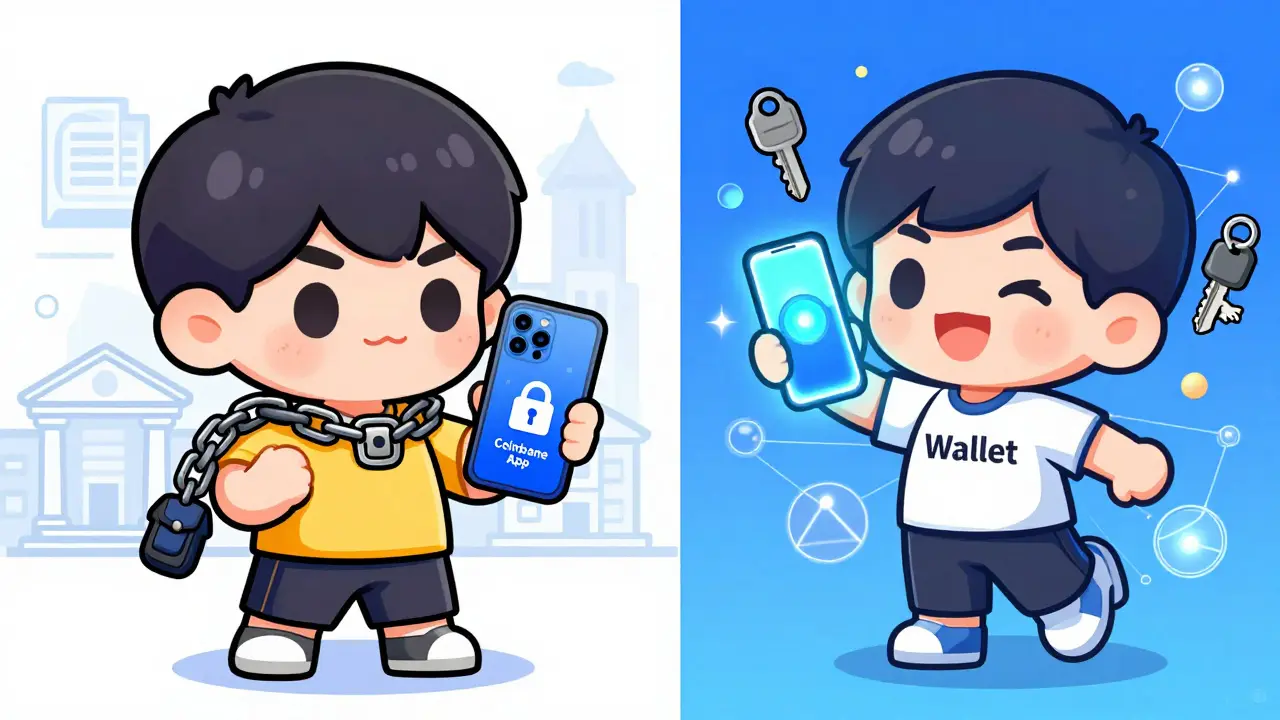
First, there is the Coinbase App. This is the centralized exchange where you deposit fiat currency (like USD, EUR, or GBP) via bank transfer or card to buy cryptocurrency. This service is strictly regulated. To use it, you must pass rigorous Know Your Customer (KYC) checks. This means uploading a government-issued ID and proving your address. The App is available in roughly 48 countries, including the U.S., U.K., Germany, France, and Singapore. If you are not in one of these jurisdictions, you cannot deposit fiat money here. Period.
Second, there is Coinbase Wallet. This is a self-custody, non-custodial wallet. It lives on your phone, and you control the private keys. Because Coinbase does not hold your assets, they don’t need to verify your identity for basic usage. You can download the Wallet app almost anywhere in the world-except for countries under strict sanctions. However, the Wallet does not allow you to buy crypto directly with your bank account. You can only receive crypto sent to you from other wallets or exchanges. For many users in restricted regions, this is a dead end because they have no way to get their first crypto without a fiat on-ramp.
| Feature | Coinbase App | Coinbase Wallet |
|---|---|---|
| Fiat On-Ramp (Buy with Bank/Card) | Yes (in ~48 countries) | No (Global restriction) |
| KYC Verification Required | Mandatory | Optional (for basic use) |
| Asset Custody | Coinbase holds your funds | You hold your private keys |
| Geographic Availability | Limited to regulated markets | Available globally (minus sanctions) |
| DApp Browser | Limited/None | Full Access |
Why Are Certain Countries Blocked?
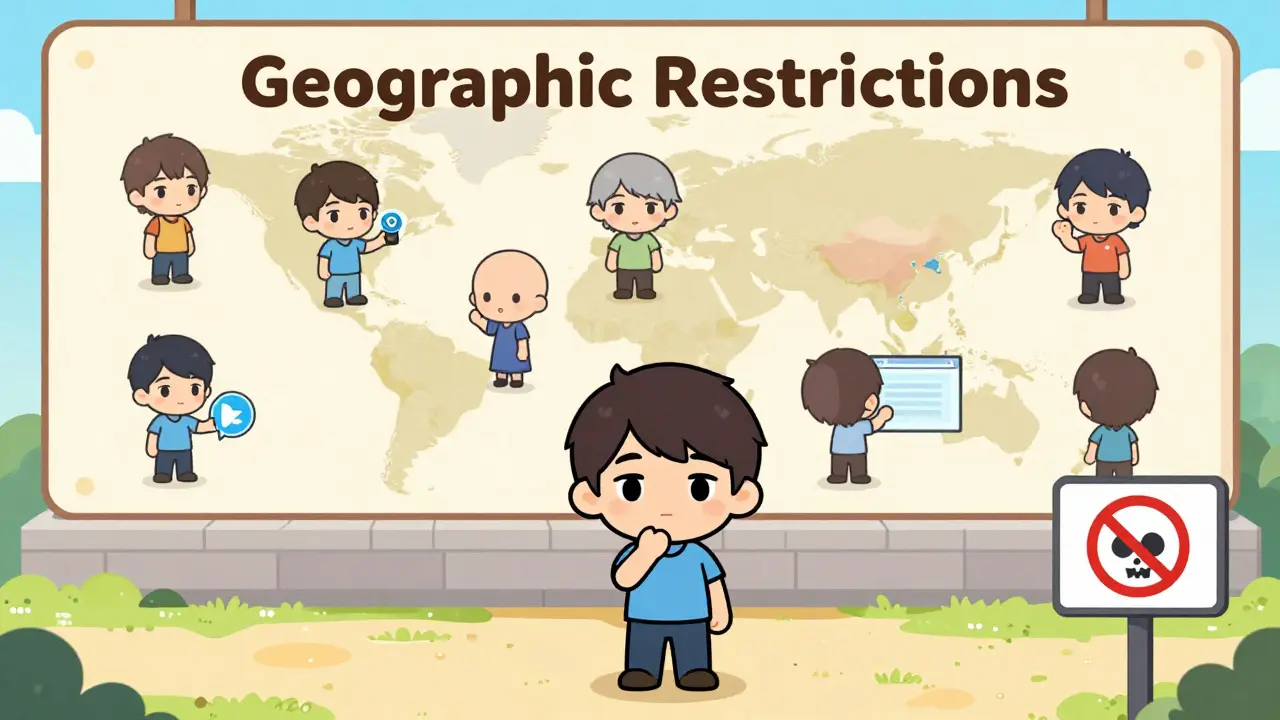
Coinbase doesn’t block countries arbitrarily. Their restrictions are driven by three main forces: U.S. Treasury sanctions, local regulatory bans, and operational risk.
The biggest factor is the Office of Foreign Assets Control (OFAC). As a U.S.-based public company (NASDAQ: COIN), Coinbase must comply with U.S. law. OFAC maintains a list of sanctioned countries and entities. If you reside in a country on this list, Coinbase will block your IP address and terminate any accounts linked to that location. Currently, this includes Russia, Iran, North Korea, and Syria. Even if you just travel to these places temporarily, using a VPN to bypass these blocks is a fast track to having your account permanently frozen. In March 2025, a user in the UAE lost $2,300 after trying to mask their location with a VPN. Don’t risk it.
Secondly, some countries actively ban cryptocurrency services. In these regions, Coinbase withdraws its license or shuts down operations to avoid legal penalties. For example, while China has long banned crypto trading, Coinbase never operated there officially. More recently, countries like Nigeria and Egypt have tightened regulations, leading to restrictions on fiat deposits. In India, the situation is volatile. Despite attempts to register with the Reserve Bank of India (RBI) in early 2025, regulatory uncertainty has kept full fiat services limited or paused, forcing many Indian users to rely on peer-to-peer methods or local exchanges.
Finally, there is the issue of "high-risk" jurisdictions. Countries with weak anti-money laundering (AML) laws may face stricter limits. For instance, users in Pakistan or Colombia might find that while the Wallet works, the App imposes heavy transaction holds (24-72 hours) or blocks certain features entirely. This isn’t a total ban, but it makes active trading difficult.
The European Shift: MiCA and New Rules
If you are in Europe, things are changing rapidly due to the Markets in Crypto-Assets (MiCA) regulation. Implemented fully in 2025, MiCA created a unified framework for crypto across the European Economic Area (EEA). This was supposed to make life easier for Coinbase, and in many ways, it did. It allowed Coinbase to expand its services to 30 EEA nations under a single license.
However, it also introduced new complexities. Not all EU countries adopted the same transitional rules immediately. For example, staking rewards for assets like Cardano (ADA) became unavailable in 12 EU countries during the transition period. Additionally, Coinbase had to restructure its European entity. Effective August 2025, Coinbase Luxembourg S.A. replaced Coinbase Europe Limited for users in Malta, Iceland, Liechtenstein, and Hungary. This means users in those specific countries had to undergo a brief migration process to ensure their accounts remained compliant. If you missed the notification emails, your account might have been temporarily suspended until you verified your status under the new entity.
What If You Are in a Restricted Country?
If you live in a country where the Coinbase App is blocked, you have limited options. Here is the reality check:
- You cannot legally use a VPN. Attempting to spoof your location violates Coinbase’s User Agreement. Their fraud detection systems track IP addresses, device fingerprints, and KYC data. If they detect a mismatch, they will freeze your funds and close your account. There is no appeal process for this.
- Use the Wallet for Receiving Only. If you can acquire crypto elsewhere (through friends, family, or decentralized exchanges), you can store it in Coinbase Wallet. This keeps your assets secure and gives you access to the broader DeFi ecosystem, but you still can’t buy crypto directly.
- Look for Local Alternatives. In many restricted regions, local exchanges offer better fiat on-ramps. In the Philippines, for example, users often turn to PDAX or Binance P2P. In Pakistan, Binance processes hundreds of thousands of daily transactions through peer-to-peer networks, whereas Coinbase offers nothing. While fees might be higher (e.g., 3.5% vs Coinbase’s 0.5%), it’s the only legal way to enter the market.
- Avoid Gray Market Services. Some third-party sites claim they can help you open a Coinbase account from a banned country. These are almost always scams designed to steal your identity and funds. Stick to regulated platforms available in your jurisdiction.
How to Check Your Eligibility Right Now
Before you spend time gathering documents, check if you are eligible. Coinbase updates its list frequently, so old blog posts might give you wrong information.
- Go to the official Coinbase website and try to create an account. The sign-up page will ask for your country of residence. If your country doesn’t appear in the dropdown menu, you are ineligible for the App.
- If you already have an account, log in and go to your Account Settings. Look for the "Country Restrictions" section. Coinbase updated its Help Center FAQ in January 2025 to include real-time status checks. If your account shows a warning banner, read it carefully.
- Check the User Agreement Section 1. It explicitly states that services are subject to termination "as required by law, regulation or any court." If your country introduces a new ban, Coinbase will enforce it quickly.
Remember, eligibility is based on where you reside, not just where you are visiting. If you move to a supported country, you can update your address and provide proof of residence (like a utility bill) to unlock full services. Conversely, if you move to a restricted country, you must withdraw your funds before the restrictions kick in.
Comparing Coinbase to Other Exchanges
If Coinbase is blocked in your country, you aren’t out of luck. Other exchanges have different geographic strategies. Binance, for instance, operates in more countries than Coinbase but faces its own set of restrictions (including bans in Canada and the Netherlands). Kraken is known for operating in over 190 countries with fiat services in 55, making it a strong alternative for users in Europe and Asia who want a regulated experience similar to Coinbase.
For those who want complete freedom from geographic restrictions, decentralized wallets like MetaMask are the ultimate solution. They operate in 195+ countries without any KYC requirements. However, MetaMask doesn’t solve the initial problem: how to get crypto in the first place. You still need a fiat on-ramp, which brings you back to the same regulatory hurdles.
| Exchange | Countries with Fiat Support | Key Restriction |
|---|---|---|
| Coinbase | ~48 | Strict OFAC compliance; limited emerging market access |
| Binance | ~70 | Banned in Canada, Netherlands, and others; high regulatory scrutiny |
| Kraken | 55 | More liberal than Coinbase but still avoids sanctioned zones |
| Local P2P Platforms | Varies by Region | Higher fees; counterparty risk |
Future Outlook: Will Restrictions Ease?
The trend in 2026 is toward tighter regulation, not looser. With the SEC lawsuit against Coinbase potentially resolving in late 2025, we could see further restrictions if the court rules against Coinbase’s broker-dealer defense. Analysts predict that geographic fragmentation could reduce Coinbase’s total addressable market by 40% by 2030. This means fewer countries will gain access, and existing users might face more friction.
On the flip side, as more countries adopt clear crypto frameworks (like the EU’s MiCA), Coinbase may expand into previously gray areas. Countries like South Africa and Brazil have shown interest in regulating crypto, which could open doors for Coinbase in the future. But for now, if you are in a restricted zone, plan accordingly. Rely on local solutions, keep your assets in self-custody wallets when possible, and never gamble with your account security by using proxies.
Can I use Coinbase if I am traveling to a restricted country?
You can likely still access your account if you are merely traveling, provided your registered address remains in a supported country. However, Coinbase monitors IP locations. If you stay in a sanctioned country for an extended period, they may flag your account for review. Do not attempt to change your registered address to a banned country while traveling there.
Why is Coinbase Wallet available in Russia but the App is not?
The Coinbase Wallet is a non-custodial tool. Since Coinbase does not hold your funds, they are not facilitating a financial transaction that violates U.S. sanctions. The App, however, involves fiat currency conversion and custody, which is strictly prohibited under OFAC rules for sanctioned countries like Russia.
Will Coinbase ever expand to India or Nigeria?
It depends on local regulations. In India, Coinbase has attempted to register with the RBI, but full fiat support remains uncertain due to tax and compliance hurdles. In Nigeria, central bank restrictions on crypto transactions have made entry difficult. Coinbase will only enter these markets if they can operate within the legal framework without risking their U.S. licenses.
What happens if my country gets banned after I’ve already bought crypto?
If your country is added to the restricted list, Coinbase will notify you. You will typically be given a window to withdraw your remaining funds to an external wallet or another supported exchange. You will likely lose the ability to buy or sell new assets. Act quickly upon receiving such notifications to avoid being locked out.
Is it safe to use a VPN to access Coinbase from a banned country?
No, it is extremely risky. Coinbase’s terms of service prohibit using virtual private networks to bypass geographic restrictions. Their security systems can detect VPN traffic and IP mismatches. Using a VPN can lead to immediate account suspension, frozen funds, and permanent blacklisting. It is not worth the potential loss of your investment.


Ellie Riddell
May 14, 2026 AT 07:25So the whole point is that if you live in a place with actual problems, you just get locked out of the digital economy entirely. It’s not really about safety, it’s about convenience for the shareholders.
Shelby Cantu
May 15, 2026 AT 12:51I wish they would just let us use the wallet to buy directly. The KYC process is so long and tedious right now.
Tobias Gjerlufsen
May 16, 2026 AT 02:08You are missing the fundamental point here because you clearly don't understand how OFAC works or why US public companies exist. Coinbase is listed on NASDAQ which means they are subject to US federal law regardless of where their servers are physically located. The idea that they could simply 'allow' transactions from sanctioned countries like Iran or North Korea without violating international sanctions is laughable. If they did that, every single one of their executives would be facing prison time for money laundering and aiding terrorist organizations. You cannot separate the platform from the jurisdiction that grants them their charter. This isn't corporate greed, it's basic compliance. People who think otherwise are either ignorant of financial law or willfully deluded.
Samara McCallum
May 17, 2026 AT 20:02i mean its kind of funny how we pretend this is all fair when half the world is basically banned from participating in the future economy
Ruben Michel
May 19, 2026 AT 17:06The distinction between the custodial exchange and the non-custodial wallet is often misunderstood by the layperson. One facilitates fiat entry under strict regulatory frameworks, while the other merely stores assets. To conflate the two is to demonstrate a lack of technical literacy regarding blockchain infrastructure and financial regulation.
Gavin Wonnacott
May 21, 2026 AT 08:45Get over it. If you can't afford to move to a country with stable laws, that's your problem not theirs. I'm tired of people whining about access when they live in places that actively ban crypto anyway. Just use P2P like everyone else does.
Sheldon Friesen
May 22, 2026 AT 00:14Look, I get the frustration!! But using a VPN is literally asking for your account to be frozen!!! They have systems to detect that stuff!! It's not worth the risk!!! Just find a local exchange instead!!!
Tricia Alach
May 22, 2026 AT 11:58its sad tho bcuz i want to try defi but my country is restricted so im stuck waiting for something to change maybe
Jan Gilmore
May 23, 2026 AT 06:49Let me explain something to you about MiCA. Most people don't realize that the European framework actually makes things harder for smaller players. Coinbase had to restructure their entire entity in Luxembourg to comply. This isn't just about blocking Russia; it's about creating a unified legal shield for themselves against EU regulators. If you're in Hungary or Malta, you were affected by this shift. It's a masterclass in regulatory arbitrage.
Caique Muniz
May 24, 2026 AT 19:38lol another article telling us what we already know. just use binance p2p and stop crying
Bradley Geldenhuys
May 26, 2026 AT 09:22Yall need to wake up and realize that self custody is the only way forward. Centralized exchanges are just honeypots waiting to fail. If you cant buy crypto legally then you shouldnt be buying it period. Learn to code and build your own solutions instead of relying on these gatekeepers.
robert Whitehead
May 26, 2026 AT 22:26The moral hazard here is immense. By restricting access, these platforms are effectively enforcing geopolitical boundaries through technology. It creates a two-tier system where citizens of compliant nations have financial freedom while others are left behind. This is not progress, it is digital colonialism disguised as compliance. We need decentralized protocols that cannot be shut down by a single entity's legal team.
Mike S
May 27, 2026 AT 18:11Oh wow, groundbreaking discovery. Coinbase blocks sanctioned countries. Who would have thought? I bet you didn't know that. Maybe next time read the terms of service before signing up. It's not rocket science.
Ashley Rodriguez
May 28, 2026 AT 02:05i feel like we should just accept that crypto is going to be fragmented forever and there is no perfect solution for everyone everywhere because governments are always going to try to control money flow and exchanges have to follow those rules or they will cease to exist completely
Bridget Coogle
May 29, 2026 AT 13:09It is good that they provide clear information though. At least we know where we stand. Better than guessing.
Zara Zaman
May 29, 2026 AT 18:38If you are in a sanctioned country you deserve to be blocked. These regimes do terrible things and funding them via crypto is unethical. Stop trying to bypass sanctions and take responsibility for where you live.
Larry Port
May 30, 2026 AT 14:12Interesting point about the DApp browser in the wallet. I didn't realize that was fully accessible even in restricted regions. That might be a workaround for some DeFi interactions if you can get funds in somehow.
Destiny Kilby
May 31, 2026 AT 18:29it seems very complicated to navigate all these rules and restrictions without making a mistake that costs you everything
Jerry CUNNINGHAM SR
June 2, 2026 AT 07:30We must respect the legal frameworks established by each nation. While it may seem inconvenient, compliance ensures the stability of the global financial system. Users should seek alternatives that are legally available in their jurisdiction rather than attempting to circumvent regulations.