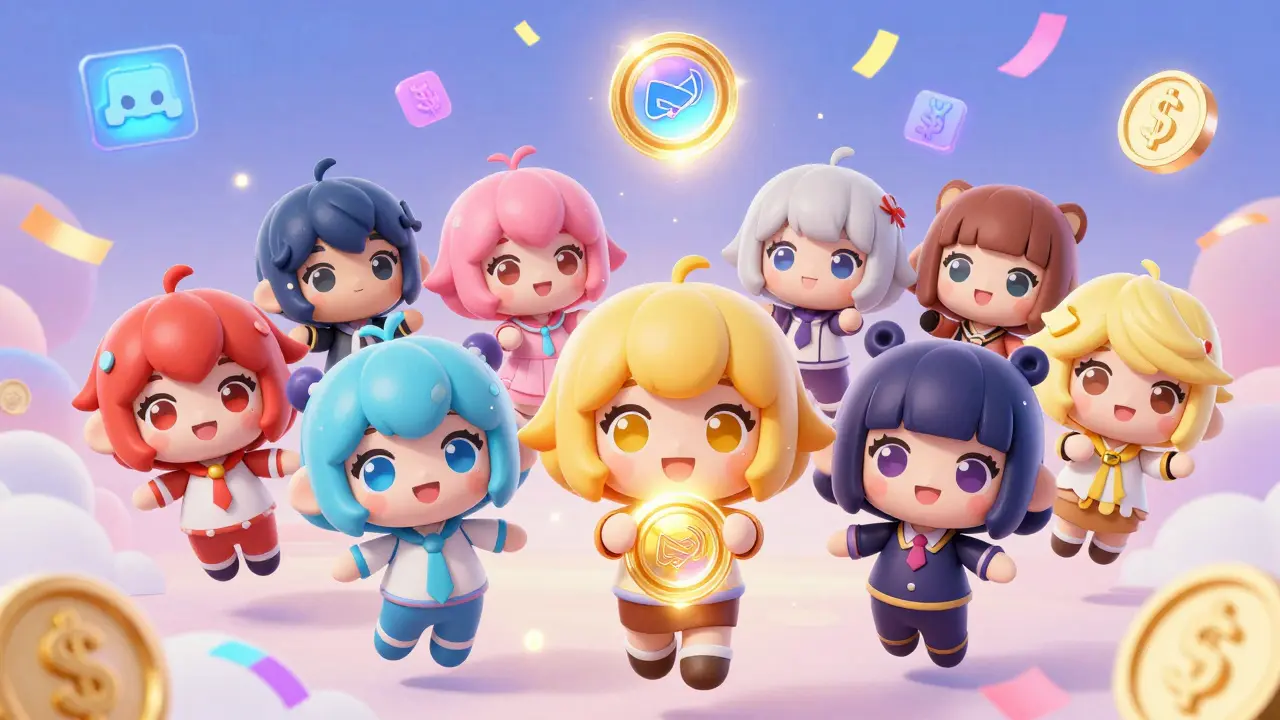
On January 24th, 2022, the Lepasa ecosystem dropped its first major NFT collection: the Polqueen. Unlike most NFT projects that sell their assets or run public mint sales, Lepasa chose a different path. The Polqueen NFTs were distributed as an airdrop - free to selected community members. This wasn’t just a giveaway. It was a strategic move to seed the Lepasa Metaverse with active users who would help build the world from the ground up.
What Was the Lepasa Polqueen NFT Airdrop?
The Polqueen collection consisted of 3,240 unique NFTs. Each one was a fully rigged 3D character, not just a JPEG. These weren’t meant for profile pictures or flipping. They were designed to be used inside the Lepasa Metaverse - as playable avatars with real function. The airdrop targeted early supporters, content creators, and active Discord members who had helped grow the project before its official launch.
There was no public mint. No wallet address spam. No pay-to-play. To get a Polqueen NFT, you had to be part of the community. That meant posting in Discord, helping new users, sharing memes, testing early builds, or creating guides. The team didn’t announce exact rules, but those who contributed consistently were rewarded. It felt less like a marketing stunt and more like an invitation to join a team.
Why Did Lepasa Choose an Airdrop Instead of a Sale?
Most NFT projects launch with a public mint to raise funds fast. Lepasa didn’t need that. They already had the $LEPA token trading on Uniswap, PancakeSwap, and QuickSwap. Their goal wasn’t quick cash - it was long-term engagement. By giving away Polqueen NFTs for free, they filtered out speculators and attracted builders.
Think of it like this: if you’re building a virtual city, you don’t want people who just want to sell their house. You want people who’ll open shops, fix roads, and invite others. The Polqueen airdrop did exactly that. It gave real utility to those who cared about the world, not just the price chart.
How Did Polqueen Fit Into the Larger Lepasa Ecosystem?
The Polqueen NFTs weren’t the most powerful in the Lepasa system. That title belonged to the Lepasa Bull Collection - only 1,210 total, earned through extreme community effort. But Polqueen was the entry point. It gave holders access to early land sales, special events, and voting rights in the metaverse’s development.
Every NFT in Lepasa had a power score called ALBP - Lepasa Bull Power. Polqueen NFTs carried a moderate ALBP, enough to buy smaller plots of virtual land but not enough to compete with the top-tier Bulls. Still, it was a foothold. Holders could later upgrade their status by participating in battles, quests, or content challenges on Discord. It turned ownership into progression.
The 3D rigging was a big deal. While most NFTs were static images, Polqueen characters had joints, animations, and physics ready for the metaverse engine. This meant you could move them, dress them, and use them in games - not just display them. That technical choice showed Lepasa wasn’t just jumping on the NFT bandwagon. They were building something that actually worked in a 3D space.
What Was the Role of the $LEPA Token?
The $LEPA token was the engine behind everything. You needed it to buy land, pay for upgrades, or trade NFTs on the Lepasa marketplace. But here’s the key: you didn’t need $LEPA to get your Polqueen NFT. That’s rare. Most airdrops require you to hold a token first. Lepasa flipped it. You got the NFT first, then used $LEPA to unlock its full potential.
This created a natural feedback loop. People who got Polqueen NFTs started buying $LEPA to interact with the metaverse. That drove demand for the token. And as more people joined, the value of both the NFTs and the token grew - not because of hype, but because they had real use.
Who Got the Airdrop? How Was It Selected?
Lepasa never published a public list of winners. But from community reports, the recipients fell into three groups:
- Early Discord members (joined before December 2021)
- Top contributors (most helpful replies, guides posted, event hosts)
- Content creators (YouTube videos, TikToks, or Twitter threads about Lepasa)
There were no random giveaways. No KYC forms. No gas fee traps. If you were quiet, you didn’t get one. If you showed up, helped others, and stayed active, you had a real shot. One user reported getting their Polqueen NFT after posting 147 helpful replies in a month. Another got it after making a 12-minute walkthrough video that went viral in the server.
Some people who thought they’d qualify didn’t get anything. Others who didn’t expect it did. That unpredictability kept people engaged. You couldn’t game the system. You had to be real.
What Happened After the Airdrop?
After January 2022, the Polqueen NFTs became the foundation of the Lepasa Metaverse. Holders formed guilds, rented out their characters for events, and even hosted virtual concerts inside their owned land. The NFTs didn’t just sit in wallets - they moved.
By mid-2023, over 60% of Polqueen holders had used their NFTs to buy virtual land. That’s a high adoption rate for any NFT project. The community grew to over 150,000 members on Discord. The $LEPA token’s liquidity increased by 300% in the first year after the airdrop.
But here’s the catch: Lepasa never launched the full metaverse. The game engine, land maps, and multiplayer features were promised - but never fully released. As of 2026, the Polqueen NFTs still exist on-chain. They’re still 3D-ready. But without the metaverse, they’re like keys to a door that never opened.
Was the Airdrop Successful?
By community standards - yes. It created a tight-knit group of builders who believed in the vision. By financial standards - mixed. The $LEPA token peaked in 2022 and has since declined, like many metaverse projects. The Polqueen NFTs still trade on secondary markets, but prices are low. Most holders aren’t selling. They’re waiting.
The real success? The airdrop proved that NFTs don’t need hype to matter. They need purpose. Lepasa gave people a tool, not a ticket. And that’s rare.
What Can You Learn From the Lepasa Polqueen Airdrop?
If you’re looking to join the next big airdrop, here’s what actually works:
- Join early - before the hype hits
- Be helpful, not loud - answer questions, make guides, fix bugs
- Don’t chase airdrops - chase value. If the project doesn’t have a plan beyond selling NFTs, walk away
- Check if the team has shipped anything real - code, demos, testnets
- Airdrops that require no token hold or gas fees are usually more trustworthy
The Polqueen NFTs didn’t make anyone rich. But they gave a small group of people a chance to help build something new. And in crypto, that’s more valuable than any price spike.
Where Are Polqueen NFTs Now?
As of January 2026, the Polqueen collection still exists on Ethereum and BSC chains. You can view them on OpenSea or LooksRare. But the Lepasa Metaverse platform is inactive. The Discord server is quiet. The team hasn’t posted updates since 2024.
Some holders still hope for a revival. Others have moved on. A few have repurposed their NFTs as 3D assets in other indie games. One developer even used a Polqueen model in a Unity demo for a new metaverse project.
The lesson? Airdrops aren’t guaranteed wins. But when done right, they can create something lasting - even if the original project fades.

Caitlin Colwell
January 10, 2026 AT 09:57Denise Paiva
January 11, 2026 AT 16:28Charlotte Parker
January 11, 2026 AT 22:38Calen Adams
January 13, 2026 AT 15:46Paul Johnson
January 14, 2026 AT 22:19Meenakshi Singh
January 14, 2026 AT 23:26Michael Richardson
January 16, 2026 AT 07:40Sabbra Ziro
January 17, 2026 AT 19:50Jessie X
January 19, 2026 AT 10:42Natalie Kershaw
January 20, 2026 AT 06:36Danyelle Ostrye
January 20, 2026 AT 17:51Becky Chenier
January 22, 2026 AT 09:14Staci Armezzani
January 23, 2026 AT 11:13Katrina Recto
January 24, 2026 AT 20:02Ritu Singh
January 25, 2026 AT 11:37LeeAnn Herker
January 27, 2026 AT 06:55Andy Schichter
January 28, 2026 AT 00:52Valencia Adell
January 28, 2026 AT 09:20Sarbjit Nahl
January 29, 2026 AT 02:18Kelley Ramsey
January 30, 2026 AT 12:05Emily Hipps
January 31, 2026 AT 18:11Jacob Clark
February 2, 2026 AT 15:30Tracey Grammer-Porter
February 2, 2026 AT 23:43Don Grissett
February 4, 2026 AT 07:08kris serafin
February 4, 2026 AT 13:22