Imagine trying to run a bank in Lagos without a license. You’d be shut down fast. Now imagine doing that with cryptocurrency. For years, Nigeria’s crypto scene was the Wild West-huge volume, zero rules, and plenty of scams. But that era is closing. If you want to operate a Digital Asset Exchange in Nigeria today, you need a stamp of approval from the Securities and Exchange Commission. The new Investments and Securities Act 2025 changed the game by officially classifying digital assets as securities. This isn’t just bureaucratic red tape; it’s a survival kit for legitimate businesses.
You might be wondering why this matters so much right now. Well, the SEC has been tightening its grip since 2022, but the 2025 Act gives them real teeth. It supersedes the old 2007 laws and grants comprehensive authority over exchanges and Virtual Asset Service Providers (VASPs). If you’re an operator, local or foreign, targeting Nigerian investors, you can no longer hide behind the "it's not regulated" excuse. The rules are clear, the penalties are strict, and the path to compliance is specific. Let’s break down exactly what you need to do to stay legal and profitable.
The New Legal Foundation: ISA 2025 and SEC Authority
The backbone of current regulation is the Investments and Securities Act 2025 (ISA 2025). Before this, crypto existed in a gray area. Now, it’s squarely under the SEC’s jurisdiction. Director-General Emomotimi Agama made it clear: the goal is a resilient capital market that protects investors while allowing innovation. This shift means that any entity facilitating the trading of virtual assets must register formally.
This change impacts everyone. Whether you’re a homegrown startup like Quidax or a global giant eyeing West Africa, the law applies if you serve Nigerian users. The SEC defines these entities broadly. If you target Nigerians through direct emails, promotions, or even just have agents on the ground, you fall under this regulatory umbrella. Ignoring this doesn't just risk fines; it risks being blocked entirely.
Core Licensing Requirements: Capital and Documentation
So, what does it actually take to get licensed? It starts with money and paperwork. The SEC isn’t letting just anyone set up shop. The barrier to entry is designed to filter out fly-by-night operators who can’t handle serious volume or sudden market swings.
First, look at your wallet. The minimum paid-up capital requirement is ₦500 million (roughly $325,000 USD depending on exchange rates). That’s not pocket change. But here’s the good news: you don’t need to keep all that cash sitting idle in a checking account. The SEC allows this capital to be held in bank balances, fixed assets, or investments in quoted securities. However, you must prove where the money came from. Expect rigorous verification of fund sources. They want to ensure the capital isn’t recycled from dubious crypto profits.
Then there’s the fidelity bond. You need to secure a bond covering at least 25% of your paid-up capital. For the minimum tier, that’s ₦125 million. Think of this as insurance against employee fraud or operational mishaps. It adds a layer of security for users, ensuring that if things go wrong internally, there’s a financial buffer.
Your documentation needs to be spotless. You’ll need a Certificate of Incorporation from the Corporate Affairs Commission (CAC). Crucially, your Memorandum and Articles of Association (MEMART) must explicitly state that cryptocurrency exchange operations are part of your business objectives. If your MEMART says you’re a logistics company, you won’t get approved. You also need standard CAC forms (like Form 7) and audited financial statements. If you’re a new entity, a statement of affairs will suffice initially, but audit-ready books are non-negotiable.
| Requirement Type | Specific Detail | Notes |
|---|---|---|
| Minimum Paid-Up Capital | ₦500 Million (~$325k) | Can be in cash, assets, or securities |
| Fidelity Bond | ₦125 Million (25% of capital) | Covers internal fraud/errors |
| Corporate Docs | CAC Cert, MEMART, Forms | MEMART must list crypto activities |
| Financials | Audited Statements | New firms may submit Statement of Affairs |

The Accelerated Regulatory Incubation Programme (ARIP)
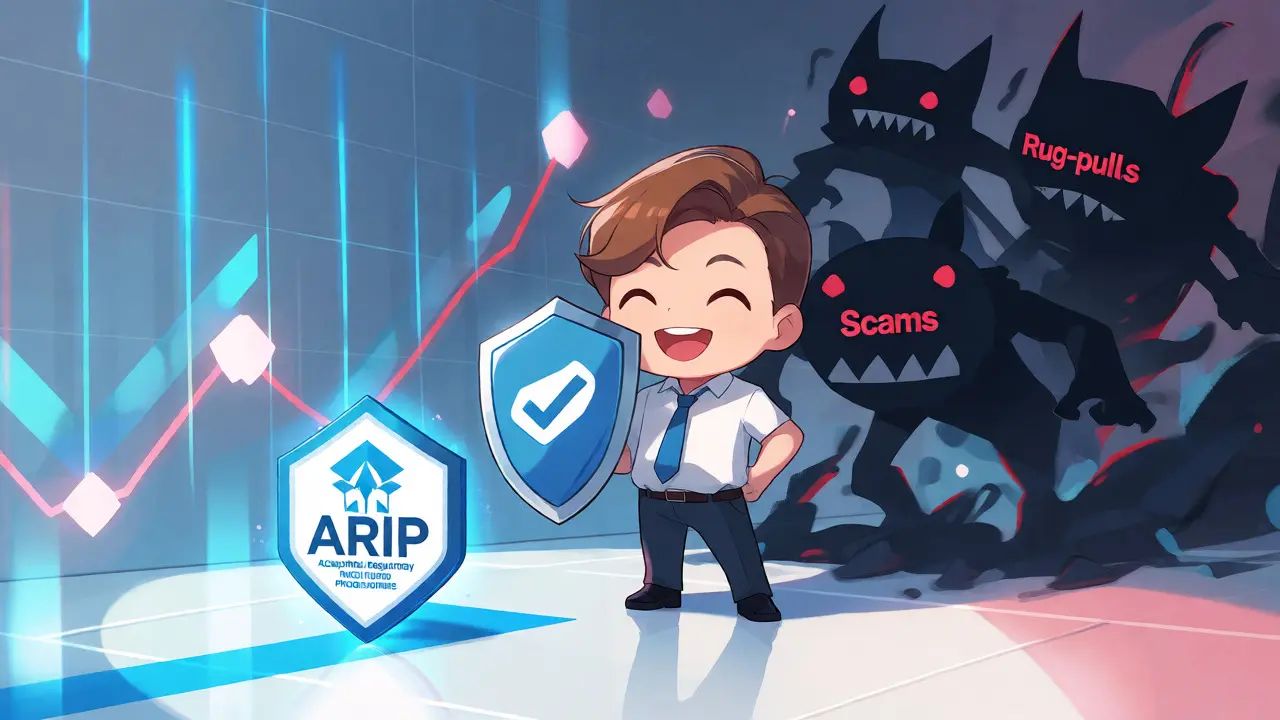
If the full licensing process sounds daunting, the SEC introduced a shortcut: the Accelerated Regulatory Incubation Programme (ARIP). Launched in June 2024, ARIP is designed to fast-track viable startups. It’s not a free pass, but it provides a clearer pathway for provisional licenses. Since its inception, only two companies-Quidax and Busha-have secured these provisional approvals. They are the pioneers, proving that the system works if you meet the criteria.
Why should you care about ARIP? Because speed matters in crypto. Waiting months for a full license can kill momentum. ARIP offers a structured environment where you can operate under supervision while finalizing broader compliance. SEC officials indicated in late 2024 that they intend to move quickly, issuing more provisional licenses throughout 2025 and 2026. If you’re a smaller player, getting into ARIP is your best bet to enter the market legally without drowning in upfront costs immediately.
Compliance: AML, KYC, and Operational Restrictions
Getting the license is step one. Keeping it requires daily discipline. The core of ongoing compliance revolves around Anti-Money Laundering (AML) and Combating the Financing of Terrorism (CFT). While the ISA 2025 doesn’t spell out every single technical procedure, it mandates that exchanges follow Central Bank of Nigeria (CBN) guidance. In practice, this means robust Know Your Customer (KYC) protocols.
You cannot allow anonymous transactions. Every user must be identified and verified. This involves collecting government-issued IDs, proof of address, and sometimes liveness checks. Ongoing monitoring is equally critical. You need systems that flag suspicious transfers automatically. The SEC wants to monitor transactions partly for tax purposes, so clean data trails are essential.
There are also strict operational restrictions. One major rule prohibits providing direct or indirect financial assistance to investors, officers, or employees for trading on their own platforms. No lending your own money to staff to trade on your exchange. This prevents conflicts of interest and potential manipulation. Additionally, the "No Objection Rules" apply to asset listings. You cannot simply add a new token because it’s trending. You need prior SEC approval before trading any virtual asset. This gatekeeping mechanism aims to stop rug-pulls and meme coin manias from destroying retail investors.
Market Reality: Why Compliance Matters to Users
You might think all this regulation scares away customers. Interestingly, research suggests the opposite. A survey by Busha found that nearly half of Nigerian crypto users cited security concerns as the primary barrier to adoption. Scams, rug-pulls, and unregulated platforms make people nervous. By complying with SEC rules, you signal safety. Licensed exchanges offer a legitimate alternative to risky peer-to-peer trades.
However, compliance adds friction. Cross-border payments become slower due to stringent verification steps. Local partners must verify your license status, which can slow down integration. But for serious traders and institutions, this friction is worth it. They prefer paying slightly higher fees or waiting a bit longer for transaction confirmation if it means their funds aren’t disappearing overnight.
Future Outlook: Taxation and Expansion
The landscape is still evolving. The SEC plans to expand its licensing framework further. There’s active discussion about cryptocurrency taxation. While the ISA 2025 focuses on regulation, revenue generation via crypto taxes is on the agenda. Currently, it’s unclear if specific tax amendments are fully integrated into the enacted act, but expect clarity soon. The SEC wants centralized exchanges to facilitate easy monitoring for tax collection.
For foreign operators, the message is clear: you can’t ignore Nigeria. With millions of young, tech-savvy citizens using stablecoins to hedge against inflation, the market is too big to skip. The transition from informal P2P trading to institutionalized services is underway. Those who adapt to the SEC’s requirements now will dominate the next phase of growth.
Do I need a license if I’m a foreign exchange serving Nigerians?
Yes. The SEC regulations apply to foreign or non-residential operators that actively target Nigerian investors. This includes marketing through publications, direct emails to Nigerian addresses, or having agents within the country. If you serve Nigerian clients, you must comply with SEC licensing and operational rules.
What is the minimum capital required for a crypto exchange license?
The minimum paid-up capital is ₦500 million. This can be held in bank balances, fixed assets, or investments in quoted securities. Additionally, you must secure a fidelity bond worth at least 25% of this amount, which is ₦125 million.
How long does the licensing process take?
Timelines vary, but the Accelerated Regulatory Incubation Programme (ARIP) aims to speed this up. Full licensing can take several months depending on document readiness. Provisional licenses via ARIP are faster, with early adopters like Quidax and Busha receiving theirs relatively quickly after application.
Can I list any cryptocurrency I want?
No. Under the "No Objection Rules," exchanges must obtain prior approval from the SEC before listing and trading any new virtual or digital asset. This prevents the proliferation of scam tokens and ensures quality control.
What happens if I operate without a license?
Operating without a license exposes you to enforcement actions, including fines and potential shutdown. The SEC has increased penalties for violations, particularly those linked to Ponzi schemes or misleading investors. Banks and payment processors may also refuse to work with unlicensed entities.