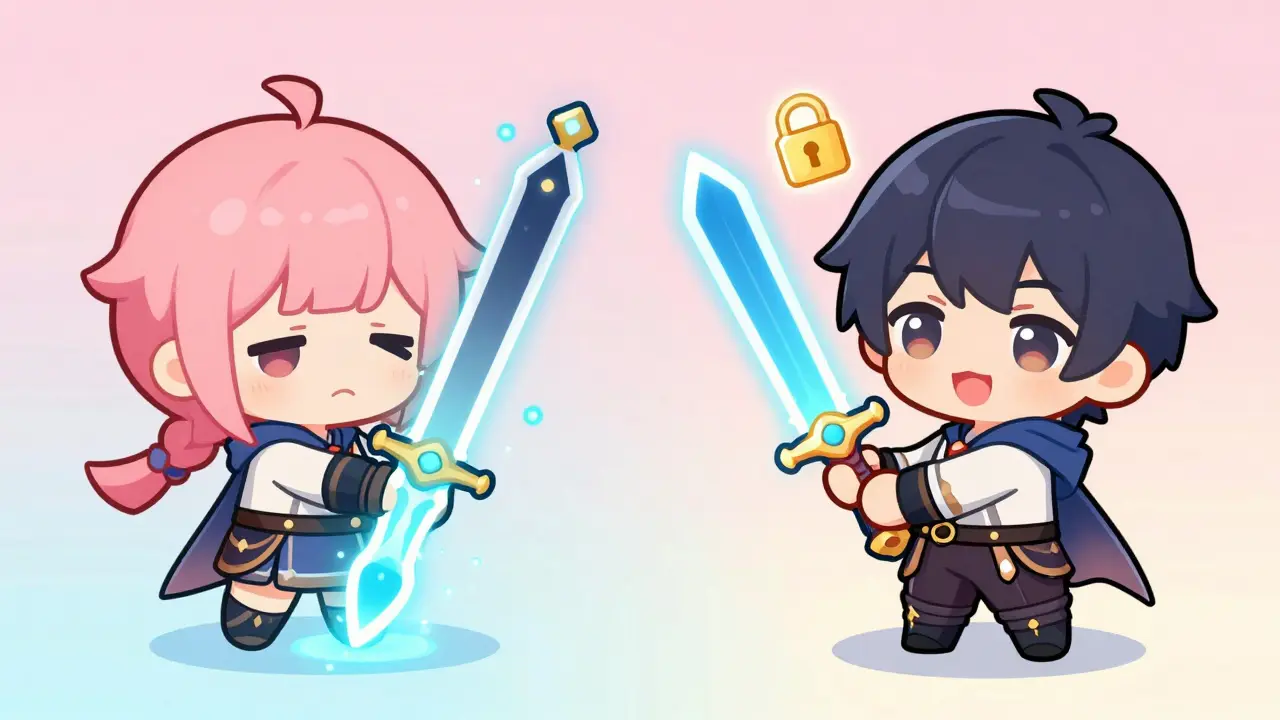
Imagine spending a hundred hours grinding for a legendary sword in a game, only to have the developers shut down the servers, leaving you with nothing. That is the reality of traditional gaming. Now, imagine a world where that same sword is a digital asset you actually own, which you can sell on a marketplace for rent or cold hard cash. This is the core promise of Play-to-Earn is a gaming model where players earn cryptocurrency and tradeable digital assets through gameplay. Often called P2E, it flips the script on how we spend our leisure time.
But is getting paid to play actually fun, or does it just turn your favorite hobby into a second job? The gap between traditional gaming and the new wave of Web3 titles isn't just about technology; it's about who holds the power and the money. Let's break down how these two worlds collide and where they diverge.
The Fundamental Shift in Ownership
In a traditional game, you aren't really buying a skin or a character; you're buying a license to use it. If you've ever spent $20 on a Fortnite skin, you've likely ignored the fine print: you don't own that item. If Epic Games decides to ban your account or close the game, your investment vanishes. In the industry, this is a closed-loop economy where 90-100% of the profits stay with the developer.
P2E changes this by using NFTs is Non-Fungible Tokens that represent unique ownership of a specific in-game asset on a blockchain. . When you earn a rare item in a blockchain game, it's recorded on a public ledger like Ethereum is a decentralized, open-source blockchain with smart contract functionality. or BNB Chain is a blockchain ecosystem designed for high-speed, low-cost smart contract execution. . This means you can take your asset out of the game and sell it on external markets like OpenSea. You move from being a consumer to a producer.
How the Money Actually Works
Traditional games rely on a straightforward business model: you buy the game (usually around $60 for a AAA title) or play for free and buy microtransactions. The money flows one way-from your wallet to the company's bank account. For most, the reward is pure entertainment or a sense of achievement.
P2E games often use a dual-token system to keep the economy moving. Take Axie Infinity is one of the first major P2E games that allowed players to earn tokens by battling digital pets. as an example. They used AXS for governance (voting on game changes) and SLP for gameplay rewards. While this sounds great, it introduces volatility. If the token price crashes, your "earnings" vanish overnight. In fact, some early P2E projects saw token prices plummet from peaks of $155 down to just a few dollars in under two years.
| Feature | Traditional Gaming | Play-to-Earn (P2E) |
|---|---|---|
| Asset Ownership | Developer-controlled (License) | Player-owned (NFTs) |
| Primary Motivation | Entertainment & Achievement | Financial Gain & Utility |
| Revenue Flow | Player $\rightarrow$ Developer | Ecosystem $\leftrightarrow$ Player |
| Onboarding Time | Fast (15-30 minutes) | Slow (2-4 hours) |
| Risk Level | Low (Loss of time/money) | High (Crypto volatility) |
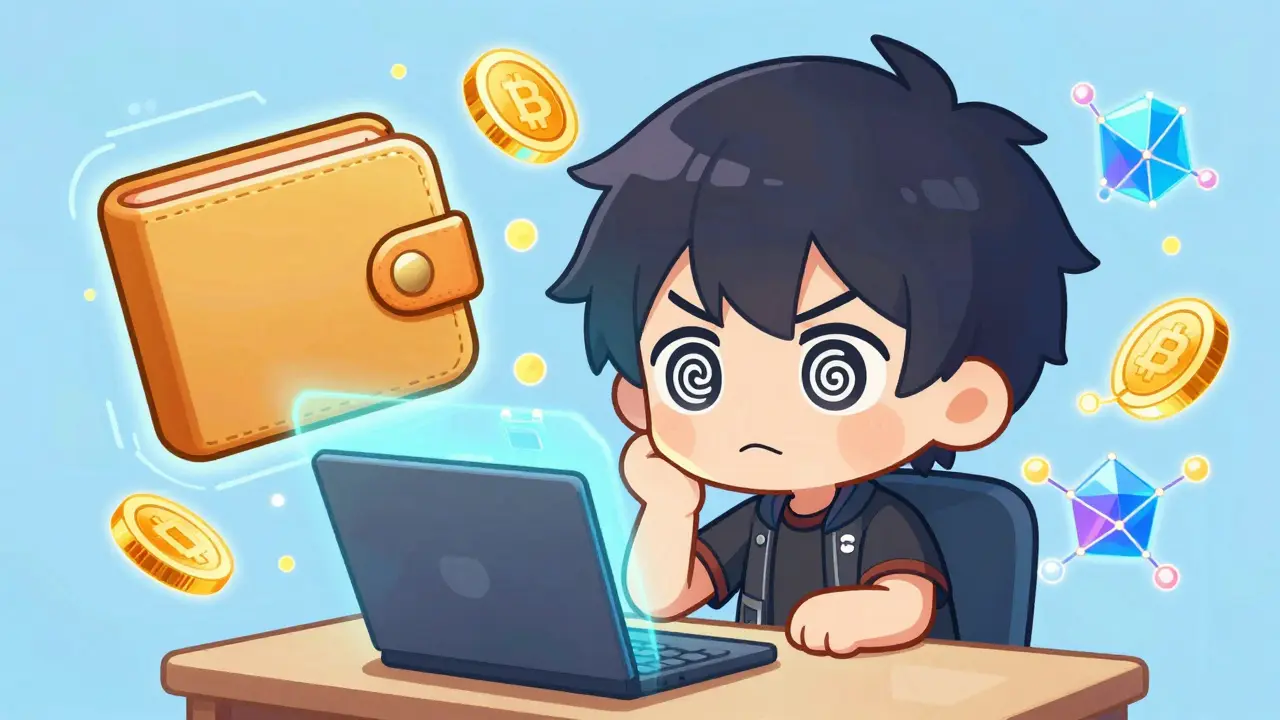
The "Job" Problem: Fun vs. Finance
Here is where the friction starts. When you add a paycheck to a game, the psychology changes. For players in emerging economies like the Philippines or Venezuela, P2E has been a literal lifesaver, providing a primary income source during periods of hyperinflation. But for the average gamer, it can feel like a chore. Why spend four hours a day doing a repetitive task if the only reason is to earn $10? This is often called "gaming as labor."
Research suggests that nearly 43% of P2E players feel their enjoyment drops because of the financial pressure to maximize earnings. If you're playing to win money, you stop taking risks and start optimizing for efficiency. The magic of discovery in a game is replaced by a spreadsheet of ROI calculations. This is why we're seeing a shift toward "Play-and-Earn" (P&E), where the focus returns to fun, and earning is just a nice side effect.
Breaking Down the Barrier to Entry
If you want to play a traditional game, you buy a console, download the app, and you're in. It's seamless. P2E, however, has a steep learning curve. To get started, you typically need to:
- Set up a Crypto Wallet is a digital tool like MetaMask that allows users to interact with the blockchain and store private keys. .
- Buy cryptocurrency from an exchange to cover "gas fees" (transaction costs).
- Purchase a starter NFT to even enter the game world.
- Learn how to navigate decentralized exchanges to cash out your earnings.
This process can take hours and requires a level of technical knowledge that scares off the average person. Until blockchain complexity is hidden in the background, P2E will struggle to reach the billions of players that traditional titles like Call of Duty or Fortnite enjoy.
The Future: Web3 Gaming and Beyond
The industry is currently moving away from the pure "GameFi" phase. We are entering the era of Web3 Gaming is the evolution of P2E that prioritizes gameplay and ownership over pure financial speculation. . Instead of just "earning," the focus is now on "owning." This means creating games that are actually fun to play, where the blockchain is just the plumbing that allows you to own your gear.
Hybrid models are winning. Games that prioritize a great story and tight mechanics, but allow you to trade your items, are far more sustainable. The early "ponzinomics" of P2E-where the only way to make money was to recruit new players-are being replaced by real utility. If a game is fun, people will play it regardless of the money; if it also lets them own their assets, they'll stay for the long haul.
Is Play-to-Earn actually sustainable?
Early pure P2E models were largely unsustainable, with about 70% failing within 18 months because they relied on a constant influx of new players to pay old ones. However, new "Play-and-Earn" and "Play-to-Own" models are more sustainable because they focus on actual entertainment value and utility-based assets rather than just speculative token rewards.
Do I need to be a crypto expert to start P2E gaming?
Currently, yes. You need to understand how to manage a digital wallet, handle private keys, and deal with cryptocurrency volatility. However, the industry is moving toward "abstracting" this complexity, meaning future games will likely let you sign up with an email while the blockchain handles the ownership in the background.
What is the main difference between an in-game item and an NFT?
A traditional in-game item is a line of code in a company's private database; they can delete it or change its stats at any time. An NFT is a token on a public blockchain. It provides verifiable proof of ownership that exists independently of the game developer, allowing you to sell it on third-party marketplaces.
Can I really make a living playing P2E games?
In some emerging economies, players have used P2E to replace minimum wage income. However, for most people, it is highly risky. Token prices can crash overnight, and the time investment required to make significant money often turns the game into a full-time job, which can lead to burnout.
Which blockchain is best for gaming?
Ethereum is the most secure and widely used for high-value NFTs, but its high gas fees can be a barrier. Networks like BNB Chain and Polygon are more popular for active gaming because they offer much faster transactions and significantly lower fees, making frequent in-game trades viable.
Next Steps for Gamers
If you're a traditional gamer curious about this space, start small. Don't dump your life savings into a starter NFT. Instead, look for "Play-and-Earn" titles that offer a free-to-play entry point. This lets you test the mechanics without risking capital.
For those already in the crypto world, focus on the utility. Ask yourself: "If the token price went to zero, would I still enjoy playing this game?" If the answer is no, you're not playing a game-you're trading a volatile asset. The real winners in the next few years will be the games that remember that gaming, first and foremost, is supposed to be fun.