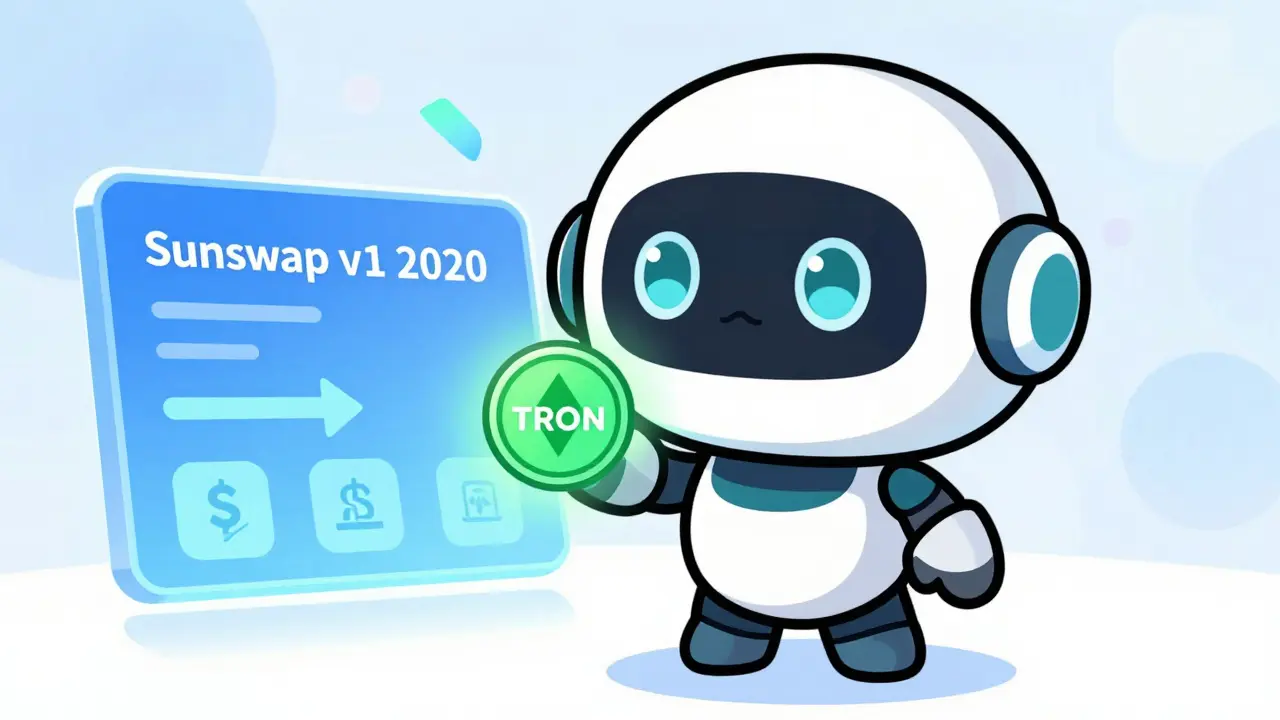
Remember the early days of DeFi on TRONa blockchain network known for high-speed transactions and low fees? Back in 2020, Sunswap v1the first decentralized token exchange protocol built specifically for the TRON network promised simple, instant trading for TRC-20 tokens without any middlemen. It sounded perfect. But if you are looking at Sunswap v1 today in 2026, you need to stop and read this carefully. The platform that once touted a "near-perfect security track record" is now surrounded by red flags, fraud warnings, and silence from its developers.
The Quick Reality Check
Before we dig into the technical history, here is the bottom line. Sunswap v1 is technically still online, but it is effectively dead as a legitimate trading venue. Coingecko, a major data aggregator, gives it a reliability rating of zero. In late 2024 and into 2025, reports showed only five cryptocurrencies being traded with zero transaction volume in some months. More alarmingly, regulatory bodies like the Washington State Department of Financial Institutions have issued consumer alerts linking the name "SunSwap" to sophisticated withdrawal scams where investors lost thousands trying to access their funds.
If you have money stuck there, do not send more. If you are considering using it, absolutely do not. There are safer, active alternatives on the TRON network and elsewhere. This review breaks down how Sunswap v1 went from a pioneering DEX to a cautionary tale.
What Was Sunswap v1 Supposed to Be?
To understand why people trusted it initially, we have to look at its origins. Launched during the industry's "DeFi Year" of 2020, Sunswap v1 was created by the SUN.io team. Its goal was straightforward: provide a decentralized exchange (DEX) exclusively for TRC-20 tokens. Unlike centralized exchanges like Binance or Coinbase, which hold your funds, Sunswap operated as an Automated Market Maker (AMM). This means prices were determined by smart contracts and liquidity pools rather than an order book.
The selling points were clear:
- No Intermediaries: You swapped tokens directly from your wallet.
- Low Fees: A standard 0.3% fee per swap, which went entirely to liquidity providers, not the platform.
- Anonymity: No KYC (Know Your Customer) verification required.
- Speed: Leveraging TRON’s fast blockchain for sub-second finality when the network wasn’t congested.
For users who wanted to trade TRX and other TRC-20 tokens without dealing with email verifications or identity checks, it seemed like a dream. Early reviews from 2020-2021 praised its "intuitive UI" and "eco-friendly application" design. It filled a niche gap when Ethereum-based DEXs like Uniswap were suffering from massive gas fees.
The Red Flags: From Decline to Fraud Warnings
Things started going wrong around 2022. As the broader crypto market cooled, so did activity on Sunswap. By Q1 2022, daily active users peaked at around 85,000, but that number plummeted to fewer than 1,200 by mid-2024. The code repositories on GitHub haven't been updated since July 2022. That is three years of no development, no bug fixes, and no community engagement from the core team.
But the lack of updates is just the beginning. The real danger emerged in 2024 and 2025. Regulatory agencies began documenting specific fraud cases involving platforms using the SunSwap name. Here is what happened in documented cases:
In one instance reported to the Washington State Department of Financial Institutions, an investor deposited $9,000. The platform credited them with a "bonus" of over $10,000, showing impressive profits on a screen with a 90-second timer. When the user tried to withdraw, they were blocked. They were told they needed to pay an "advanced verification fee" to release the funds. Another victim invested $85,000 and was asked to pay $22,000 in fees before they could withdraw anything. These are classic signs of a "pig butchering" or advance-fee scam.
Reddit threads in r/CryptoScams from mid-2024 contained dozens of verified reports describing identical patterns: fake profits displayed on a timer, followed by demands for thousands of dollars in undisclosed fees to unlock withdrawals. Trustpilot data from late 2024 showed Sunswap accumulating hundreds of negative reviews, with nearly 90% mentioning "withdrawal scam."
| Feature | Sunswap v1 (Original Intent) | Sunswap Name (Current Risk) |
|---|---|---|
| Trading Volume | Active during 2021 DeFi boom | Zero to negligible; Coingecko reports 0 volume |
| Security | Relied on TRON blockchain consensus | Linked to fraud alerts; no regulatory oversight |
| Withdrawals | Direct to wallet via smart contract | Blocked unless "fees" are paid (scam pattern) |
| Development | Regular updates in 2020-2021 | No code updates since July 2022 |
| Regulatory Status | Unregulated DEX | Flagged by WA State DFI for potential fraud |
Why Did It Fail? Technical and Market Limitations
Even before the fraud allegations, Sunswap v1 had significant structural weaknesses that limited its longevity. First, it was locked into the TRON ecosystem. It only supported TRC-20 tokens. If you wanted to trade ERC-20 tokens from Ethereum or assets on Solana, you couldn't. This made it a niche product.
Second, liquidity was always an issue. In an AMM model, you need deep liquidity pools to prevent slippage. Because Sunswap never gained the same traction as Uniswap or PancakeSwap, traders often faced up to 15% slippage on less popular tokens. That means if you tried to swap $1,000 worth of a minor token, you might only receive $850 worth of the target token due to poor pricing depth.
Third, the lack of cross-chain functionality became a fatal flaw. The crypto world moved toward interoperability. Users wanted to move assets between chains easily. Sunswap stayed isolated. Meanwhile, competitors like Uniswapthe leading decentralized exchange on Ethereum expanded to multiple chains, and PancakeSwapa major DEX on Binance Smart Chain offered higher yields and better marketing. Sunswap simply faded into irrelevance.
Is There a Difference Between Sunswap v1 and the Scam Sites?
This is a crucial distinction. The original Sunswap v1 was a legitimate, albeit poorly maintained, decentralized protocol. It ran on smart contracts that were open-source. However, the entity behind the original code appears to have abandoned ship. What remains today are likely imposter sites or phishing pages using the "SunSwap" brand to lure victims.
Cryptolegal.uk listed Sunswap among "fake crypto exchanges" in their 2025 report. The pattern described by regulators-where the platform looks like a game with a timer and demands fees for withdrawal-is not how the original automated market maker worked. The original DEX allowed direct swaps. The current operations demanding upfront fees for withdrawals are centralized scams masquerading as a DEX. This confusion is dangerous because new users searching for "Sunswap" may land on these fraudulent interfaces instead of realizing the original protocol is dead.

Safe Alternatives for TRON Traders
If you are looking to trade TRC-20 tokens safely, do not use Sunswap. Instead, consider these active, reputable options:
- JustLend / JustSwap: Part of the JUST ecosystem on TRON, these are active DeFi protocols with transparent governance and regular updates.
- SunSwap V2 (if available and verified): Note that even newer versions require extreme caution. Always verify the official contract addresses from trusted sources like CoinMarketCap or CoinGecko, not random search results.
- Multi-Chain DEX Aggregators: Platforms like 1inch or Matcha can route trades across multiple networks, including TRON, ensuring you get the best price without relying on a single thin pool.
- Centralized Exchanges (CEXs): For beginners, established CEXs like KuCoin or Gate.io support many TRC-20 tokens and offer customer support if things go wrong, unlike a dead DEX.
What To Do If You Are Stuck
If you have funds trapped in a site claiming to be SunSwap and are being asked to pay fees to withdraw, follow these steps immediately:
- Stop Sending Money: The fees will never unlock your funds. This is a sunk cost fallacy trap. Every additional dollar you send is lost.
- Document Everything: Take screenshots of the interface, the "balance," the fee demands, and any communication with "support."
- Report It: File a report with your local financial regulator (like the FTC in the US or the FCA in the UK) and with the Washington State DFI if applicable, as they are tracking these specific cases.
- Contact Your Wallet Provider: If you used a hardware wallet, ensure it is secure. If you connected a browser extension wallet like TronLink, revoke permissions for the malicious site immediately in your wallet settings.
Recovery is difficult in crypto, especially with scams. But sending more money is never the solution. Professional recovery services often charge high fees and have mixed success rates; be wary of anyone promising guaranteed recovery for a fee.
Final Verdict: Avoid Sunswap v1
Sunswap v1 was a pioneer in its time, but it has long since expired. The combination of zero development activity, zero trading volume, and active fraud warnings makes it a complete no-go zone. The name itself has been hijacked by scammers targeting desperate investors. In the world of decentralized finance, trust is earned through transparency, active maintenance, and community verification. Sunswap has none of these. Stick to well-audited, active platforms with strong communities and clear regulatory standing. Your capital is too valuable to risk on a ghost protocol.
Is Sunswap v1 still operational in 2026?
Technically, the website may load, but it is not operational for legitimate trading. Coingecko reports zero transaction volume, and the code has not been updated since 2022. It is considered abandoned and potentially unsafe.
Why does Sunswap ask for a fee to withdraw my money?
Legitimate decentralized exchanges do not require upfront fees to withdraw funds. If a site asks for a "verification fee" or "tax payment" to release your crypto, it is almost certainly a scam. Do not pay it.
What is the Coingecko reliability rating for Sunswap?
Coingecko assigns Sunswap a reliability rating of 0, indicating it is non-operational or highly risky for trading purposes.
Are there safe alternatives to Sunswap on TRON?
Yes. Consider using JustSwap, SunSwap V2 (only if verified from official sources), or multi-chain aggregators like 1inch. Always verify contract addresses on CoinMarketCap or CoinGecko.
Did Sunswap v1 ever have a security breach?
While the original protocol relied on TRON's security, the current entities using the SunSwap name are linked to fraud cases documented by regulators like the Washington State DFI, where users lost funds to withdrawal scams.
Can I recover funds lost to a SunSwap scam?
Recovery is extremely difficult. Report the incident to local authorities and financial regulators immediately. Do not send additional fees promised by "recovery agents" as these are often secondary scams.