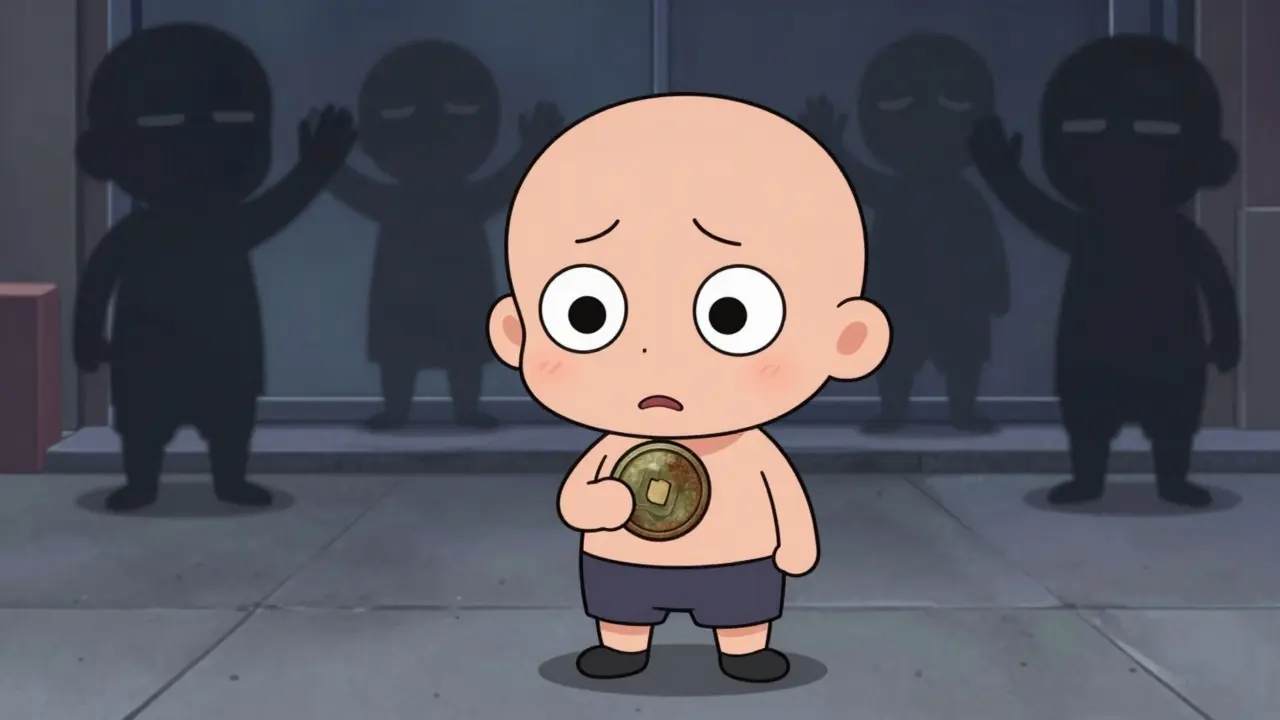
Imagine finding a coin on the sidewalk. It looks like currency, but nobody accepts it at the store, and its value fluctuates based on who you ask. That is essentially the situation with BUILDING STRONG COMMUNITY (B.S.C), a cryptocurrency token that currently sits in the shadows of the digital asset market. If you are searching for this specific ticker, you might be hoping for a hidden gem or a low-entry investment opportunity. However, the data tells a very different story-one of extreme volatility, near-zero liquidity, and significant red flags.
This article breaks down what B.S.C actually is, where it trades, and why most serious investors steer clear. We will look at the hard numbers, the technical gaps, and the reality of trying to buy or sell a token that effectively has no market presence.
Quick Takeaways
- B.S.C is a micro-cap token: It trades at fractions of a penny with virtually zero market capitalization.
- Liquidity is non-existent: Major exchanges like Binance and Crypto.com show $0 trading volume and do not list it for direct trading.
- Data inconsistencies are high: Price reports vary wildly between platforms, indicating a lack of reliable price discovery.
- Technical details are missing: There is no clear information on the blockchain network, total supply, or active development team.
- High risk of abandonment: The token shows characteristics of dormant or abandoned projects with no community engagement.
The Reality of B.S.C’s Market Value
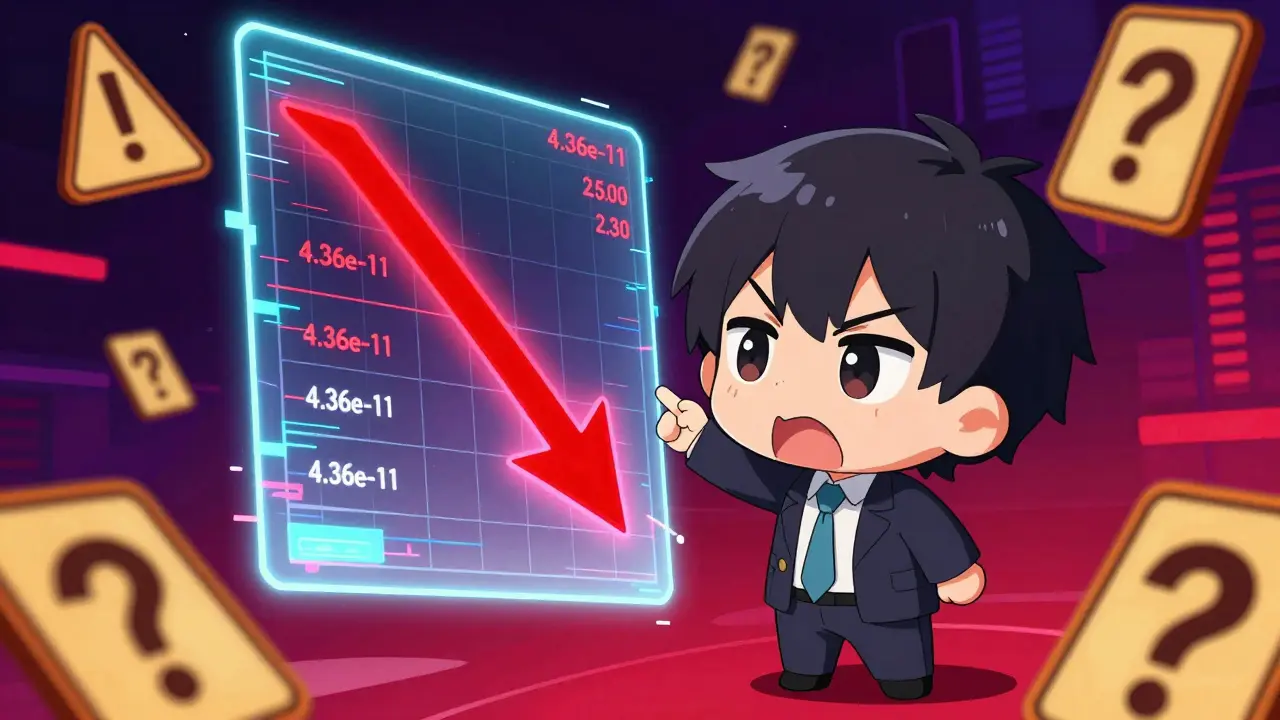
When we talk about cryptocurrency value, we usually think of Bitcoin or Ethereum, which have deep markets and stable pricing mechanisms. BUILDING STRONG COMMUNITY (B.S.C) operates in a completely different universe. As of late 2025 and into 2026, the token’s price is so low that it requires scientific notation to display accurately. Crypto.com lists it at approximately $0.00000000003675 USD, while CoinMarketCap reports a similar figure of $4.36e-11 USD. To put that in perspective, you would need billions of these tokens just to equal one cent.
But the price isn't the only issue-it's the consistency. Different platforms report different values, which is a major warning sign in finance. In healthy markets, arbitrageurs quickly close small price gaps. When prices diverge significantly across trackers, it means there is no real trading happening to anchor the value. Binance, one of the world’s largest exchanges, lists the price as less than $0.000001 per B.S.C/USD, with a market cap of $0 USD. This suggests that even if someone wanted to buy a large amount, there simply aren’t enough sellers to facilitate the trade without crashing the price further.
Over the last few months, the token has shown a steady decline. Data from October 2025 indicates a drop of nearly 28% over 30 days and almost 25% over 60 days. While daily changes might show tiny positive movements of less than 0.01%, these are likely statistical noise rather than genuine buying interest. For a retail investor, this kind of performance offers no upside potential-only the risk of losing the entire principal investment.
Where Can You Actually Buy B.S.C?
If you decide to proceed despite the warnings, you won’t find B.S.C on your standard exchange dashboard. B.S.C token is not tradable on major centralized exchanges like Crypto.com or Binance in the traditional sense. Crypto.com explicitly states that "B.S.C is not tradable yet," directing users toward established assets like Bitcoin and Ethereum instead. This exclusion is significant because listing on these platforms requires rigorous vetting, sufficient trading volume, and legal compliance. Being rejected or ignored by them signals that the project does not meet industry standards for legitimacy or liquidity.
To acquire B.S.C, you must use decentralized exchanges (DEXs). This process involves connecting a self-custody crypto wallet (like MetaMask or Trust Wallet) to a DEX platform such as Uniswap or PancakeSwap, depending on which blockchain the token resides. This adds layers of complexity and risk:
- Higher Fees: DEX transactions often incur higher gas fees compared to centralized exchanges, especially during network congestion.
- No Customer Support: If you send funds to the wrong address or get scammed by a fake token contract, there is no support team to help you recover your money.
- Slippage Risk: With such low liquidity, even a small buy order can cause massive slippage, meaning you pay much more per token than the listed price.
This barrier to entry is typical for micro-cap tokens that have failed to gain traction. It filters out casual investors, leaving only those willing to navigate complex technical hurdles for speculative gains.
Missing Technical Fundamentals
A legitimate cryptocurrency project provides clear documentation. Investors expect to see a whitepaper detailing the technology, a roadmap outlining future developments, and transparent tokenomics explaining the supply distribution. For BUILDING STRONG COMMUNITY, this information is largely absent from mainstream databases.
We do not know which blockchain network hosts the token. Is it an ERC-20 token on Ethereum? A BEP-20 token on Binance Smart Chain? Or perhaps a Solana SPL token? Without knowing the underlying infrastructure, you cannot assess the security, transaction speed, or cost efficiency of the asset. Furthermore, there is no public data on the total supply or circulating supply. In crypto, scarcity drives value. If the total supply is infinite or if a single wallet holds 90% of the tokens, the project is highly susceptible to manipulation or hyperinflation.
The absence of a website, whitepaper, or official social media channels is a critical red flag. Successful projects, even small ones, maintain active communication with their communities. They announce partnerships, code updates, and governance votes. B.S.C appears to operate in silence, suggesting either a complete lack of development resources or, more likely, project abandonment.
| Feature | BUILDING STRONG COMMUNITY (B.S.C) | Typical Legitimate Micro-Cap |
|---|---|---|
| Market Cap | $0 (effectively) | $100k - $1M+ |
| 24h Volume | $0 | $10k - $100k+ |
| Exchange Listings | DEX only (unverified) | DEX + Tier-2 CEX |
| Documentation | None available | Whitepaper, Website, GitHub |
| Community Activity | None detected | Active Discord/Telegram |
The Danger of 'Abandoned' Tokens
In the broader context of the 2025-2026 crypto market, thousands of tokens exist with minimal activity. Industry trends show a consolidation of capital toward projects with clear utility, institutional adoption, or strong technological innovation. B.S.C does not fit any of these categories. Instead, it resembles what analysts call a "zombie coin"-a token that remains technically live on the blockchain but has no active development, no user base, and no economic purpose.
Why do these tokens persist? Often, they are remnants of early experiments, failed fundraising efforts, or even scam projects where the developers have already cashed out their initial holdings. Once the creators leave, the token becomes illiquid. You might see a price on a tracker, but if you try to sell, you will find no buyers. This is known as "liquidity trap." Your assets become stuck, worthless paper digits on a ledger.
There are no expert opinions or professional analyses covering B.S.C because it lacks the scale to warrant attention. Research firms focus on assets that impact the wider economy or demonstrate novel technology. The silence from experts is itself a form of analysis: if no one is talking about it, it’s likely not worth your time.
What Should You Do Instead?
If you are looking for exposure to the "community-driven" aspect of crypto, there are far safer and more transparent options. Decentralized Autonomous Organizations (DAOs) like MakerDAO or Compound offer governance tokens that represent actual voting power in functioning protocols. These projects have audited code, visible treasuries, and active developer communities.
Alternatively, if you enjoy the thrill of high-risk speculation, consider sticking to well-known altcoins with established track records. Even smaller caps in the top 200 typically have verifiable teams, regular audits, and liquid markets. Avoid tokens that require you to connect your wallet to unknown DEX interfaces without prior research.
Before investing in any obscure token, always perform due diligence:
- Check the contract address on Etherscan or BscScan to verify holder distribution.
- Look for a locked liquidity pool on platforms like Unicrypt to ensure developers can’t rug pull.
- Verify the existence of a working product or service.
- Join community channels to gauge sentiment and activity levels.
For BUILDING STRONG COMMUNITY (B.S.C), none of these checks pass. The token appears to be a digital relic with no functional utility or future growth potential.
Frequently Asked Questions
Is BUILDING STRONG COMMUNITY (B.S.C) a good investment?
No. Based on current data, B.S.C exhibits all the signs of an abandoned or defunct token. With zero trading volume, no market capitalization, and missing technical documentation, it carries an extremely high risk of total loss. There is no fundamental value supporting its price.
Why is the price of B.S.C different on Crypto.com and CoinMarketCap?
The discrepancy arises from a lack of real trading activity. Without consistent buys and sells, price aggregators rely on stale data or algorithmic estimates, leading to inconsistent valuations. This indicates poor liquidity and unreliable price discovery.
Can I buy B.S.C on Binance or Coinbase?
No. B.S.C is not listed on major centralized exchanges like Binance, Coinbase, or Crypto.com for direct trading. Users attempting to access it must use decentralized exchanges (DEXs), which involve higher technical complexity and risk.
What blockchain is B.S.C built on?
Publicly available sources do not specify the underlying blockchain network for BUILDING STRONG COMMUNITY. The absence of this basic technical information is a significant red flag regarding the project's legitimacy and transparency.
Is B.S.C related to Binance Smart Chain (BSC)?
Despite the similar acronym, BUILDING STRONG COMMUNITY (B.S.C) is not affiliated with Binance Smart Chain. It is a separate, unrelated token. Confusion between the two is common, but they have no technical or organizational connection.
How do I check if a crypto token is abandoned?
Look for three key indicators: 1) Zero or near-zero trading volume over several weeks; 2) No recent commits on the project’s GitHub repository; 3) Inactive or silent social media channels (Twitter, Telegram, Discord). B.S.C fails all three tests.
What happens if I hold B.S.C tokens?
If you hold B.S.C tokens, they are likely trapped in your wallet with no viable exit strategy. Due to the lack of liquidity, you may not be able to sell them even if you wanted to. The value is effectively zero, and there is no expectation of recovery.