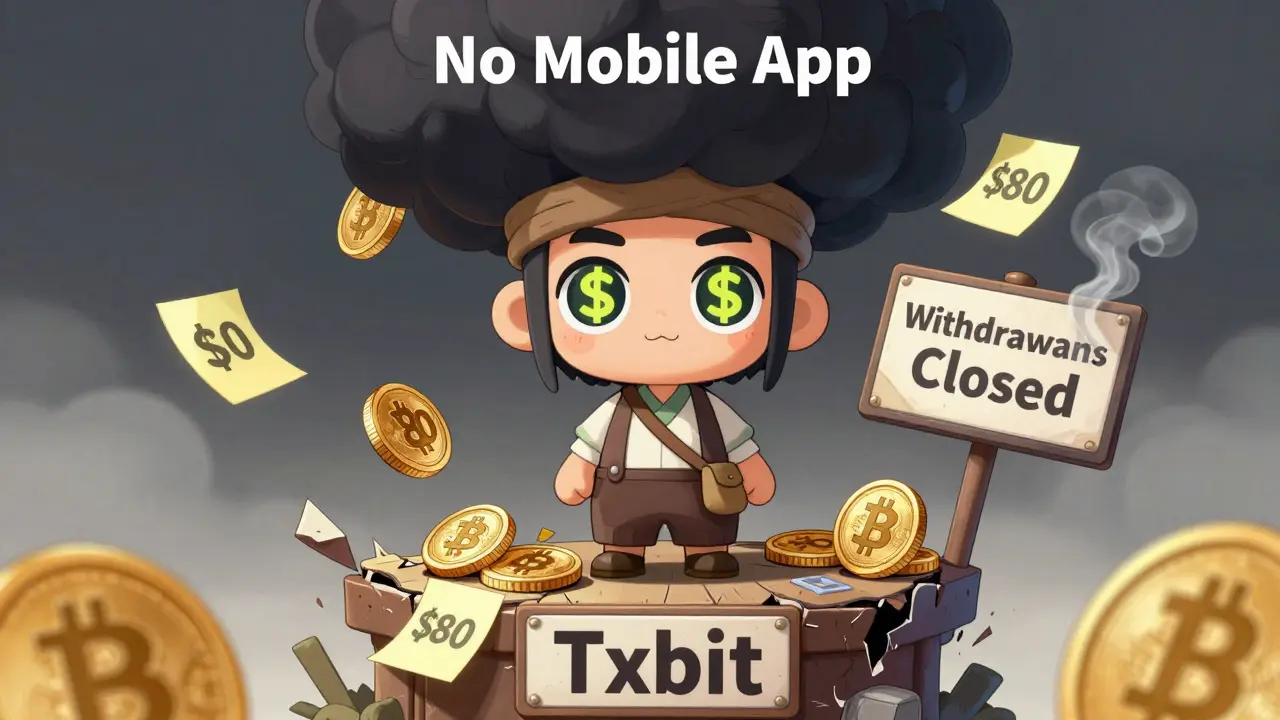
When Txbit launched in 2019, it looked like a promising option for privacy-focused traders. It promised low fees, strong security, and a simple interface. But by September 2023, the platform vanished without warning. Users couldn’t withdraw their funds. Support emails went unanswered. And the website? Just a blank page. This isn’t just a story about one failed exchange-it’s a lesson in what to avoid when choosing where to trade crypto.
What Was Txbit?
Txbit was a Netherlands-based cryptocurrency exchange operated by Txbit Exchange B.V. It started with a clean design, 24/7 customer support, and a referral program that paid users for bringing in new customers. It supported EUR, GBP, and USD bank transfers and allowed trading in Bitcoin, Ethereum, and a handful of other coins. On paper, it seemed like a solid mid-tier exchange. But behind the scenes, things were far from stable.
The Fee Structure That Turned People Away
Txbit charged a flat fee of 0.0014 BTC per transaction. That might sound small, but in practice, it was brutal. On December 2, 2021, that fee was worth about $80 USD. For someone trading $200 worth of Bitcoin, that meant paying 40% in fees just to make a trade. Compare that to Binance or Kraken, which charge between 0.1% and 0.6% depending on volume-often under $1 for the same trade. Txbit’s fee didn’t scale with trade size. A $50 trade cost the same as a $5,000 trade. That made small trades pointless and discouraged regular users.
They also required a minimum order of 0.0005 BTC, which at the time was around $25. Not outrageous on its own, but combined with the high fee, it pushed users toward larger trades they didn’t necessarily want to make. For beginners or people testing the waters, this wasn’t just inconvenient-it was a barrier.
No Mobile App, No Modern Experience
In 2023, if an exchange doesn’t have a mobile app, it’s already behind. Txbit never built one. All trading had to happen through a web browser. That meant no push notifications, no quick buys while commuting, and no easy access to your portfolio on the go. Most users expect mobile access now. Txbit didn’t just miss the trend-they ignored it entirely. That alone made the platform feel outdated, even in 2021.
Liquidity and Volume: A Mirage
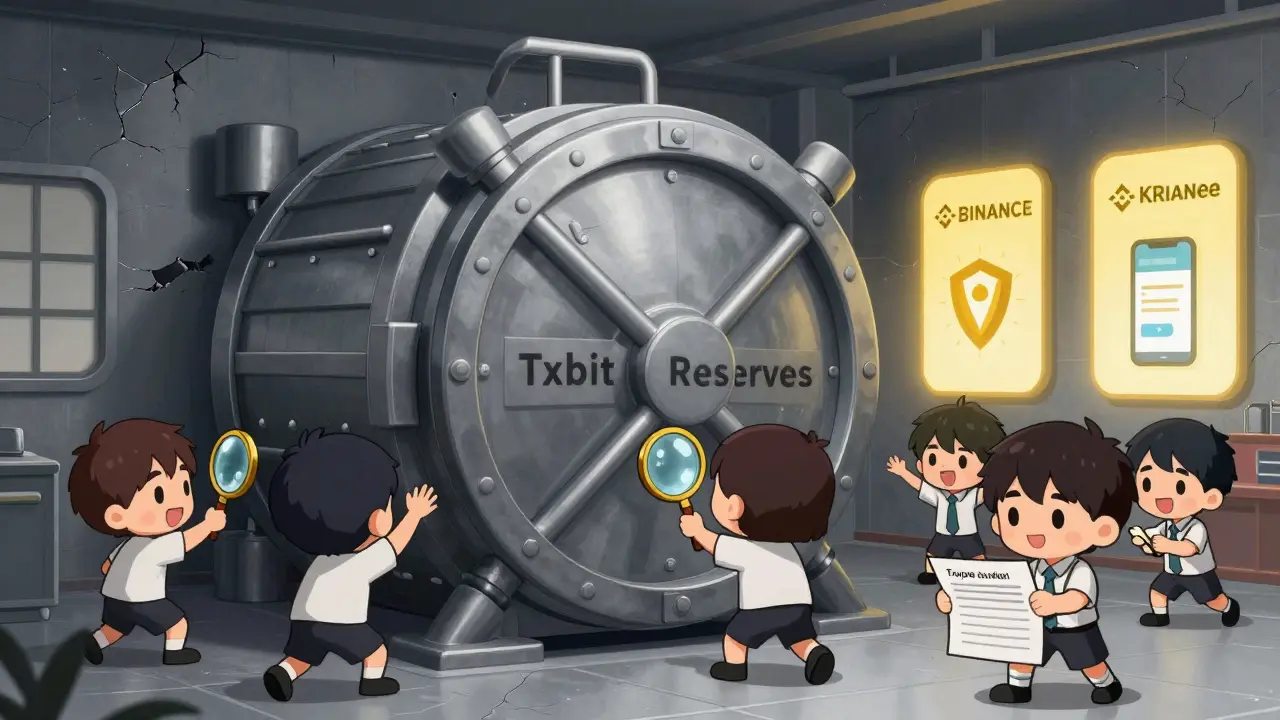
Txbit’s trading volume jumped from $12,110 in September 2019 to $2.1 million by December 2021. That’s a 17,000% increase. Sounds impressive, right? But here’s the truth: Binance processes over $10 billion daily. Coinbase? Around $5 billion. Txbit’s volume was barely a drop in the ocean. Low volume means slippage. It means you can’t sell large amounts without crashing the price. It means the market is thin, and the platform isn’t deep enough to handle real trading activity.
Most users didn’t realize how dangerous low liquidity is until they tried to cash out. If you had $10,000 in Txbit’s native token and tried to sell, you’d likely find no buyers-or the price would collapse because there wasn’t enough demand. That’s not speculation. That’s how markets work.
Regulatory Ambiguity: The Silent Killer
Txbit never clearly said whether it accepted U.S. users. Instead, it told Americans to “do their own research” on legal risks. That’s not compliance-it’s evasion. Regulators in the U.S., EU, and UK require exchanges to register, follow KYC rules, and report suspicious activity. Txbit didn’t. It operated in the gray zone, hoping to avoid scrutiny. That’s a gamble, and it lost.
When regulators started cracking down on non-compliant platforms in 2022 and 2023, Txbit didn’t have the legal team or capital to fight back. Other exchanges like Kraken and Coinbase spent millions getting licensed. Txbit spent nothing. And when the pressure came, they shut down instead of adapting.
Security Claims That Didn’t Add Up
Txbit marketed itself as a secure, private exchange. But they never published a single audit report. No proof of reserves. No details about cold storage. No explanation of how they protected user data. Compare that to Bitstamp or Gemini, which release monthly proof-of-reserves reports and hire third-party firms to audit their systems. Txbit’s silence spoke louder than any marketing slogan.
Experts in crypto security saw this as a red flag. If you can’t prove you’re secure, you’re not secure. And when an exchange closes suddenly, the first thing hackers look for is weak security. There were no reports of hacks before the shutdown, but that’s only because the platform never had the scale to attract them. Its real vulnerability was its lack of transparency.
User Experience: Mixed, But Not Enough
Some users liked the clean interface. Others appreciated the 24/7 support. The referral program paid out, and the site didn’t crash during peak times. But these positives were drowned out by bigger problems. High fees. No mobile app. Unclear rules. And worst of all-no way to get your money out when the platform vanished.
Cryptogeek.info gave Txbit a 3.3 out of 5 rating based on only 11 reviews. That’s not enough data to trust. Most major exchanges have thousands of reviews. Txbit had barely any. That’s not a sign of loyalty-it’s a sign of low adoption. If few people used it, why trust it?
The Final Blow: Shutdown Without Warning
On September 15, 2023, Txbit’s website went dark. No announcement. No email. No explanation. Users woke up to find their accounts frozen. Withdrawals stopped. Customer support vanished. The exchange’s native token, if held, became worthless overnight. People lost everything they had on the platform.
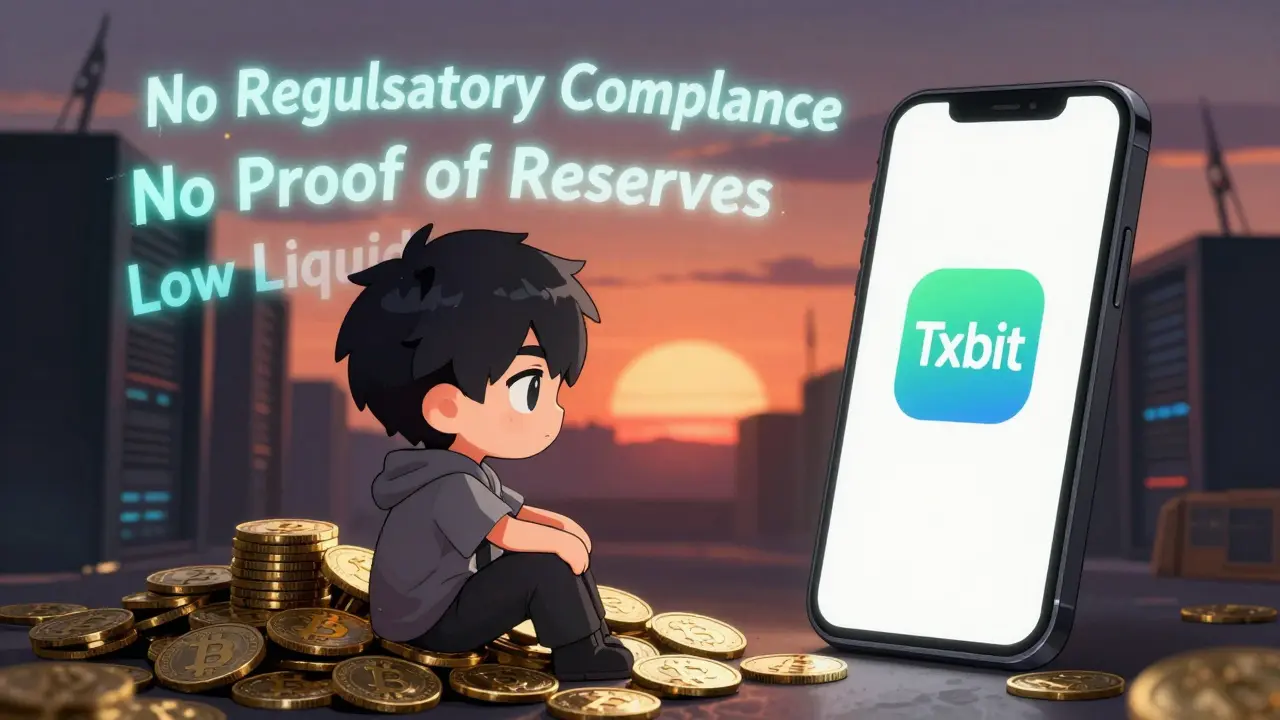
This wasn’t an accident. It was predictable. Every red flag was there: high fees, no mobile app, no transparency, no regulatory compliance, low liquidity. The only surprise was how long it took to collapse.
What You Should Learn From Txbit
Txbit’s story isn’t over. It’s a case study. Here’s what you need to remember:
- Never trust an exchange that doesn’t publish audits or proof of reserves. If they won’t show you their security, they don’t have any.
- A flat fee per trade is a trap. Always check how fees scale with volume. A 0.1% fee on $10,000 is $10. A $80 fee is madness.
- Mobile apps aren’t optional anymore. If you can’t trade on your phone, you’re stuck in 2015.
- Regulatory compliance isn’t bureaucracy-it’s protection. Exchanges that follow the law survive. Those that hide from it disappear.
- Don’t hold tokens native to an exchange. If the exchange dies, those tokens die with it.
Txbit didn’t fail because of bad luck. It failed because it ignored the basics. It tried to compete with giants by offering a worse product. And in crypto, that’s a recipe for disaster.
Is Txbit still operational?
No, Txbit permanently shut down in September 2023. Its website is no longer accessible, and users lost access to their funds. There has been no official recovery or compensation plan.
Why did Txbit charge such high fees?
Txbit charged a flat fee of 0.0014 BTC per trade, regardless of trade size. This structure was likely meant to simplify pricing, but it made small trades extremely expensive. For example, a $50 trade cost about $80 in fees. This was not competitive with industry standards, where fees are typically a small percentage of the trade value.
Could U.S. users legally trade on Txbit?
Txbit did not explicitly block U.S. users, but it advised them to assess their own legal risks. This meant the platform operated outside U.S. regulatory frameworks like those enforced by the SEC or FinCEN. Trading from the U.S. on Txbit carried significant legal exposure, and many U.S. users later faced tax and compliance complications after the shutdown.
Did Txbit have a mobile app?
No, Txbit never developed a mobile application for iOS or Android. All trading had to be done through a web browser, which made the platform inconvenient for users who wanted to trade on the go. This was a major disadvantage compared to competitors like Binance, Coinbase, and Kraken, all of which offer full-featured mobile apps.
What happened to users’ funds after Txbit shut down?
When Txbit shut down, users lost access to all funds held on the platform. There was no official process to recover assets, and no public accounting of reserves. Those holding Txbit’s native token lost their entire investment. This outcome is common with unregulated exchanges that lack proper financial safeguards.
How can I avoid exchanges like Txbit in the future?
Stick to exchanges that are transparent, regulated, and have a proven track record. Look for platforms that publish monthly proof-of-reserves reports, have clear KYC/AML policies, offer mobile apps, and charge reasonable fees (under 0.6%). Avoid platforms that hide behind vague privacy claims or refuse to disclose security details. Binance, Kraken, Coinbase, and Gemini are examples of exchanges that meet these criteria.

Austin King
March 6, 2026 AT 01:04Julie Potter
March 7, 2026 AT 18:40Jane Darrah
March 8, 2026 AT 20:42Jonathan Chretien
March 9, 2026 AT 09:05jay baravkar
March 10, 2026 AT 21:17Ian Thomas
March 11, 2026 AT 11:13Datta Yadav
March 11, 2026 AT 18:08Brian T
March 13, 2026 AT 05:22Nancy Jewer
March 14, 2026 AT 04:43Megan Lutz
March 15, 2026 AT 10:05Josh Moorcroft-Jones
March 15, 2026 AT 11:41Ethan Grace
March 17, 2026 AT 10:36Eva Gupta
March 17, 2026 AT 13:56prasanna tripathy
March 19, 2026 AT 05:08Jesse VanDerPol
March 19, 2026 AT 22:39Lydia Meier
March 21, 2026 AT 07:40Nash Tree Service
March 21, 2026 AT 18:03jonathan swift
March 23, 2026 AT 07:00Ken Kemp
March 24, 2026 AT 22:35Jackson Dambz
March 25, 2026 AT 02:47Austin King
March 26, 2026 AT 05:10