By 2025, Web3 social media isn’t just a buzzword anymore-it’s a working alternative to Facebook, Twitter, and Instagram. These platforms don’t just let you post and like. They give you ownership over your content, your data, and even your earnings. If you’re tired of algorithms that hijack your attention or companies that sell your data without asking, Web3 social media offers something different: real control.
What Makes Web3 Social Media Different?
Traditional social media runs on a simple, broken model: you give your time, your thoughts, your photos-and the platform makes billions from your attention. Web3 flips that. Instead of a company owning your profile, your followers, and your posts, you do. That’s because these platforms are built on blockchains like Ethereum, Polygon, and Base. Your identity and content live on the blockchain, not in a corporate server you can’t access. This isn’t just theory. Platforms like Lens Protocol is a decentralized social graph built on Polygon that lets users own their profiles, posts, and followers as NFTs. Also known as Lens Protocol, it was launched in 2022 and now powers over 30 independent apps, from feed readers to video platforms. With Lens, if you leave one app, you don’t lose your network. Your followers, your posts, your likes-they all move with you. No more starting over because a platform shut down or changed its rules.The Top Web3 Social Media Platforms in 2025
You don’t have to pick one platform and stick with it. The Web3 ecosystem is built for mixing and matching. Here are the leaders in 2025:- Lens Protocol is a decentralized social graph built on Polygon that lets users own their profiles, posts, and followers as NFTs. Also known as Lens Protocol, it was launched in 2022 and now powers over 30 independent apps, from feed readers to video platforms. It’s the backbone for most new Web3 social apps. Developers use it to build custom interfaces, but you don’t need to know how it works to use them.
- Farcaster is a decentralized social network built on Ethereum that lets users own their data and choose which app they use to interact with their network. Also known as Farcaster, it launched in 2022 and reached over 55,000 users by late 2023, growing rapidly in 2024 and 2025. Unlike Twitter, Farcaster doesn’t force you into one feed. You can use apps like Client, Warpcast, or Frame-each with different features-but they all connect to the same social graph. Your followers stay with you.
- Bluesky is a decentralized social network created by former Twitter CEO Jack Dorsey, using the AT Protocol to let users choose their own algorithm. Also known as Bluesky, it began as an invite-only platform in 2023 and opened fully in early 2025. It’s not fully on-chain like Lens or Farcaster, but it’s built on open protocols that let users swap servers and avoid centralized control. It’s the most user-friendly option for people who want decentralization without crypto wallets.
- Audius is a decentralized music streaming platform where artists upload tracks directly and earn tokens for plays, tips, and community support. Also known as Audius, it has over 7 million active users and 100,000+ artists as of 2025. It’s proof that Web3 works in specific niches. Musicians don’t need labels. Fans don’t need subscriptions. They trade directly using crypto tokens.
- Mastodon is a federated social network that predates Web3 but became a key player as users left Twitter after its 2022 takeover. Also known as Mastodon, it operates as a network of independent servers, each with its own rules. It’s not blockchain-based, but it’s the closest thing to a decentralized alternative most people already use. Many Mastodon users now connect their accounts to Web3 wallets to tip creators or verify ownership.
How These Platforms Reward You
Forget ad revenue. Web3 social media pays you in tokens. If you post, comment, like, or help moderate content, you earn cryptocurrency. These aren’t just empty tokens-they’re real value tied to platform growth. For example, on Farcaster, users earn $FARCASTER tokens for consistent activity. On Lens, creators can attach royalties to their posts. Every time someone shares or remixes your content, you get paid. Some apps even let you stake your tokens to vote on feature updates. That’s governance in action: you don’t just use the platform-you help run it. This changes everything. On Instagram, a viral post might get you 10,000 likes. On a Web3 platform, that same post could earn you $200 in crypto, plus ongoing royalties every time someone uses it in a video or meme. Creators no longer need brands to survive. They need their audience.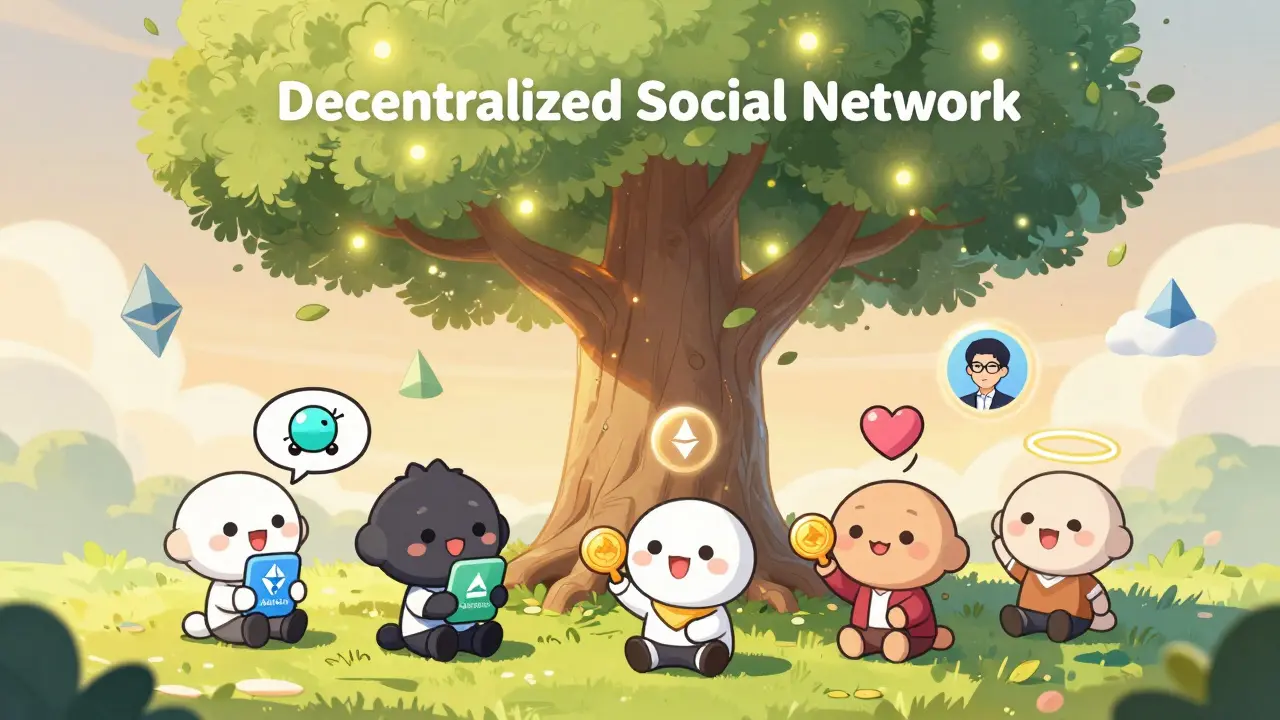
Why You Haven’t Heard of These Yet
Let’s be honest: most of these platforms still feel clunky. You need a crypto wallet. You need to understand gas fees. You need to know what an NFT is. The interfaces are often built by developers for developers. Mobile apps are rare. Onboarding takes more than five minutes. That’s why adoption is still limited to tech-savvy users, artists, and crypto-native communities. But the tide is turning. In 2025, several platforms launched simplified wallets that auto-generate keys from your phone number. Others added one-click sign-ups using Apple or Google accounts-while still keeping your data on-chain. The goal isn’t to make Web3 easy. It’s to make it invisible.What’s Missing
Web3 social media still lacks a few things most people take for granted:- Algorithmic feeds-most platforms still show posts chronologically. Discovery is harder than on TikTok or Instagram.
- Mobile-first design-many apps are web-only. Native iOS and Android apps are improving but still behind.
- Content moderation-without centralized control, hate speech and spam are harder to police. Some platforms use reputation systems or token-based voting to handle it.
- Mass marketing-no big ad campaigns. Growth happens through word of mouth, creator communities, and open-source tools.
What’s Next for Web3 Social Media
By 2026, we’ll see three big shifts:- Mobile apps will dominate. Platforms like Farcaster and Lens are launching official iOS and Android apps with wallet integration built in. No more copying seed phrases.
- Integration with virtual worlds. Platforms like Decentraland and Spatial are letting users bring their social profiles into 3D spaces. Your Lens profile becomes your avatar in a virtual concert.
- AI-powered moderation. Instead of human moderators, platforms are using AI trained on community votes to flag harmful content-without central control.
Who Should Try Web3 Social Media?
If you’re:- A creator tired of getting pennies from ads
- A privacy-focused user who hates being tracked
- A crypto user who wants to use your wallet for more than trading
- Someone who believes your voice shouldn’t be controlled by a corporation
Are Web3 social media platforms safe?
Yes, but with caveats. Your data is stored on blockchains like Ethereum or Polygon, which are secure by design. No company can delete your posts or ban you without community consensus. But if you lose your wallet seed phrase, you lose access. There’s no "forgot password" button. Security depends on you.
Can I use Web3 social media without crypto?
Some platforms let you sign up without a wallet. Bluesky, for example, uses email. But if you want to earn tokens, tip creators, or own your data as an NFT, you’ll need a crypto wallet. Most new apps now let you create a wallet in seconds using your phone number-no technical skills needed.
Do Web3 platforms have more privacy than Facebook or Instagram?
Absolutely. On Web3 platforms, your data isn’t stored in a corporate database. It’s on a public blockchain you control. No one can sell your data. No one can track your behavior across apps. Even if a platform shuts down, your profile and posts live on. Privacy isn’t a feature-it’s the default.
Can I make money on Web3 social media?
Yes, and it’s already happening. Artists on Audius earn tokens every time someone streams their music. Creators on Lens earn royalties when their posts are reused. Farcaster users earn $FARCASTER tokens for daily activity. You’re not just consuming content-you’re contributing, and you’re paid for it.
Is Web3 social media just for crypto fans?
Not anymore. While early users were crypto-native, 2025 saw a surge in non-crypto users joining because they wanted better privacy, better control, and better creator rewards. Platforms are now designed to hide the blockchain. You don’t need to understand NFTs to enjoy them-you just need to care about owning your online presence.
Web3 social media in 2025 isn’t perfect. But it’s the first time the internet is being rebuilt by the people who use it-not the companies that profit from it. And that’s worth trying.

Elizabeth Choe
February 11, 2026 AT 08:50Elijah Young
February 12, 2026 AT 08:17monique mannino
February 13, 2026 AT 10:05Will Lum
February 14, 2026 AT 03:07Brittany Meadows
February 14, 2026 AT 13:18Santosh kumar
February 15, 2026 AT 10:25Claire Sannen
February 17, 2026 AT 03:42Andrea Atzori
February 18, 2026 AT 17:58Joe Osowski
February 19, 2026 AT 13:47Tammy Chew
February 20, 2026 AT 22:18Lindsey Elliott
February 22, 2026 AT 09:38Christopher Wardle
February 23, 2026 AT 11:13blake blackner
February 24, 2026 AT 02:08Ekaterina Sergeevna
February 24, 2026 AT 11:38Sakshi Arora
February 25, 2026 AT 20:55bala murali
February 26, 2026 AT 09:02SAKTHIVEL A
February 28, 2026 AT 07:19