Have you seen the whispers about the Sonar Holiday airdrop, described as a mysterious distribution by an "Unknown" team? If so, stop scrolling and take a deep breath. In the fast-moving world of cryptocurrency, especially during the holiday season, excitement often masks danger. As of August 2026, there is no credible evidence, official announcement, or verified project backing a token called "Sonar Holiday." This silence isn't just a lack of information; it’s a massive red flag.
The crypto landscape has evolved significantly since the boom years of 2024 and 2025. Back then, legitimate projects like Magic Eden (ME) and Pudgy Penguins (PENGU) made headlines with transparent, community-driven distributions on the Solana blockchain. Today, scammers have learned to mimic this success. They use catchy names, vague promises, and the allure of "unknown" teams to lure inexperienced investors into digital traps. Before you connect your wallet to any site promising free tokens from "Sonar," you need to understand why this specific opportunity looks less like a gift and more like a setup.
Why the "Unknown" Team is Your Biggest Warning Sign
In the early days of crypto, anonymity was somewhat acceptable. But by 2026, trust is built on transparency. Legitimate projects don't hide behind the label "Unknown." When a project claims to be anonymous but offers high-value rewards, ask yourself: who are you trusting with your private keys? The Sonar Holiday rumor fits the profile of a classic "honeypot" or "rug pull" scheme. These scams work by allowing users to buy or claim tokens but preventing them from selling later, or by draining connected wallets entirely.
Compare this to the major Solana ecosystem players we saw rise in 2025. Projects like Kamino Finance and Drift Protocol had clear roadmaps, active developer communities, and verifiable smart contracts. They didn't appear out of nowhere with a holiday-themed name and zero documentation. The absence of a whitepaper, a GitHub repository, or a verified social media presence for "Sonar Holiday" suggests that the entity doesn't exist beyond a phishing website designed to steal your assets.
The Anatomy of a Fake Airdrop Scam
To protect your portfolio, you need to recognize how these schemes operate. Most fake airdrops follow a predictable pattern. First, they create buzz through Telegram groups, Twitter bots, or Reddit threads. The narrative is always urgent: "Claim before the supply runs out!" Next, they direct you to a URL that looks slightly off-perhaps `sonar-holiday-airdrop.com` instead of an official domain. Finally, they ask you to connect your wallet, such as Phantom Wallet or Solflare.
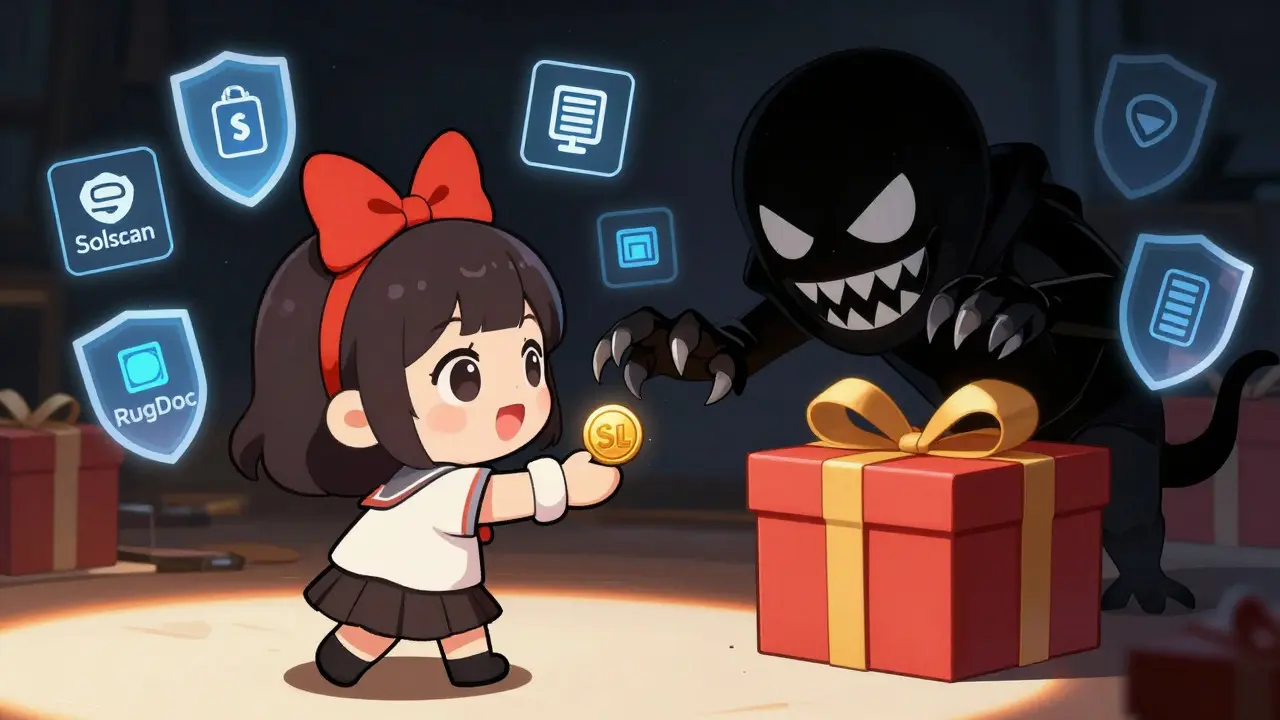
Once connected, the malicious contract requests permission to transfer tokens. You might think you're approving a small fee, but you're actually giving the scammer unlimited access to your funds. Within seconds, your SOL or USDC can be drained. This method exploits the convenience of the Solana network, which is known for its speed and low fees. While these features benefit legitimate users, they also allow scammers to execute theft almost instantly. Always check if a contract is verified on platforms like RugDoc or Solscan before interacting with anything new.
Real Solana Ecosystem Winners vs. Fake Promises
If you're looking for genuine opportunities, look at what actually worked in the recent past. The Solana ecosystem demonstrated peak activity in late 2024 and throughout 2025, driven by real utility. For example, the Doodles airdrop (DOOD) in May 2025 rewarded long-term holders and active community participants. It wasn't random; it was based on provable on-chain history. Similarly, Sanctum and DeBridge offered Season 2 rewards to users who engaged with their liquidity pools and cross-chain bridges.
These successful distributions shared common traits:
- Clear Eligibility Criteria: Users knew exactly what actions qualified them (e.g., providing liquidity, minting NFTs).
- Official Announcements: News came directly from verified project handles, not third-party influencers.
- Transparent Tokenomics: Details about total supply, vesting schedules, and team allocation were public.
The "Sonar Holiday" rumor lacks all three. Without these pillars, any token distribution is likely speculative fiction or outright fraud. Don't let FOMO (Fear Of Missing Out) cloud your judgment. The cost of missing a fake airdrop is nothing; the cost of falling for one can be everything in your wallet.
| Feature | Legitimate Project (e.g., Kamino, Drift) | Scam Indicator (e.g., Sonar Holiday Rumor) |
|---|---|---|
| Team Identity | Public profiles, LinkedIn, doxxed founders | "Unknown," anonymous, or fake personas |
| Documentation | Whitepaper, GitHub code, audit reports | No website, broken links, or copied content |
| Community | Active Discord, verified Twitter, organic growth | Bots, paid shills, pressure to "act now" |
| Contract Safety | Verified on Solscan, audited by firms like OtterSec | Unverified, hidden functions, mint authority retained |
How to Verify Any Airdrop Claim in 2026
You don't need to be a blockchain expert to spot a scam. Follow this simple checklist before clicking "Connect Wallet." First, search for the project name plus "scam" or "review" on Google. If the only results are from obscure blogs or paid ads, walk away. Second, check the project's social media. Are the followers real? Do they engage in meaningful discussions, or is it just emojis and hype? Third, verify the contract address. Copy the address provided and paste it into Solscan. Look for the number of holders. If a project claims millions of users but has fewer than 100 holders, it's fake.
Additionally, use tools like GoPlus Security or Token Sniffer to scan the token contract. These services analyze code for vulnerabilities like hidden taxes or ownership privileges that allow developers to blacklist your wallet. If a tool flags the contract as "High Risk," treat it as a hard stop. Remember, legitimate projects prioritize user safety because their reputation depends on it. Scammers care only about your balance.

Protecting Your Digital Assets Beyond Airdrops
Security extends far beyond avoiding bad airdrops. In 2026, the standard for crypto hygiene includes using a hardware wallet for significant holdings. Devices like Ledger or Trezor keep your private keys offline, making them immune to most software-based hacks. Even if you click a malicious link, the transaction must be physically approved on the device. For daily interactions, consider using a "burner" wallet-a separate account with minimal funds dedicated solely to testing new protocols or claiming potential airdrops.
Enable two-factor authentication (2FA) on all exchange accounts, preferably using an app like Authy rather than SMS, which can be intercepted. Regularly revoke unused token approvals using tools like Revoke.cash (or its Solana equivalent). Over time, you grant permissions to many dApps; revoking old ones reduces your attack surface. By adopting these habits, you shift from being a target to being a resilient participant in the ecosystem.
What to Expect from Future Legitimate Distributions
As we move further into 2026, the trend toward merit-based rewards continues. Projects are moving away from random giveaways to reward actual usage. This means engaging with decentralized exchanges (DEXs) like Raydium or Jupiter, providing liquidity to lending protocols, or participating in governance votes. These actions not only support the network's health but also position you for future eligibility in legitimate drops. Keep an eye on established ecosystems like Solana, where innovation remains high, but due diligence is non-negotiable.
The next big wave of airdrops will likely come from Layer 2 solutions, AI-integrated blockchains, and real-world asset (RWA) tokenization platforms. However, each will require proof of participation. There are no shortcuts. If someone tells you otherwise, they probably want your money. Stay curious, stay skeptical, and keep your keys safe.
Is the Sonar Holiday airdrop real?
As of August 2026, there is no verified project named "Sonar Holiday" issuing an airdrop. The term appears in scam alerts and unverified rumors. Treat any website claiming to offer this airdrop as fraudulent until proven otherwise by official, multi-source verification.
How can I tell if a crypto airdrop is a scam?
Look for red flags like anonymous teams, lack of whitepapers, unverified smart contracts, and pressure to act quickly. Legitimate projects have transparent documentation, active communities, and audited code. Use tools like RugDoc or Solscan to verify contract safety before connecting your wallet.
What are some legitimate Solana airdrops from recent years?
Notable legitimate distributions include Magic Eden (ME), Pudgy Penguins (PENGU), Doodles (DOOD), Kamino Finance, and Drift Protocol. These projects had clear eligibility criteria, public teams, and strong community engagement prior to their token launches.
Should I connect my main wallet to claim an unknown airdrop?
Never connect your primary wallet holding significant funds to unverified sites. Use a separate "burner" wallet with minimal assets for testing new protocols. This limits potential losses if the contract turns out to be malicious.
How do I revoke token approvals on Solana?
You can use online tools specifically designed for Solana, such as Solana Revoke or similar dashboard services. These platforms allow you to view all granted permissions and revoke access to suspicious or unused applications, enhancing your wallet security.