Imagine walking into a virtual store where you buy digital sneakers using a coin that only exists on the blockchain. That is the vision behind RFOX, the native utility token of RedFOX Labs, a Southeast Asia-based venture builder focused on metaverse ecosystems, e-commerce, and gaming. Launched as an ERC-20 token on Ethereum, RFOX aims to be the primary currency for payments, NFT trading, and liquidity within the RFOX VALT virtual reality platform. While the metaverse hype has cooled significantly since 2021, RFOX remains an active asset for those interested in niche web3 projects, though it carries the typical risks of micro-cap cryptocurrencies.
Key Takeaways
- RFOX is a multichain utility token powering the RedFOX Labs ecosystem, including the RFOX VALT metaverse and RFOX Games.
- It operates primarily as an ERC-20 token on Ethereum and BEP-20 on Binance Smart Chain, with a maximum supply capped at 2 billion tokens.
- The token is used for settling trading fees, creating NFTs, and participating in in-game economies using KOGs (Keys to Other Games).
- As of August 2026, RFOX is classified as a micro-cap asset with low liquidity and high volatility, trading at fractions of a cent.
- Availability is limited to specific exchanges like KuCoin and Gate.io; it is not listed on major US platforms like Coinbase.
Origin and Development Timeline
Understanding where RFOX comes from helps clarify its current status. The project traces its roots back to 2017, when conceptual work began under the RedFOX Labs umbrella. However, the public token offering occurred in April 2019, marking the initial functional launch of the asset. Some data providers list October 2020 as the official listing date, likely reflecting when it gained broader recognition on major aggregators. This timeline suggests that RFOX has been evolving through several phases, moving from an early token sale to a more defined metaverse ecosystem by 2026.
RedFOX Labs positions itself not just as a token issuer but as a venture builder. This means the organization actively develops products and partnerships around the token rather than leaving it as a standalone asset. The focus on Southeast Asia is strategic, targeting a region with high mobile internet penetration and growing interest in digital entertainment. If you are wondering why the launch dates vary across websites, it is because different platforms track "creation," "public sale," and "major exchange listing" differently. For practical purposes, treat 2019 as the start of its tradable life and 2020 as the point where it became widely accessible.
Technical Architecture and Token Standards
At its core, RFOX is a standard ERC-20 token built on the Ethereum blockchain. This choice provides security and interoperability with the vast majority of DeFi protocols and wallets. The smart contract address is publicly verifiable on Etherscan, ensuring transparency regarding supply and transactions. Additionally, RFOX is available as a BEP-20 token on Binance Smart Chain, allowing users to trade or use the asset on networks with lower transaction fees.
This multichain approach is crucial for usability. By bridging between Ethereum and BSC, RedFOX Labs ensures that users aren't locked into one expensive network. The token does not have complex staking mechanics or unique consensus algorithms; instead, it relies on the underlying security of these established blockchains. For developers and users, this means integrating RFOX is straightforward if you already support standard ERC-20 or BEP-20 assets. There are no exotic technical hurdles, which lowers the barrier to entry for wallet compatibility and exchange listings.
Utility and Ecosystem Use Cases
So, what do you actually do with RFOX? It serves as the backbone for three main pillars: e-commerce, gaming, and digital media. The flagship product is RFOX VALT, a virtual reality shopping and retail platform. In this environment, RFOX acts as the medium of exchange. You can imagine it as the cash register for a VR mall, handling payments for virtual goods, services, and potentially real-world items linked to the platform.
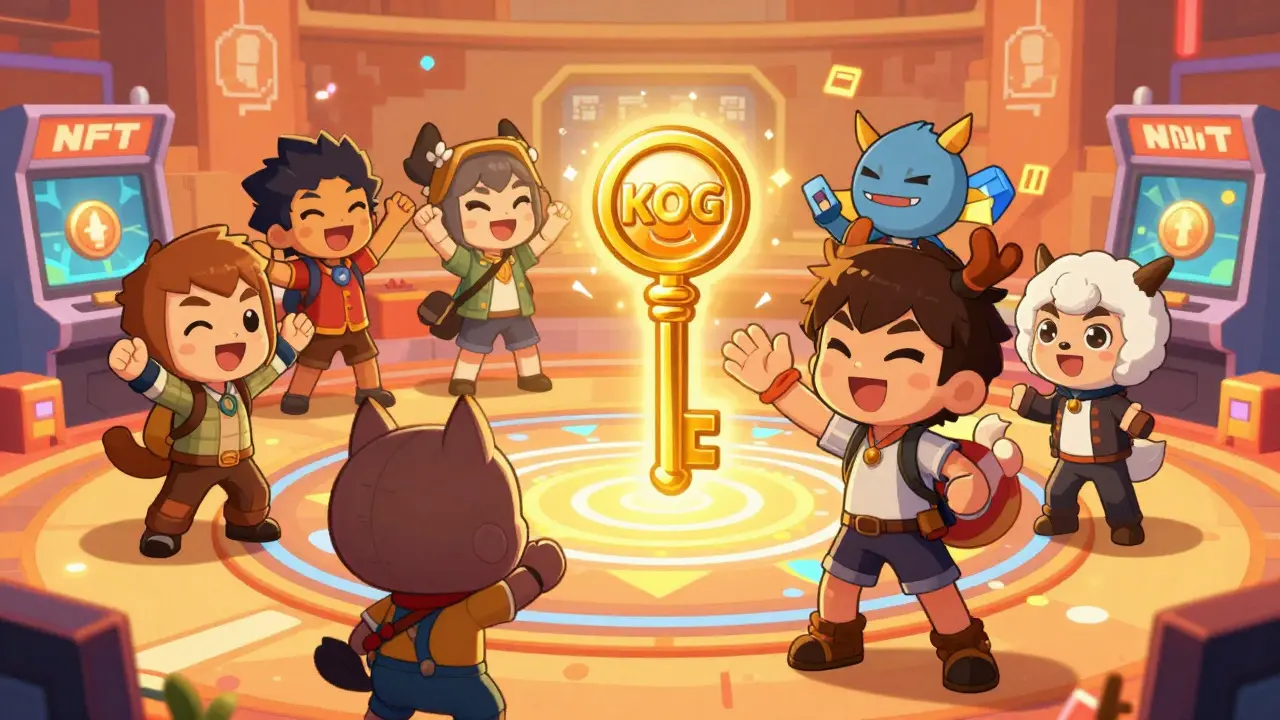
Beyond shopping, RFOX powers the RFOX Games ecosystem. Here, players interact with KOGs, or "Keys to Other Games." These are NFTs that function as in-game currency or access passes. You might use RFOX to buy a KOG, which then unlocks skins, tournament entries, or VIP event access within the metaverse. This creates a circular economy: RFOX buys NFTs, NFTs provide value in games, and game activity drives demand for RFOX. Other use cases include settling trading fees on supported exchanges, providing liquidity in pools, and compensating creators who build content within the RedFOX ecosystem.
| Attribute | Detail |
|---|---|
| Token Standard | ERC-20 (Ethereum), BEP-20 (Binance Smart Chain) |
| Max Supply | 2,000,000,000 RFOX |
| Circulating Supply (Approx.) | 1.31 - 1.93 Billion RFOX (varies by source) |
| Primary Utility | Payments in RFOX VALT, NFT purchases, fee settlement |
| Market Category | Metaverse, Gaming, Micro-cap |
Supply, Circulation, and Pricing Data
Navigating the numbers for RFOX can be confusing because data aggregators often report conflicting figures. This is common with smaller assets where data feeds update at different speeds. Most sources agree on a maximum supply of 2 billion tokens. However, circulating supply estimates range from roughly 80 million to nearly 2 billion, depending on whether a platform counts all issued tokens or only those actively held outside team wallets.
As of late August 2026, the price of RFOX hovers around $0.0003 per token. To put that in perspective, you would need over 3,000 RFOX tokens to equal one US dollar. The market capitalization typically sits between $900,000 and $2.7 million, placing it firmly in the micro-cap category. Daily trading volume is extremely low, often ranging from just a few dollars to a few hundred dollars on specific platforms. This low volume means that buying or selling large amounts of RFOX can significantly impact the price, leading to high slippage. If you plan to hold RFOX, you should expect significant volatility, with daily swings of 50% or more being possible due to the thin order books.
Where to Buy and Store RFOX
Accessing RFOX requires using specific exchanges, as it is not listed on major US-centric platforms like Coinbase or Kraken for direct spot trading. Popular venues include KuCoin, Gate.io, and Bittrex. Decentralized options include Uniswap on Ethereum and Loopring. If you are based in the United States, you may need to use a non-US exchange or bridge assets from another chain to access RFOX directly.
For storage, any wallet that supports ERC-20 tokens will work. This includes popular hardware wallets like Ledger or Trezor, as well as software wallets like MetaMask or Trust Wallet. Since RFOX also exists on BSC, ensure your wallet is configured to display both Ethereum and Binance Smart Chain networks if you intend to move assets between them. Always double-check the contract address before sending tokens, as sending ERC-20 RFOX to a BEP-20-only address without proper bridging can result in lost funds.
Risks and Market Position
Investing in RFOX comes with distinct risks that differ from holding Bitcoin or Ethereum. First, there is liquidity risk. With daily volumes sometimes under $500, exiting a large position quickly is difficult. Second, there is data integrity risk. Discrepancies in supply and price data across CoinGecko, CoinMarketCap, and Etherscan can make it hard to assess true valuation. Third, adoption risk remains high. While the metaverse narrative is persistent, user engagement in RFOX VALT and RFOX Games has not been quantified with robust public metrics like daily active users or revenue.
Comparatively, RFOX ranks around #3,500 globally by market cap. This places it far below top-tier metaverse tokens like Sandbox or Decentraland, which have higher liquidity and institutional interest. However, RFOX's focus on a specific regional ecosystem (Southeast Asia) and its integration of e-commerce with gaming offers a differentiated angle. It is not a generic play on the metaverse trend but a targeted attempt to build a self-contained digital economy. For investors, this means the upside potential is tied specifically to the success of RedFOX Labs' ventures, rather than general crypto market movements.
Frequently Asked Questions
Is RFOX a good investment in 2026?
RFOX is a high-risk, speculative asset. Its value depends entirely on the adoption of the RFOX VALT metaverse and RFOX Games. Given its micro-cap status and low liquidity, it suits investors comfortable with high volatility and small position sizes. It is not suitable for conservative portfolios seeking stability.
What is the difference between RFOX and other metaverse tokens?
Unlike larger metaverse tokens that focus primarily on virtual land and gaming, RFOX emphasizes e-commerce and retail within its VR platform. It integrates shopping experiences with gaming elements, aiming to create a hybrid digital economy. Its regional focus on Southeast Asia also distinguishes it from globally distributed competitors.
Can I stake RFOX to earn rewards?
There is no native proof-of-stake mechanism for RFOX itself. However, you can participate in liquidity provision on decentralized exchanges like Uniswap to earn trading fees. Any staking opportunities would be third-party DeFi integrations rather than protocol-level features.
Which wallets support RFOX?
Any wallet supporting ERC-20 tokens on Ethereum works, such as MetaMask, Trust Wallet, Ledger, and Trezor. For the BEP-20 version, ensure your wallet is connected to the Binance Smart Chain network. Always verify the correct contract address for your chosen network.
Why do different websites show different prices for RFOX?
Price discrepancies arise because different exchanges have varying liquidity levels and update frequencies. Aggregators like CoinGecko and CoinMarketCap pull data from multiple sources, and delays in data syncing can cause temporary mismatches. Always check the live price on the specific exchange where you intend to trade.